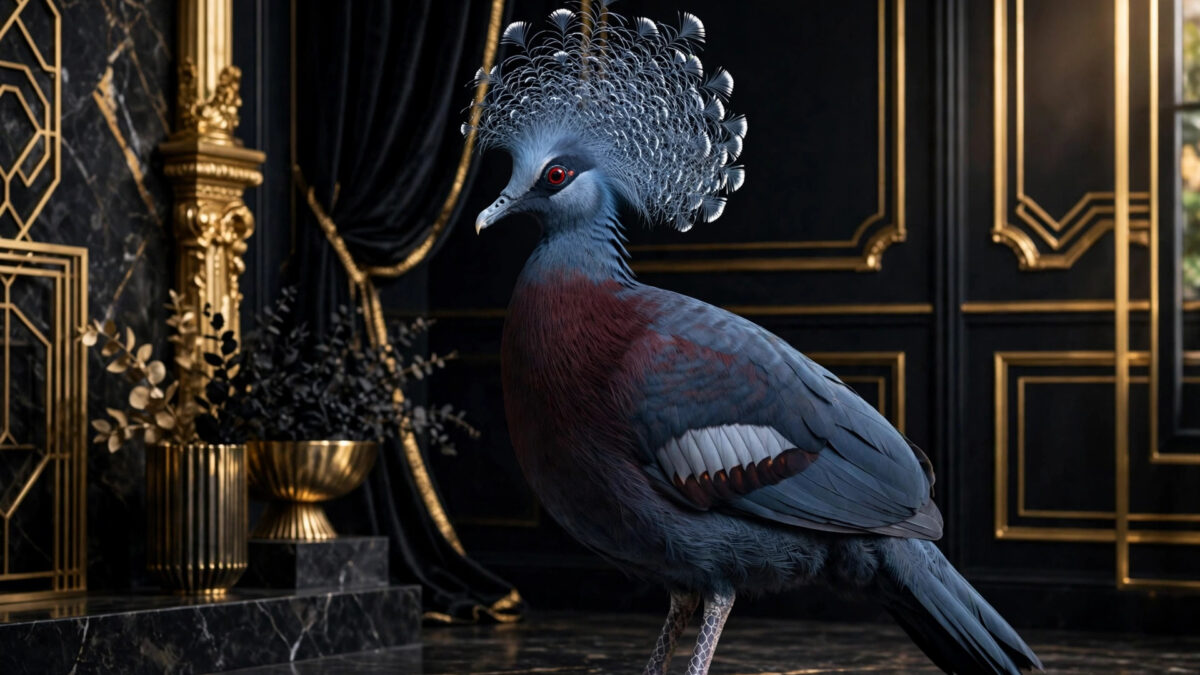
Some pets enter a room. A Victoria crowned pigeon arrives. Living with one means giving a large, ground-walking bird real floor space, a planted aviary feel, and a calm daily rhythm — and in return you share your home with a crest of blue lace, a deep maroon breast, and a presence guests remember long after they’ve left.
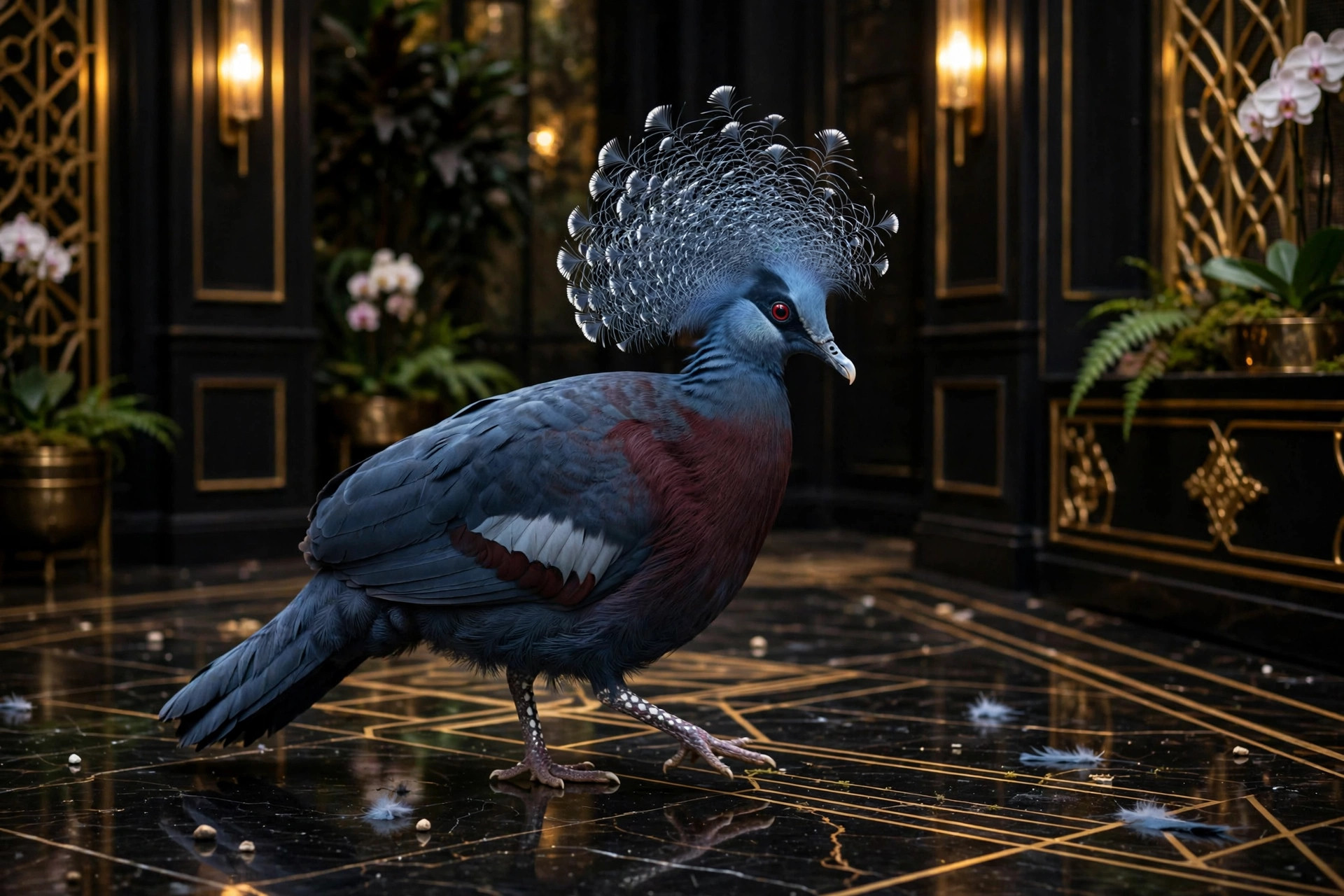
A bird built like a small peacock, mannered like a dowager
The Victoria crowned pigeon comes from the lowland forests of New Guinea and nearby islands, according to the San Diego Zoo Wildlife Alliance. It’s one of the largest living pigeons, and up close that scale surprises people. This isn’t a delicate cage bird. It’s a substantial, deliberate bird who moves at her own pace and expects the room to adjust.
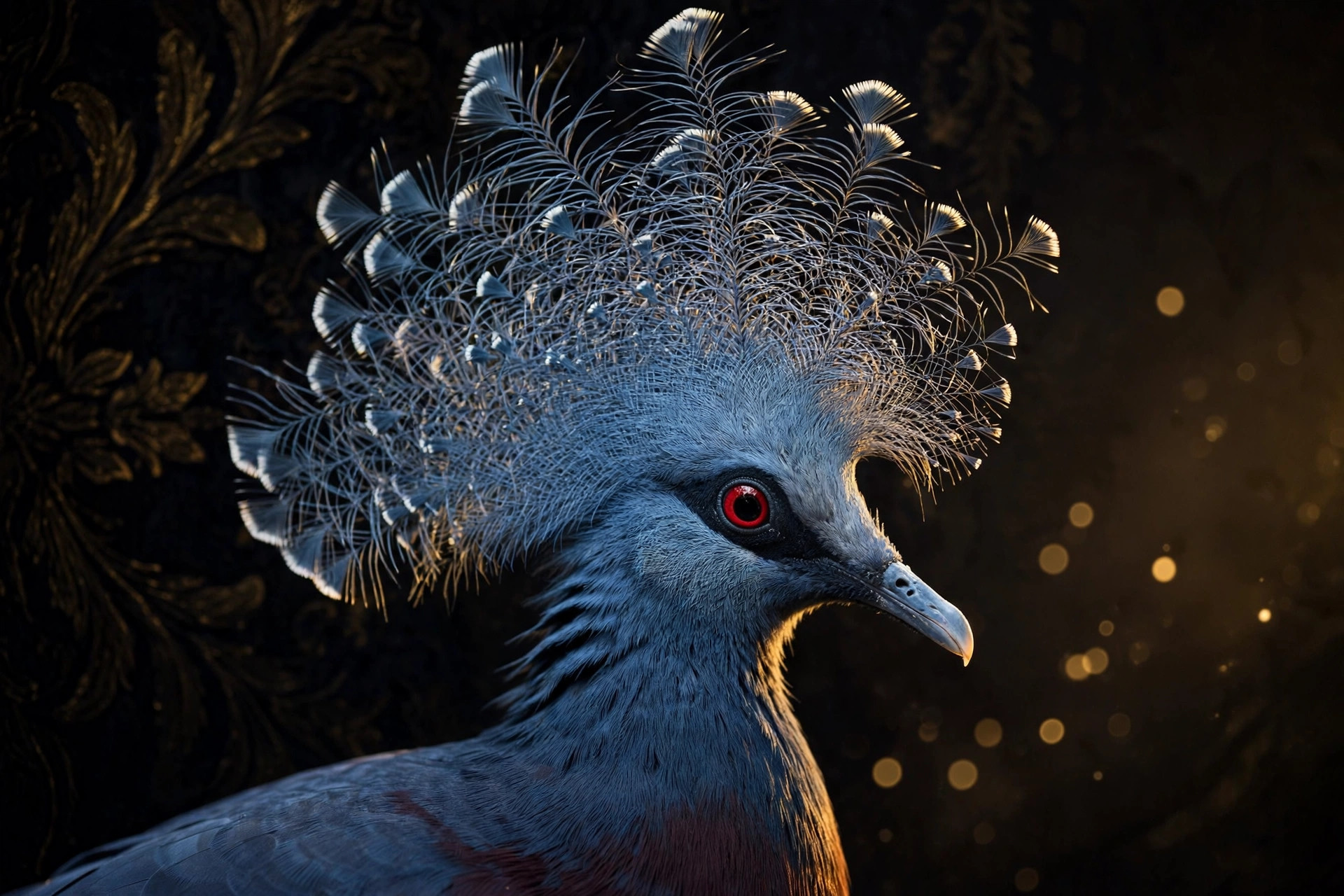
That crest does most of the talking. Each feather ends in a fine, lacy fan, and when she turns her head the whole arrangement moves like a headdress catching light. Add the maroon breast, the slate-blue body, and those red eyes, and you understand why she photographs like jewellery that happens to breathe.
She doesn’t decorate a room. She re-casts it — every chair, every shaft of light, suddenly part of her portrait.
Space: think floor, not cage
Here’s the first thing new keepers get wrong. They shop for a cage.
A crowned pigeon spends much of her day walking, foraging, and patrolling on the ground. She flies to a perch to roost, but her life happens at floor level. So the home she needs is an aviary in spirit: a generous, secure space she can cross in many steps, with a soft, cleanable floor, low perches she can reach easily, and planted corners where she can retreat and feel hidden.
Keep it calm in there. No frantic traffic, no looming dogs, no children chasing a photo. She’ll tolerate a well-run household — she won’t thrive in a chaotic one. If your home is loud from dawn to midnight, admire this bird in someone else’s collection.
The daily rhythm
Her days have a pleasing shape. Morning is for walking and foraging. Midday slows right down. Evening brings a last patrol, a feed, and then the move up to a roosting perch.
Feed her like the forest-floor bird she is. Crowned pigeons eat seeds, grains, and fallen fruit in the wild, and keepers build the bowl around a quality seed and grain mix with fresh fruit and leafy greens alongside, following the guidance of their avian vet. Fresh water matters twice over — she’ll drink it, and she’ll want to bathe in a shallow tray of it. Watching a crowned pigeon bathe, crest and all, is one of the quiet privileges of keeping her.
Talk to her while you work. Not baby talk — conversation. These are social birds who live in small groups in the wild, and a single bird in a home needs her people to be that group. A pair is often happier still, if you have the space and the budget to do it properly.
Company, handling, and honest limits
She’s not a bird to carry around. Handling stays minimal and gentle, on her terms, and mostly you’re a presence rather than a perch. That distance is part of the appeal. Living with her feels closer to hosting a resident artist than owning a pet.
Now the honest part. Check your local rules before anything else — large exotic birds can need permits, paperwork, and a specialist vet within reach, and the rules differ widely by place. The species is listed in CITES Appendix II and assessed as Near Threatened by the IUCN, so trade in these birds is regulated — one should only ever come from a legal, captive-bred source with its paperwork in order. The purchase price is the small number in this story. The aviary, the food, the vet care, and the years add up to the real one. Crowned pigeons are long-lived birds in good care, so this is a long commitment, not a season’s decoration.
Health checks follow the same calm logic as everything else with her. Know her normal — her walk, her appetite, her droppings, the sound she makes when she’s content — and call an avian vet early when something shifts. Birds hide illness well. Your job is to notice small changes before they become big ones.
The planted corner, and the perch above it
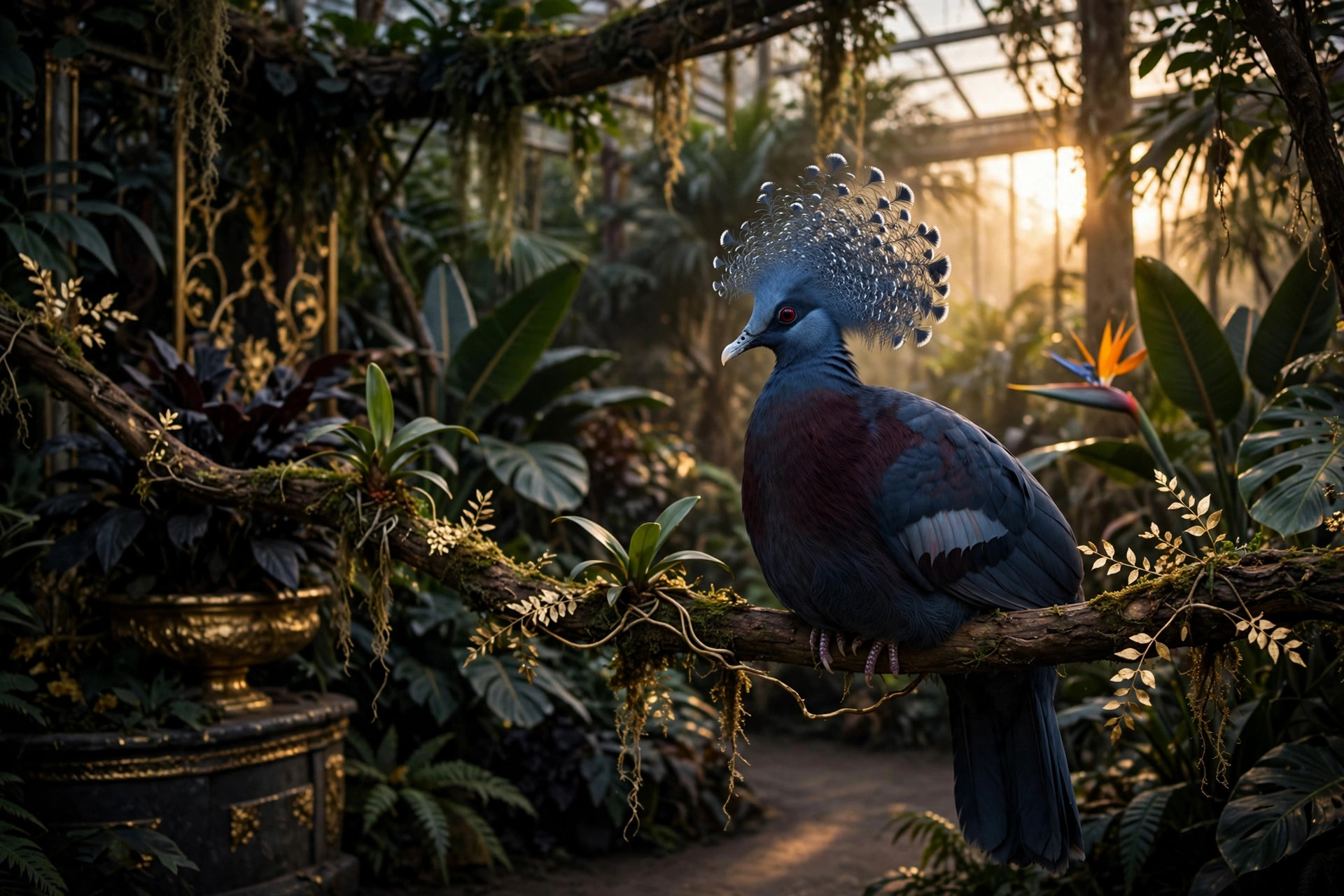
Give her one corner that feels like forest edge. A few sturdy, bird-safe plants in heavy pots. A branch she can step onto without wobbling. Leaf litter she can turn over with her beak, hunting for the seeds you’ve scattered there on purpose.
That scattered feed is enrichment, not mess. A bird built to forage on a forest floor gets bored by a full bowl in an empty room, and boredom in a bird this size shows up as pacing, feather damage, or a bird who simply goes quiet in the wrong way. Ten minutes of hiding food in the litter buys her an hour of honest work. It’s the cheapest luxury in her whole setup.
Her roosting perch sits above it all — broad, secure, and high enough that she can survey her territory before sleep. She’ll choose the same spot most nights. Let her. Routine is a form of safety for a prey species, and a crowned pigeon who picks her perch, her bath time, and her favourite corner is a bird who feels at home.
The sound she makes
Expect a deep, booming whoom that you feel as much as hear. It’s nothing like a city pigeon’s coo. New keepers often check the room the first time, half convinced something larger has got in.
She uses it sparingly — a greeting, a mild announcement, a note that the household is awake and so is she. In a calm home it becomes part of the furniture of the day, like a clock striking in another room. Neighbours in a thin-walled flat may feel differently, which is one more reason this bird belongs in a house with space around her, not in close quarters.
Why people fall for her
It isn’t the rarity. Well — it isn’t only the rarity.
It’s the composure. Dogs ask for your attention, cats negotiate for it, and a crowned pigeon simply assumes the room is better with her in it, then proves it. She turns a morning feed into a small ceremony. She makes a plain hallway feel like the entrance to a private garden. Guests lower their voices without being asked. Nobody knows why. Everybody does it.
If you have the space, the patience, and a household that runs calm, she’ll repay you in a currency few pets trade in: stillness, with a crest on it.
Key takeaways
- She lives on the floor — plan aviary-style space she can walk, not a cage.
- Feed a seed and grain base with fresh fruit and greens, guided by an avian vet, and offer a shallow bath.
- Keep handling gentle and minimal; be her social group instead.
- Check permits, specialist vet access, and the long-term cost before you commit.
- Learn her normal, and act early when anything about it changes.
This article was created with AI assistance and reviewed by our editorial team before publishing.
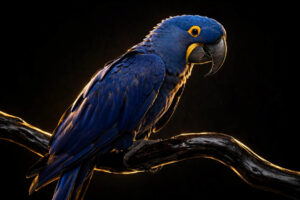 Living With a Hyacinth Macaw: The Cobalt Icon
 Pet Portraits: The New Heirloom for Devoted Owners
 The World’s Most Dog-Friendly Luxury Hotels
Leave a Reply