A commissioned pet portrait turns a beloved animal into art that stays in the family — painted, drawn, or photographed with real intention. You choose an artist whose work you love. The portrait takes its place on the wall. And it stays there, long after the sofa’s been replaced twice.
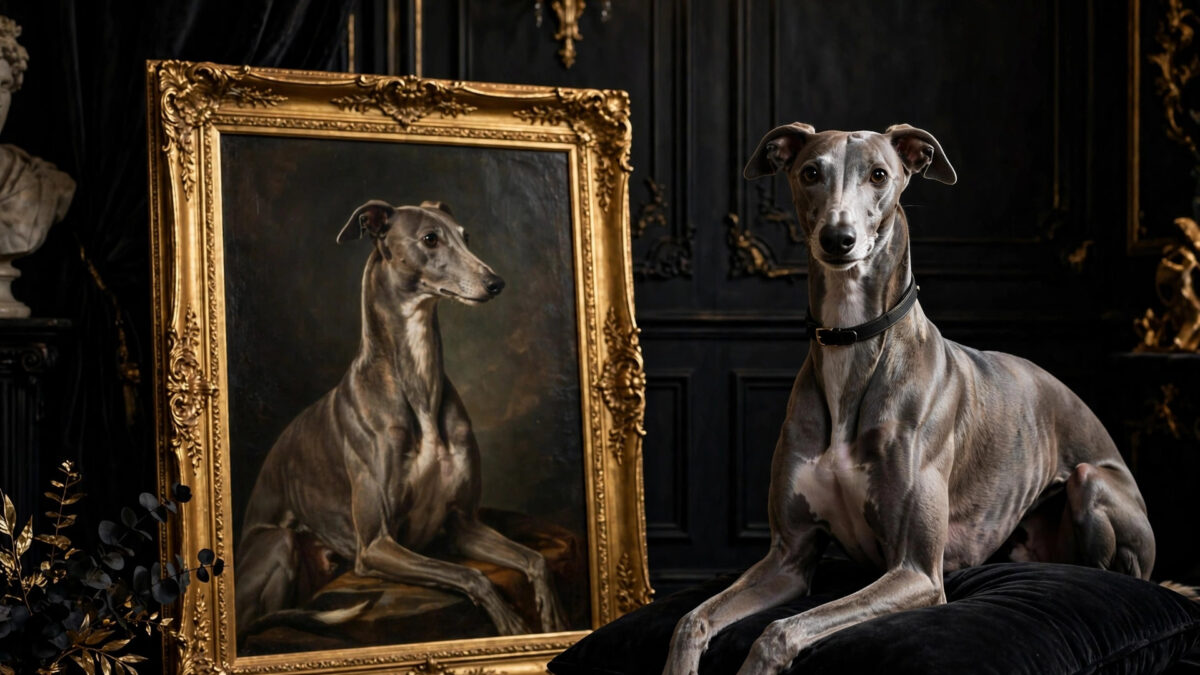
A Greyhound posed beside his own framed portrait, gold frame catching the light.
Why Owners Commission a Portrait
Phone photos are wonderful. There are thousands of them. They live in a camera roll, behind a cracked screen, sorted by nobody.
A portrait is different because it’s deliberate. Someone chose this dog, this pose, this light — and spent hours, sometimes far longer, getting the expression right. That intention changes how you look at it. You don’t scroll past a painting.
For many devoted owners, the reason is simple enough: the animal is family, and family gets a place on the wall. Not tucked away. Hung properly, at eye level, where guests ask about it and you get to tell the story again.
The Greyhound, Made for This
Some dogs photograph well. Greyhounds were practically designed for portraiture.
Look at the lines. That long, thoughtful face. The deep chest, the tucked waist, a neck that curves like it was drawn first and built second. Artists have favoured sighthounds for centuries in sporting and aristocratic art, and it’s easy to see why — there’s very little about a Greyhound that needs exaggerating.
Put one on a chaise in a quiet room and you don’t need props. The dog is the composition. A good portraitist knows it, too, and will usually build the whole piece around that calm, sideways gaze Greyhounds do so well.
Three Styles, Three Very Different Rooms
Classical oil painting is the grand option. Rich colour, visible brushwork, a background that hints at garden or library rather than spelling anything out. It suits a formal room, and it ages beautifully — oils have a depth that doesn’t flatten with the years.
Minimalist line art goes the other way. One continuous-feeling line, or a few, and suddenly it’s all there: the ear fold, the long nose, the particular way your dog holds his head when he’s listening. It’s spare. It’s modern. It works in a bright, uncluttered space where a heavy gilt frame would shout.
Then there’s the studio photographic portrait. Controlled light, a plain backdrop, nowhere for the eye to wander except the animal. Done well, it’s startling — every whisker sharp, the coat’s texture right there. Done badly, it’s a passport photo with better lighting, so the photographer’s eye matters enormously here.
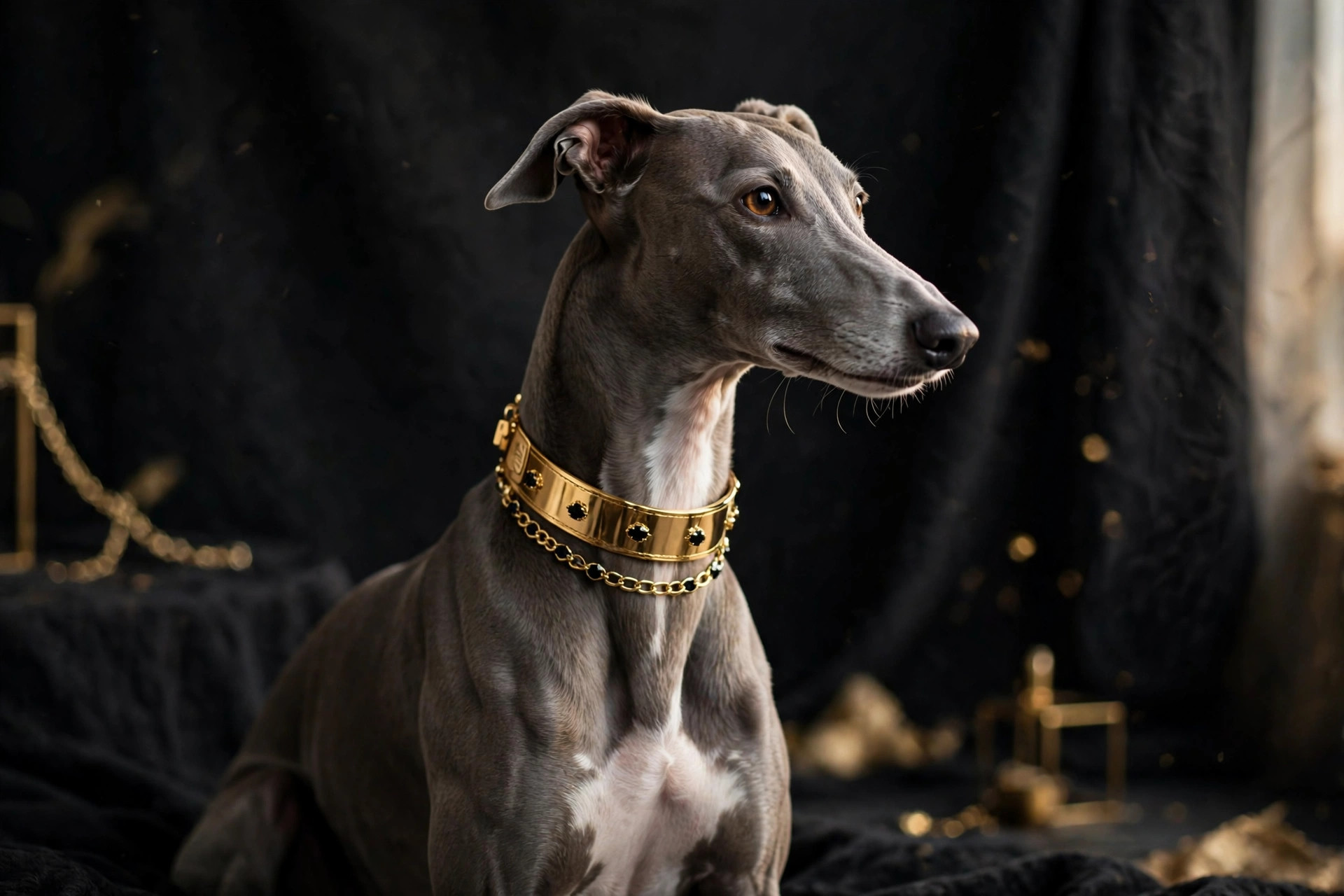
In the studio: a Greyhound holds a pose under soft portrait light, patient as a sitter should be.
Choosing an Artist You Won’t Regret
Start with the portfolio, not the price list. You’re looking for one thing above all: does this person capture animals, or just copy photographs?
There’s a difference, and you’ll feel it. A copied photo gives you accuracy — the markings are right, the proportions are right, and yet something’s missing. A real pet portraitist finds the expression that’s most like your dog, the one you’d recognise across a room. The tilt. The look. That.
Ask to see work in the exact medium you’re considering, too. A brilliant watercolourist isn’t automatically your oil painter. And don’t be shy about asking how revisions work, how the artist prefers to receive reference material, and what happens if the first sketch doesn’t feel right. Clear answers early save awkward emails later.
Reference Photos: The Quiet Foundation
Most commissions today are made from photographs rather than live sittings, and that’s no bad thing. Dogs don’t hold a pose for three hours. Greyhounds, devoted nappers that they are, certainly won’t.
So the reference photos carry the whole project. Send plenty. Natural light beats flash every time, because flash flattens the face and invents colours that aren’t there. Include close views of the eyes and face, full-body shots from the side, and at least one picture that shows your dog’s character rather than his best behaviour.
Be honest in the selection, too. If his ear always folds back, say so. If there’s a scar, a grey muzzle, a crooked tooth you’re fond of — flag it. You’re not ordering an idealised stranger. You’re commissioning this dog, exactly as he is.
Sittings, Sketches, and the Waiting
Some artists still offer sittings, usually short ones, backed up by photographs taken during the session. A sitting gives the artist something a photo can’t: movement, temperament, the way the animal settles and startles and sighs. Even a brief meeting can sharpen a likeness.
Photo-based work follows a steadier rhythm. You agree the composition, often from a preliminary sketch. The artist works in stages, sometimes sharing progress images, sometimes preferring to reveal the finished piece in one go. Ask which way yours works before the deposit stage, so the waiting feels exciting rather than anxious.
And waiting there will be. Good portraitists are booked ahead, and a considered piece takes the time it takes. Size, medium and the artist’s waitlist all shape the quote, along with framing and delivery — so treat a rushed offer with a little suspicion. Heirlooms aren’t hurried.
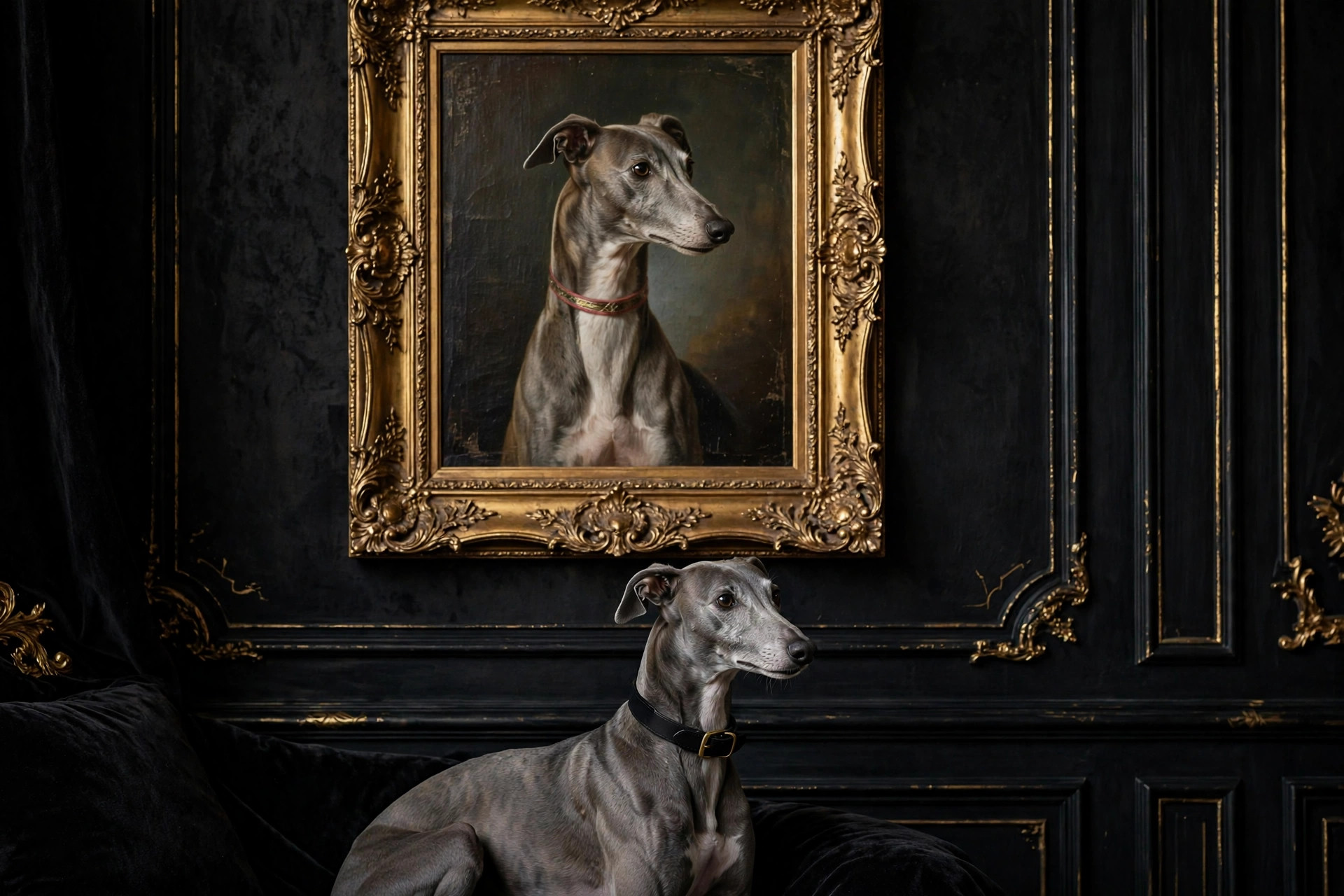
Framed and hung: a classical-style Greyhound portrait above the dog himself, taking his usual spot beneath it.
Framing Is Half the Portrait
People underestimate framing. Then the portrait comes home, gets leaned against a wall for a month, and the whole project loses its moment.
Plan the frame as part of the commission, not an afterthought. A classical oil often wants weight — a wide, gold-toned frame that gives the painting room to breathe. Line art usually wants the opposite: a slim frame, generous white mount, nothing competing with those few quiet lines. A photographic print may need glazing chosen with care, so reflections don’t stand between you and the image at the hour when the light hits that wall.
Placement matters just as much. Hang it where it’s seen daily but not blasted by direct sun, which is unkind to pigments and prints alike. Eye level is lower than most people guess. Sit in the chair opposite, look up, and check. That’s the view that counts.
From Picture to Heirloom
Here’s what changes over time. A new portrait is a likeness. An old one becomes a record.
It outlasts collars and beds and favourite walking routes. It moves house with the family, gets argued over affectionately, gets pointed out to grandchildren who never met the dog but somehow know his name anyway. That’s how a portrait becomes an heirloom: not through grandeur, but through staying.
If you’d like yours to travel well through the years, keep the artist’s details with it — a note on the back of the frame, the medium, the year, the dog’s name and dates. Future owners of the picture shouldn’t have to guess. And care is mostly common sense: stable room conditions, gentle dusting, no harsh cleaners anywhere near the surface.
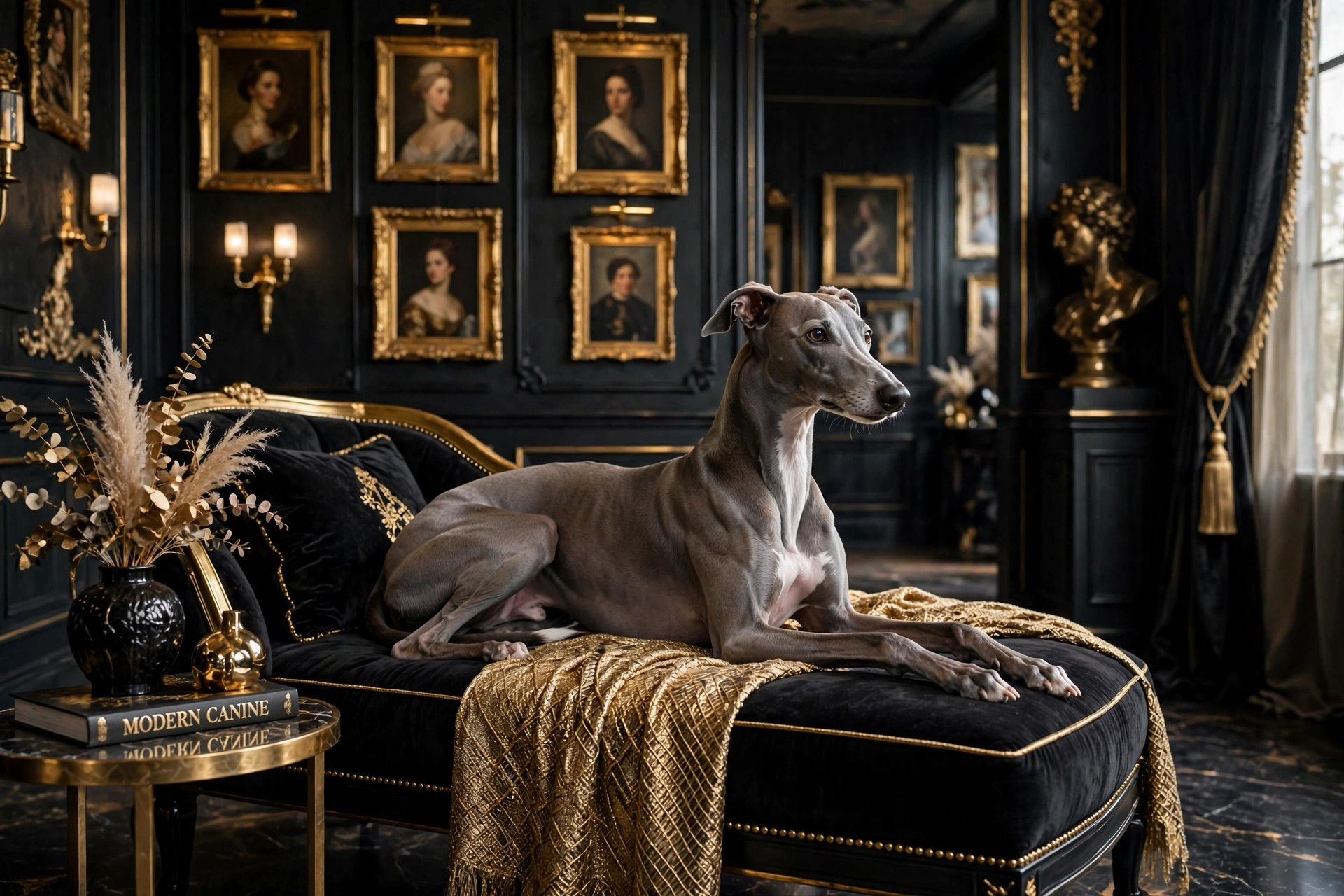
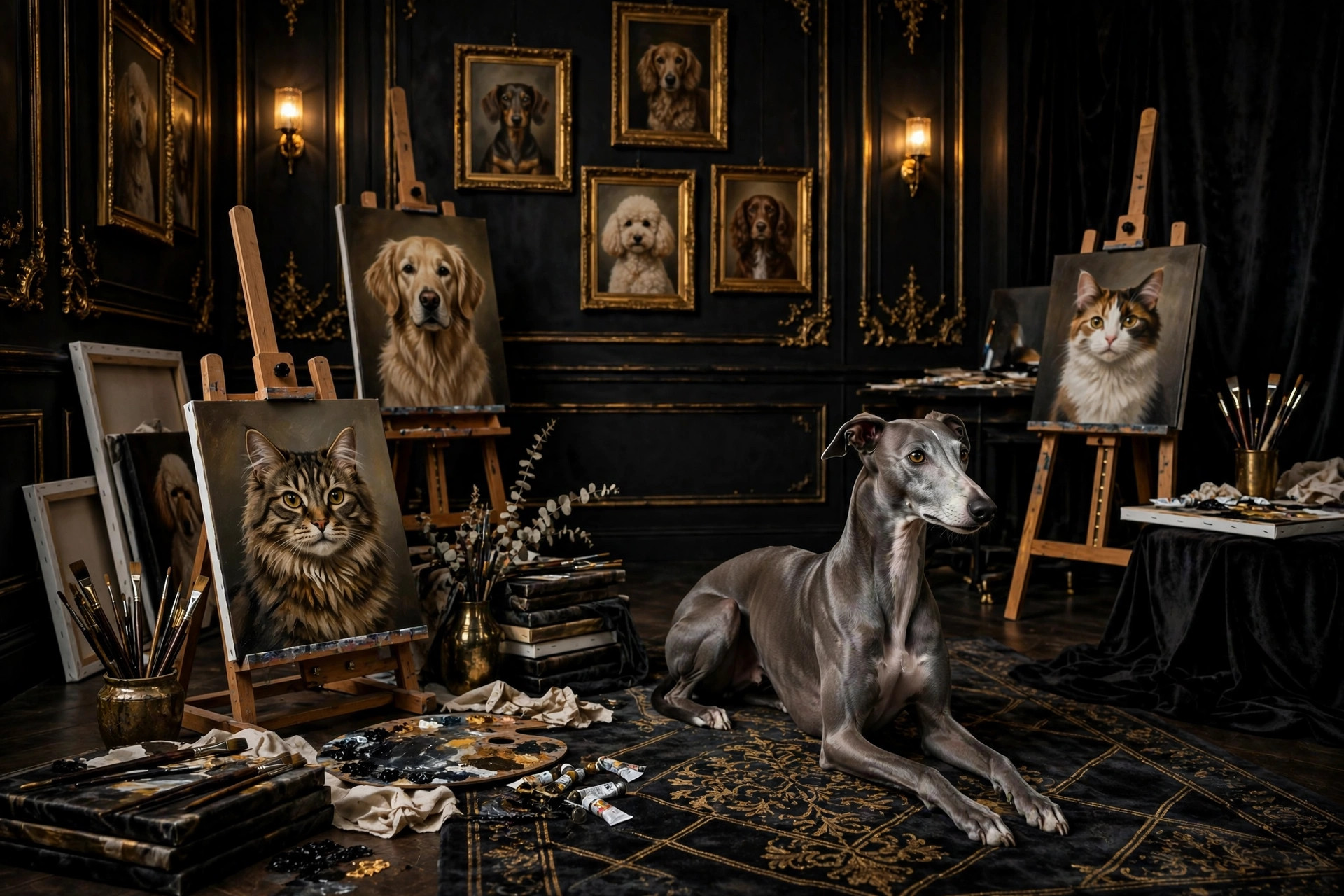
A Greyhound on a chaise in a gallery-like room, surrounded by portraits and entirely at home.
Frequently Asked Questions
How does commissioning a pet portrait usually work?
You choose an artist whose portfolio you love, share reference photos, and agree the style, size, and composition. The artist may produce a preliminary sketch first, then completes the piece over an agreed period. Once finished, it’s framed, delivered, and hung — with the details of the commission worth keeping alongside it.
Does my dog need to sit for a portrait?
Usually, no. Most artists work mainly from photographs, because even the calmest dog won’t hold a pose for long. Some offer short sittings supported by photos taken in the session, which can help capture temperament and movement. Either route can produce a strong likeness when the reference material is good.
What makes a good reference photo for a portrait?
Natural light, sharp focus, and honesty. Send clear close-ups of the face and eyes, side views of the full body, and a few shots that show character rather than perfect behaviour. Mention distinctive details — a folded ear, a greying muzzle — so the artist captures your actual dog, not a generic one.
What affects the price of a commissioned pet portrait?
There’s no single figure, because several factors shape every quote. Size, medium and the artist’s waitlist all play a part, as do framing, the number of animals in the piece, and delivery. Ask for a clear written quote that separates the artwork from framing, so you know exactly what you’re agreeing to.
This article was created with AI assistance and reviewed by our editorial team before publishing.
 Living With a Victoria Crowned Pigeon: The Crowned Guest
 Living With a Hyacinth Macaw: The Cobalt Icon
 The World’s Most Dog-Friendly Luxury Hotels
Leave a Reply