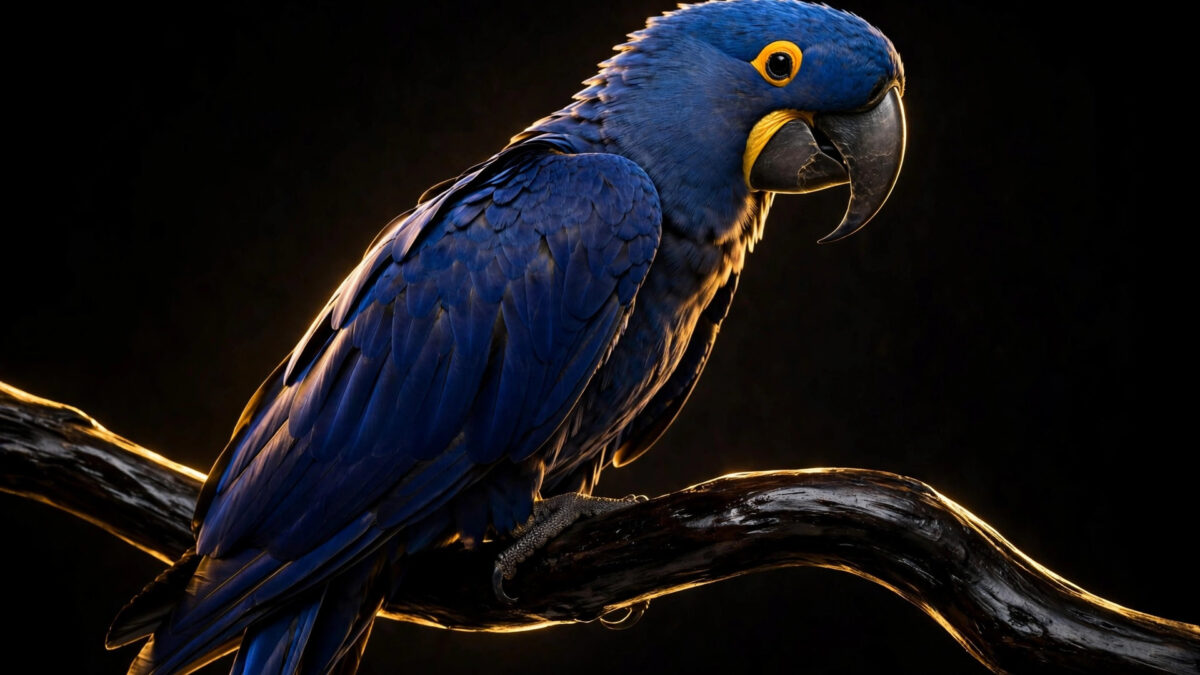
There are parrots, and then there is the hyacinth macaw. Nearly a metre of deep cobalt feathers, a beak that cracks palm nuts other birds can’t dent, and a gaze that follows you around the room like a portrait in a gallery. Living with one is less like keeping a pet and more like sharing your home with a very beautiful, very loud work of art — one that may outlive you.
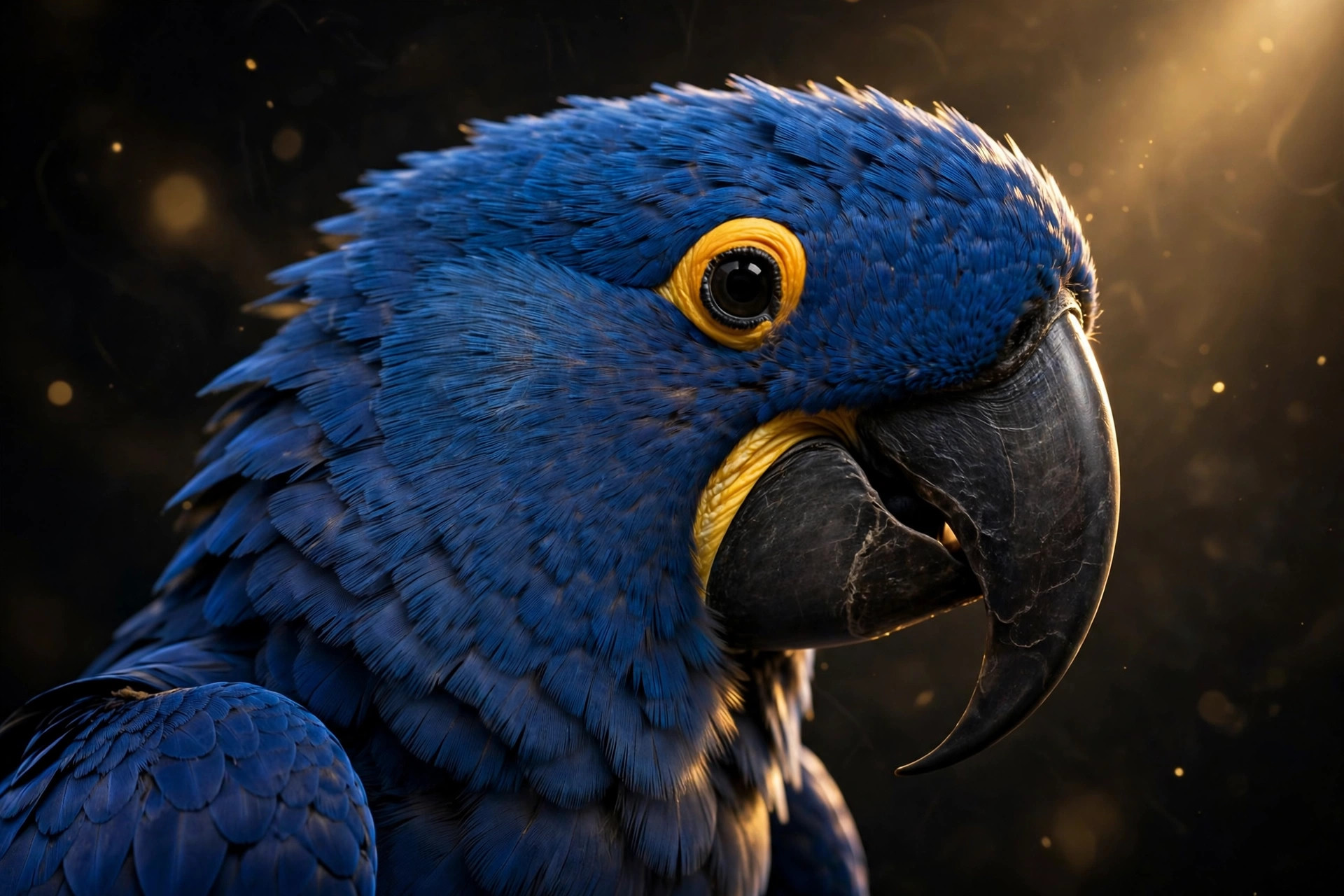
The cobalt icon
The hyacinth macaw (Anodorhynchus hyacinthinus) is the largest flying parrot in the world, reaching about 100 cm from beak to tail tip, according to species accounts from the Cornell Lab of Ornithology. In the wild it lives in parts of Brazil, Bolivia, and Paraguay, where it feeds heavily on the nuts of native palms.
That colour isn’t paint-box blue. It’s structural — light refracting through feather barbs — which is why a hyacinth seems to change shade as it moves, indigo in shadow, almost violet in full sun. Photographers chase that shift. Owners just get to live inside it, morning after morning, for decades on end.
A hyacinth macaw doesn’t enter a room. It takes up residence in it, and the room is better for it — provided the room was ready.
A beak built like a tool
That enormous black beak is not decoration. In the wild, hyacinths crack open palm nuts so hard that few other animals can use them at all. At home, the same beak opens walnuts as if they were grapes — and can just as happily reshape a door frame, a curtain rail, or the corner of an antique sideboard.
This is the first thing to understand before you fall in love: a hyacinth needs things to destroy. A steady rotation of hardwood toys, natural branches, and whole nuts in the shell isn’t enrichment garnish. It’s the job you are hiring this bird to do, every single day.
The commitment, in plain numbers
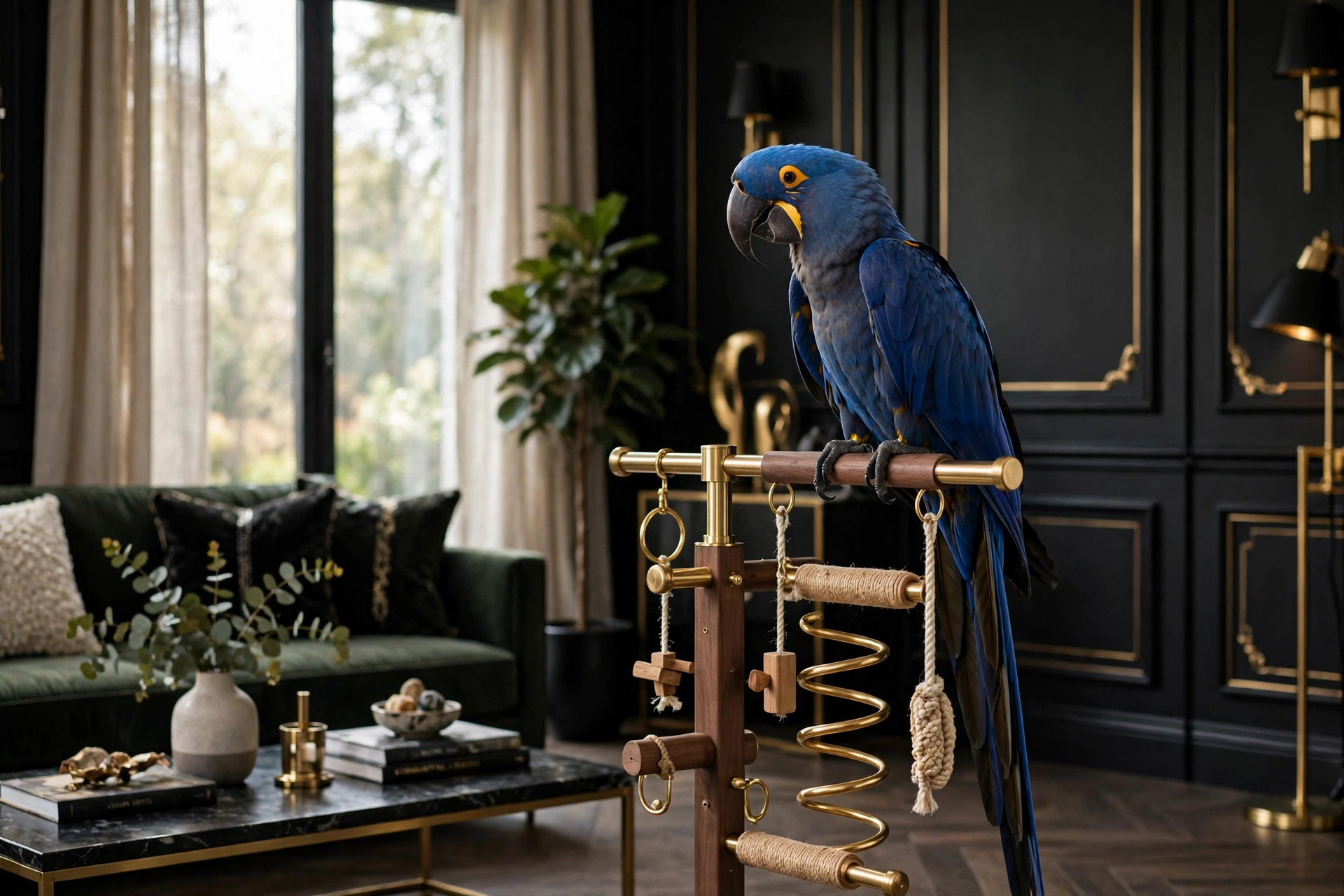
Hyacinth macaws commonly live 50 years or more in captivity, a figure reported by avian veterinary references and zoo collections alike. Read that again and do the arithmetic honestly. A bird bought at thirty may be your companion at eighty, and responsible owners write the bird into their will.
The species is listed as Vulnerable by the IUCN and sits on CITES Appendix I, the strictest tier of international trade controls. That means paperwork, permits, and a price that reflects genuine rarity — from reputable breeders, a hyacinth typically costs more than a small car. Anyone offering one cheaply is a question, not a bargain.
Feeding a giant
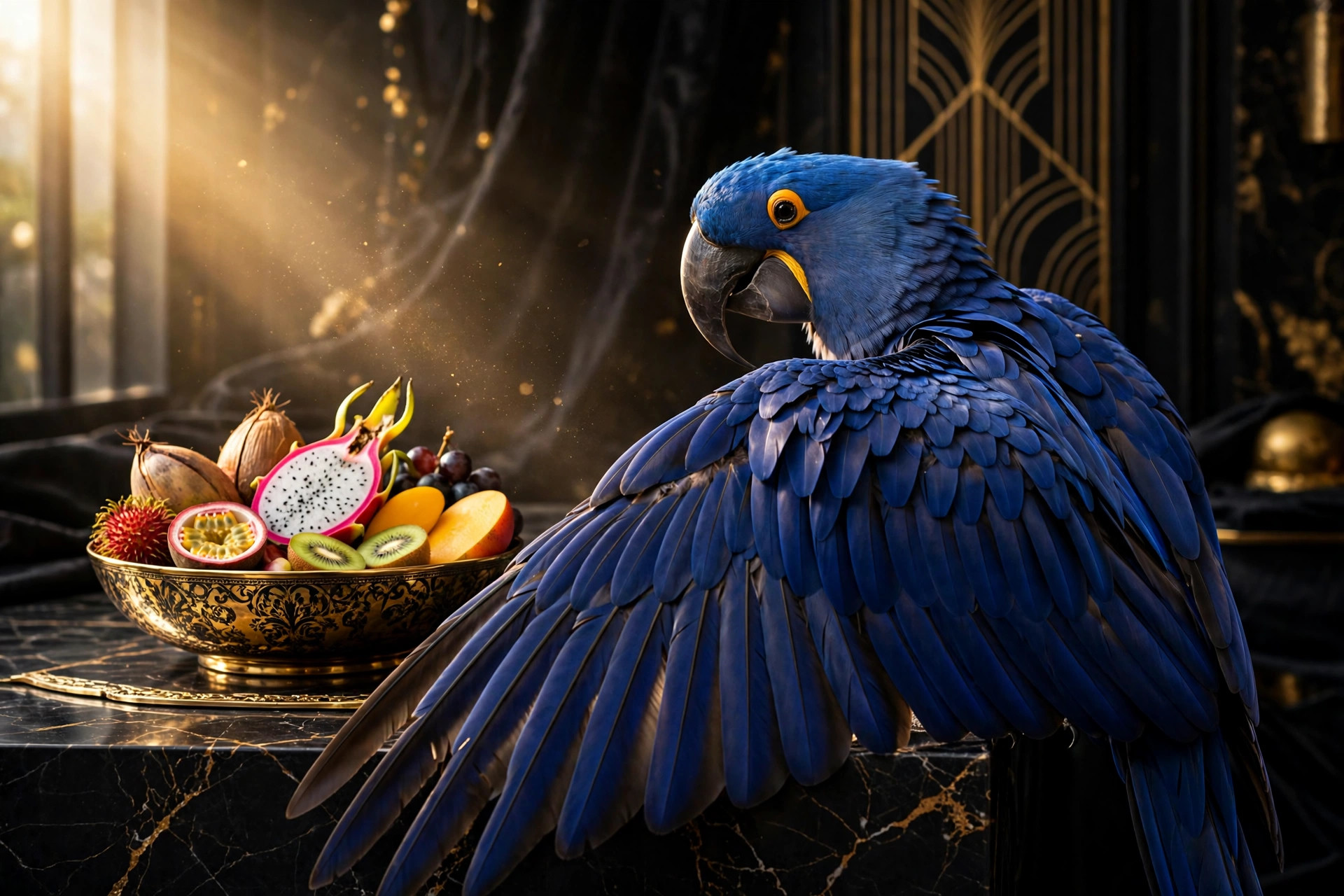
Wild hyacinths run on fat-rich palm nuts, and captive diets honour that: macadamias and other whole nuts in the shell form a far larger share of the bowl than they would for a smaller parrot. A quality formulated pellet, fresh vegetables, and fruit round it out.
What surprises new owners is the ritual of it. A hyacinth working a macadamia — braced, deliberate, cracking with surgical patience — is one of the great small spectacles of the bird room. Breakfast takes as long as it takes.
Space, sound, and the social contract
The cage question answers itself: the largest you can house, with bar spacing wide enough and steel strong enough for that beak, plus hours out on a stand each day. A hyacinth cooped up is a hyacinth dismantling its own feathers, and the fault won’t be the bird’s.
Sound? They’re not the loudest macaws, but “not the loudest macaw” is a relative term. A morning contact call carries through walls, floors, and good intentions. Detached house, understanding neighbours, or both.
In return, you get a bird famous among macaws for steadiness — gentle, dog-like in its attachment, playful well into old age. Hyacinths bond deeply and visibly. They choose their people, and they remember them.
A day in cobalt
Life with a hyacinth settles into a rhythm, and the bird sets it. Mornings begin with contact calls and a fresh bowl — nuts to crack, vegetables to inspect and mostly fling. Midday is for the stand by the window, a shower under a fine mist if the bird approves, and the serious business of reducing a hardwood toy to splinters.
Afternoons belong to you. This is when a hyacinth wants its people — sitting close, preening a sleeve button loose, supervising whatever you’re doing with grave attention. Owners talk about this quality more than the colour, in the end. The blue is what stops you. The company is what keeps you.
Evenings wind down early. Twelve hours of sleep in a quiet, dark room is the standard avian vets recommend for large parrots, and a tired hyacinth is a cranky architect of destruction. Put the bird to bed. Protect the furniture.
Choosing one properly
Because the species sits on CITES Appendix I, a legitimate hyacinth comes with a paper trail: permits, closed-ring or microchip identification, and a breeder who expects your questions and asks plenty back. Expect a waiting list. Expect to be interviewed about your house, your hours, and your plans for the decades ahead.
Walk away from any seller who can’t document the bird’s origin, who offers to ship one like a parcel, or who prices far below the going rate. Wild-caught birds still move through illegal trade, and the IUCN listing exists precisely because wild populations paid for that trade. A luxury bird bought carelessly isn’t luxury at all.
Visit if you can. A healthy young hyacinth is bright-eyed, fully feathered, and busy — working a nut, testing a perch, watching you back. That mutual inspection is the real beginning of the arrangement. The bird is choosing, too.
Key takeaways
- Scale: about a metre long, the world’s largest flying parrot — space planning comes first.
- Time: a 50-year-plus lifespan means estate planning, not just pet planning.
- Diet: whole hard nuts daily; that beak needs real work.
- Status: IUCN Vulnerable, CITES Appendix I — buy only with full paperwork from a reputable source.
- Temperament: famously gentle for a giant macaw, and deeply bonded to its chosen people.
The hyacinth macaw is not a pet for a season of life. It’s a pet for the whole of it. For the household that understands that — and builds its days, its rooms, and its will around it — there is simply nothing else like living in cobalt.
This article was created with AI assistance and reviewed by our editorial team before publishing.
 Living With a Victoria Crowned Pigeon: The Crowned Guest
 Pet Portraits: The New Heirloom for Devoted Owners
 The World’s Most Dog-Friendly Luxury Hotels
Leave a Reply