
Premium pet food is a promise about sourcing and care, not a regulated grade: “premium” and “gourmet” have no legal definition, “human-grade” has a strict one, and “fresh” describes a format rather than a virtue. What separates a genuinely fine food from a merely expensive one is label literacy — adequacy statements, named ingredients, and honest calorie math.
What “Premium” and “Gourmet” Really Mean
“Premium” and “gourmet” mean whatever the brand wants them to mean, because no regulator defines either word. AAFCO, the body whose model rules most states follow for pet food labeling, has no definition for premium, gourmet, or holistic. Any food that meets the basic requirements for sale can wear the word in gold foil.
That doesn’t make premium foods a confidence trick. Brands in this tier often do buy costlier ingredients, commission nicer recipes, and package the result beautifully. But the word itself certifies nothing. It describes positioning and price, not measured quality. Two bags can sit side by side — one plainly dressed, one in matte black with gold lettering — and carry nearly identical nutrition.
So treat the adjective as an invitation to look closer, never as the conclusion. The bag in the photograph below is gorgeous. It still has to earn its place in the bowl, the same way every other food does: through what’s declared on the back.
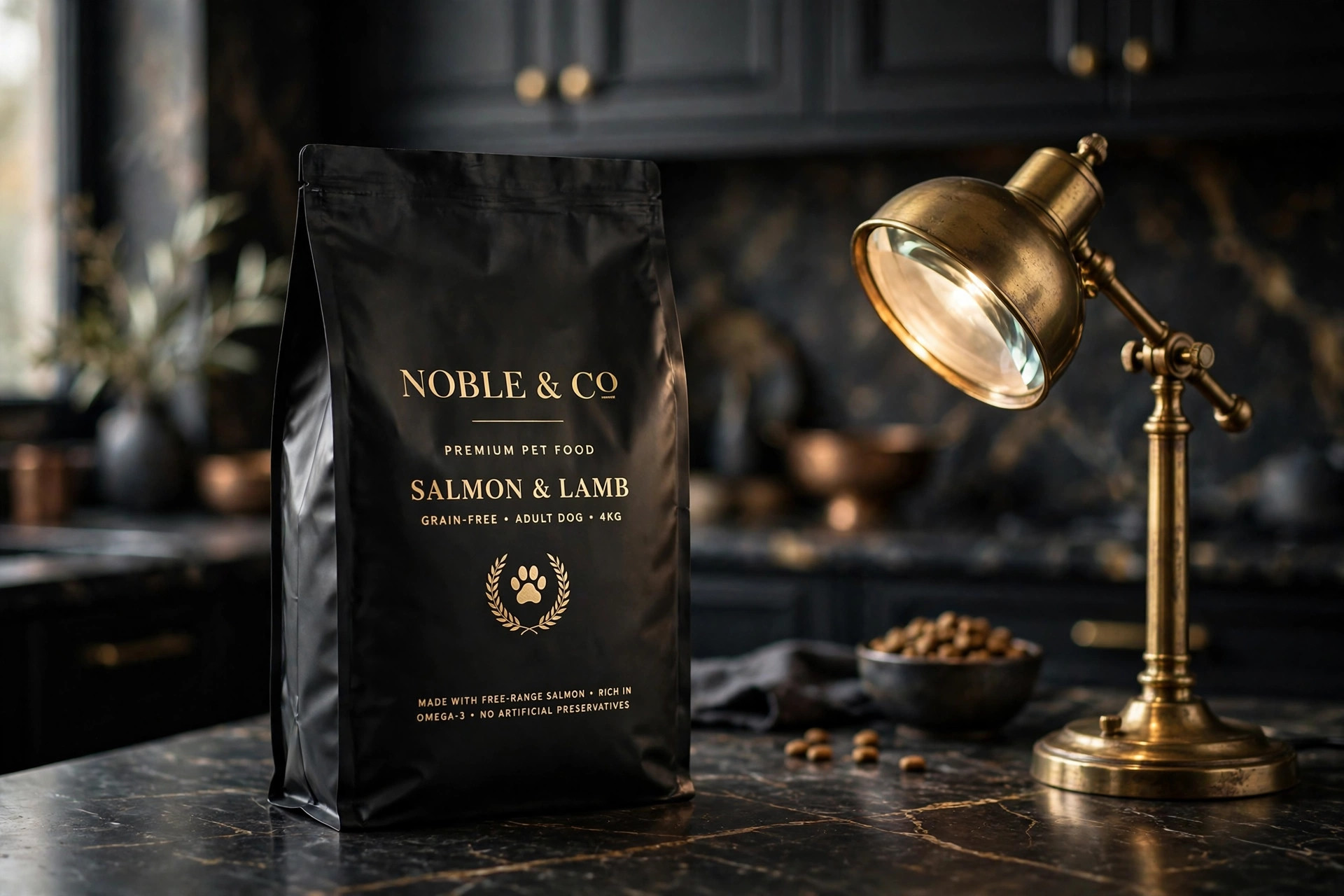
None of this means the higher shelf is a mirage. Premium foods often cost more for honest reasons: named cuts instead of anonymous meals, smaller production runs, gentler cooking, refrigerated trucks instead of a warehouse shelf. A cold chain is expensive. So is salmon. The point isn’t that price lies — it’s that price is a receipt for costs, not a certificate of nutrition. What those costs bought still has to be proven on the back of the bag.
“Human-Grade” Is the One Claim With Teeth
Human-grade is the strictest claim on the bag: under AAFCO’s guidelines, every ingredient must be fit for human food and stored, handled, processed, and transported under human food rules. Not just the headline protein — every ingredient, and the factory too. A human-grade food is made in a facility permitted for human food production, which is a demanding standard to meet and an easy one to check.
Here’s the nuance that gets lost in the advertising. Human-grade is a claim about sourcing and handling. It tells you where the ingredients came from and how carefully they were treated on the way to the bowl. It does not, by itself, promise that the recipe suits your particular dog, and it says nothing about whether the finished food is complete and balanced. That verdict lives in a different line of the label entirely.
Our earlier guide walks through this wording in detail: Decoding Pet Food Labels: What “Human-Grade” Really Means takes the claim apart phrase by phrase.
Reading an Ingredient List Without Being Fooled
An ingredient list is ordered by weight before cooking — genuinely useful, quietly gameable, and never the whole story. Fresh meat is mostly water, so it weighs in proudly at the top of the list, then cooks down to a fraction of that weight in the finished food. A named meat meal, like chicken meal or salmon meal, has already had the water removed. Ounce for ounce, it delivers far more protein than its fresh counterpart, even when it appears further down.
Splitting is the other trick worth knowing. A recipe can list peas, pea protein, and pea fiber as three separate entries, each small enough to sit below the meat — while peas, combined, outweigh it. Nothing about that is illegal. It’s simply how the ordering rules work, and a polished label knows it.
Then there’s the phrase that frightens people unnecessarily: by-products. In pet food, by-products are the parts of the animal humans tend not to eat — organ meats, mostly. Liver, kidney, and spleen are dense with nutrients dogs need. A named by-product from a named animal is not filler. Vague wording is the real warning sign: “meat by-products” with no species attached tells you far less than “chicken by-products” does.
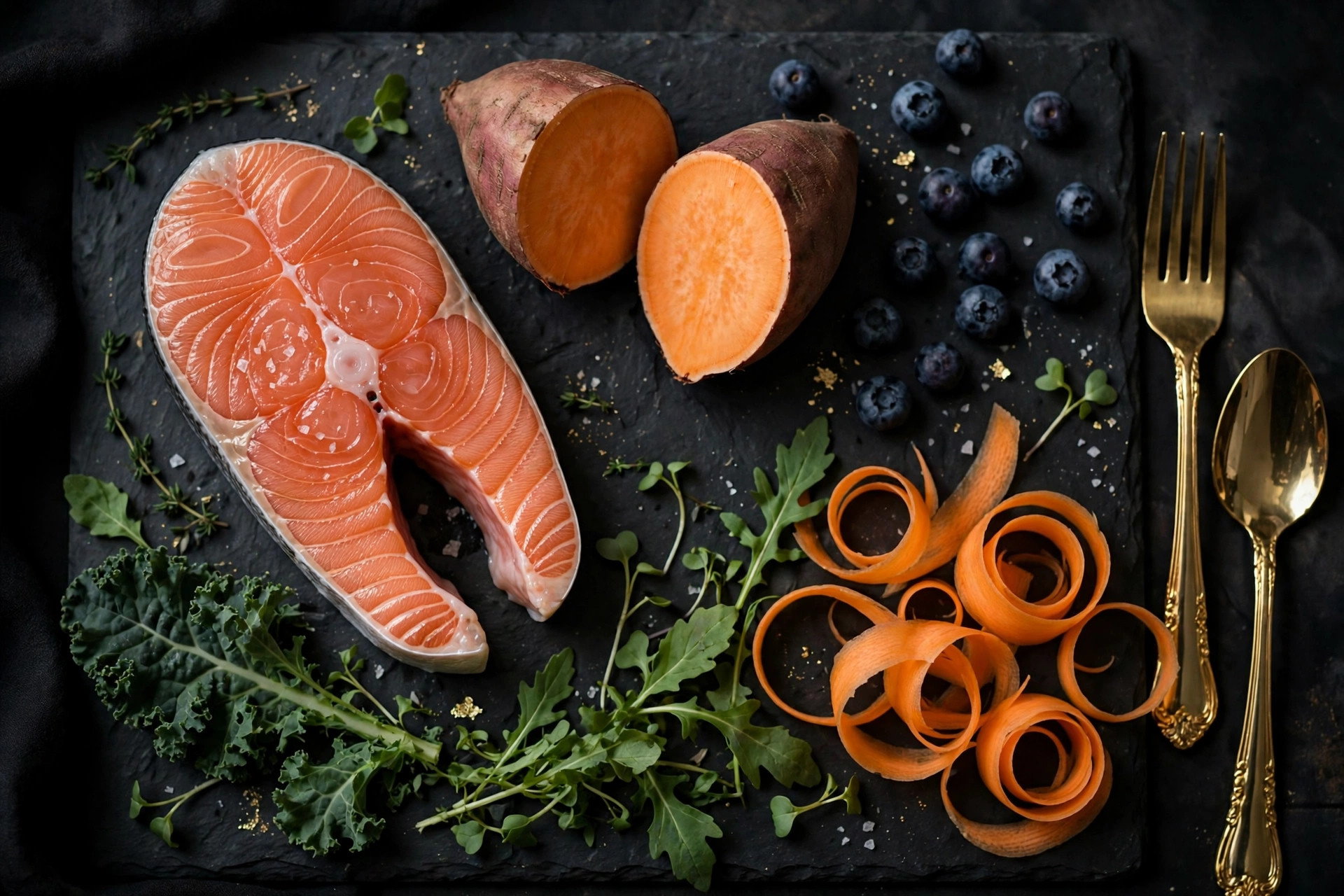
Read the list for names, not poetry. Specific proteins, specific organs, specific oils. The vaguer the language, the less the maker is willing to commit to.
The Guaranteed Analysis, Translated
The guaranteed analysis is the label’s ledger — minimum protein, minimum fat, maximum fiber, maximum moisture — and it only makes sense once you account for water. Those percentages describe the food as it sits in the bag or the tin, water included. A dry food at about 10% moisture and a fresh or wet food at 75% moisture or more are barely speaking the same language.
The translation is simple division. To compare any two foods, convert each nutrient to a dry-matter basis: divide its percentage by what’s left after the moisture comes out. A wet food declaring 10% protein at 78% moisture is really offering 10 divided by 22 — about 45% protein on a dry-matter basis. A kibble declaring 26% protein at 10% moisture offers 26 divided by 90, roughly 29%. Side by side on the shelf, the kibble looks richer. On the only basis a body cares about, the wet food is denser by half.
Run that one calculation and the whole shelf rearranges itself. Foods that seemed modest reveal themselves; foods trading on a big protein number up front sometimes shrink. It’s the single most useful piece of arithmetic in pet nutrition, and it takes ten seconds.
The Adequacy Statement Is the Most Honest Line on the Bag
The nutritional adequacy statement tells you whether a food is complete, which life stage it suits, and how that was proven — read it before the ingredient list. It sits in small print, usually near the guaranteed analysis, and it carries more truth per word than everything on the front of the bag combined.
Look for the words “complete and balanced,” followed by a life stage: growth, gestation and lactation, adult maintenance, or all life stages. Then look for how the claim was earned. A food can be formulated to meet AAFCO’s nutrient profiles on paper, or it can be tested in animal feeding trials run under AAFCO protocols — for adult maintenance, that trial runs 26 weeks with real dogs eating the food. Formulation is respectable. A feeding trial is evidence.
The statement also exposes the impostors. A food labeled “for intermittent or supplemental feeding only” is not a dinner, whatever the photography suggests. It’s a topper, a treat, a mixer. Plenty of beautiful products live in this category honestly — the trouble starts when a household serves one as the main event, day after day, and nobody notices the small print.
Fresh, Gently Cooked and Raw: Three Formats, Three Trade-Offs
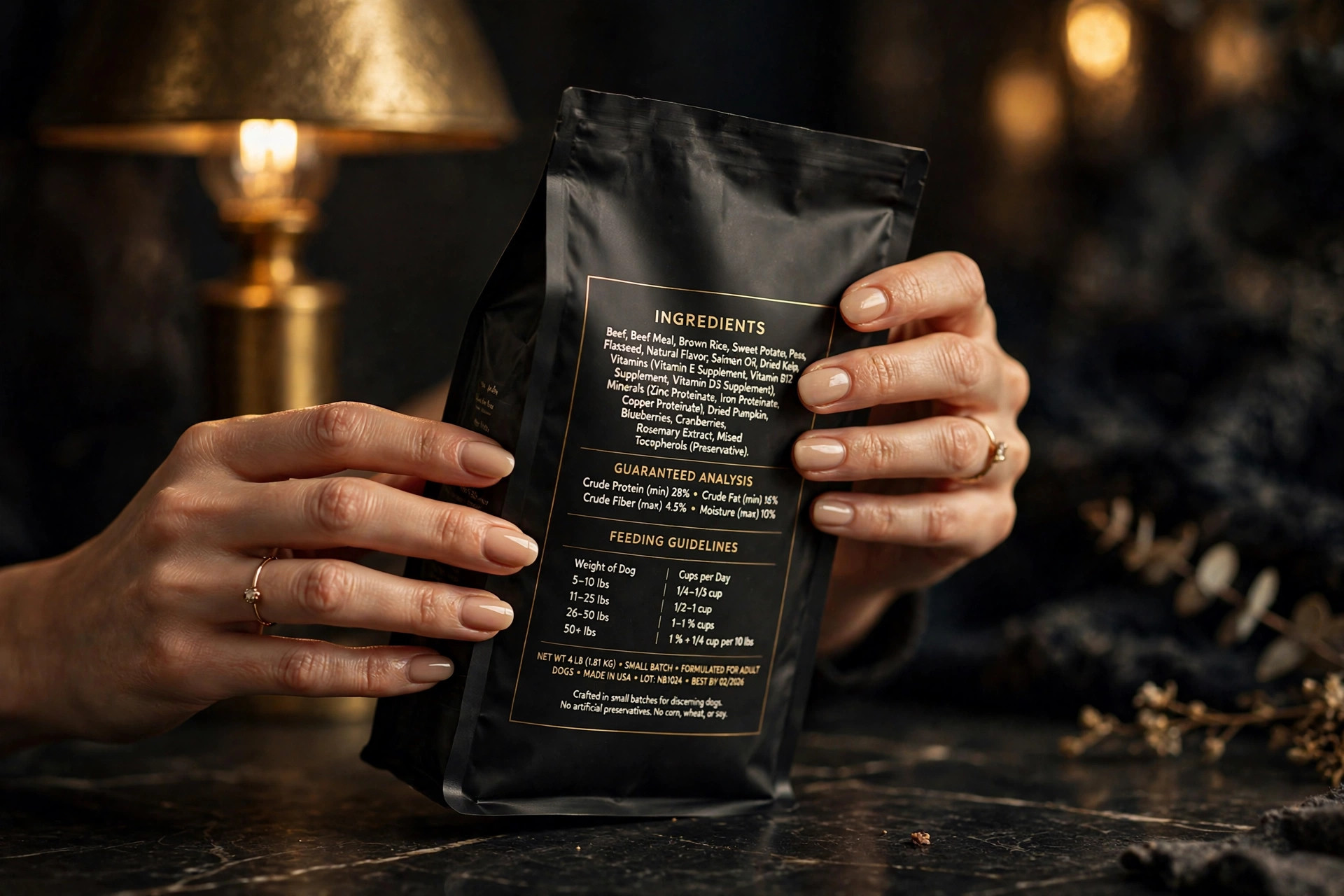
Fresh describes how a food is made and stored, not how good it is — a fresh food still stands or falls on its formulation. The fresh-cooked services changed the category’s feel: real-looking food, gently cooked, portioned, refrigerated, delivered on a schedule. Dogs tend to adore it. The trade-offs are a short fridge life, a firm price, and recipes that vary a great deal in rigor from one brand to the next. We weighed the full question in Premium Fresh Dog Food: Is It Worth It?, including what the subscription math looks like over a year.
Raw sits at the far end of the format spectrum, and it deserves a clear-eyed sentence. The U.S. Food and Drug Administration advises against raw pet food diets because raw meat can carry Salmonella and Listeria — a risk to the dog, and to everyone handling the bowl, the counter, and the dog afterward. Households that choose raw anyway owe it obsessive hygiene. Freeze-dried raw removes some of the mess, not the underlying question.
None of these formats excuses a food from the adequacy statement. Fresh, raw, baked, extruded — the format is the cuisine. The statement is the nutrition.
Storage is part of the recipe, too. Premium dry foods often use gentler preservation, which makes the bag a clock: once it’s open, air works on the fats, and the food is best finished within about six weeks, kept in its own bag — the bag’s lining is a better barrier than most bins — with the air pressed out and the top folded down. Fresh-cooked food asks more: fridge space, a few days per portion once thawed, and the discipline to freeze what the week won’t use. Buy the format your household can store properly. A magnificent food, kept badly, becomes an ordinary one.
Toppers, Broths and the Art of the Finish
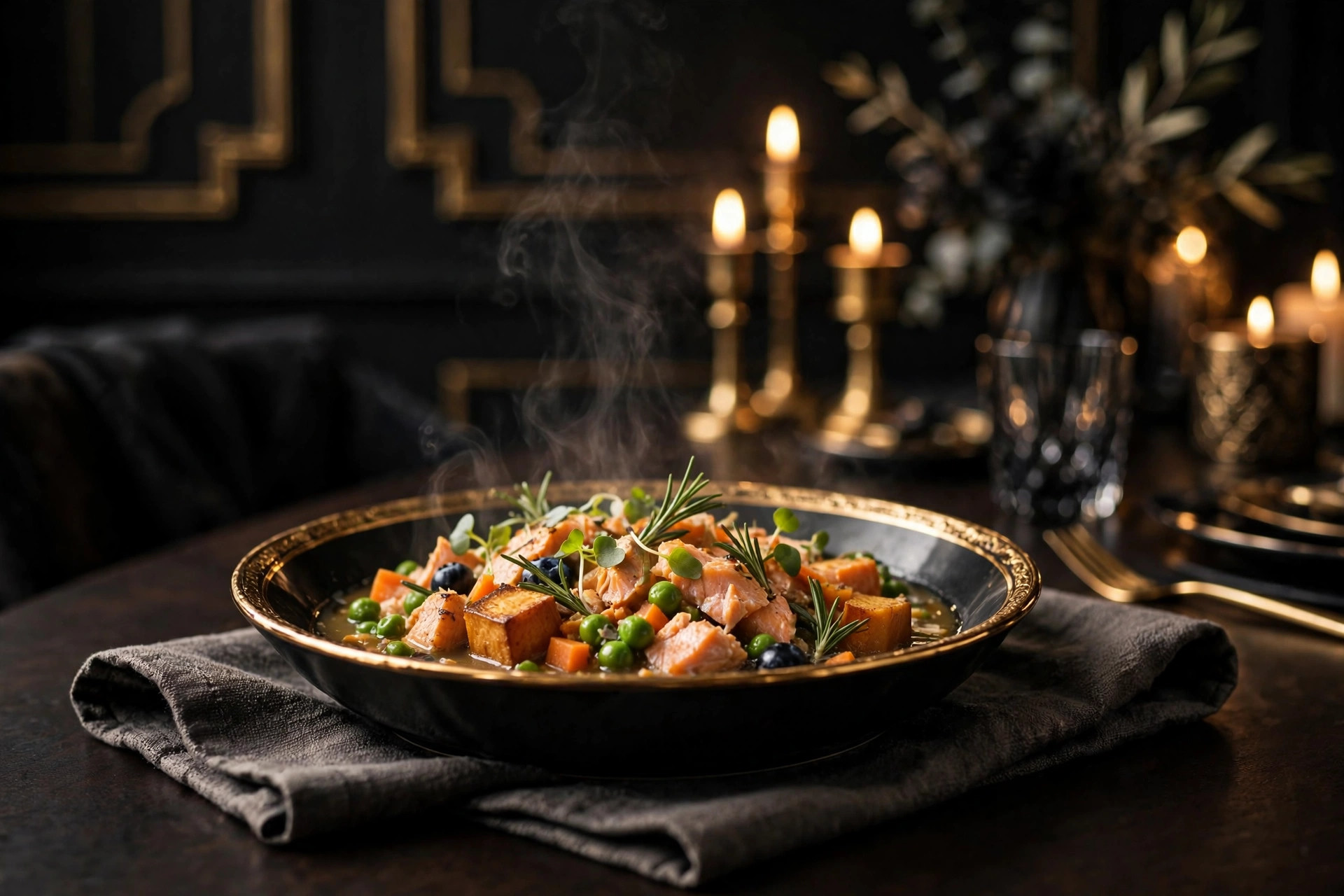
Toppers and broths are seasoning, not substance — lovely extras layered over a complete base. A warm pour of bone broth can persuade a picky eater, add moisture to a dry-food diet, and turn an ordinary Tuesday bowl into an occasion. Our guide to bone broth and meal toppers covers choosing and serving them well.
The discipline is proportion. Veterinarians often cite a simple rule of thumb: keep treats and extras near a tenth of the day’s calories, so the complete food underneath still does the nutritional heavy lifting. A topper that quietly becomes a third of the diet unbalances it just as quietly. Finish the dish, by all means. Just know which part is the garnish.
The Cost-Per-Day Math, Done Properly
Price per bag is a useless number; cost per day is the only figure that compares two foods honestly. Run it for a 20 kg adult dog eating roughly 1,000 kcal a day, and the formats separate fast.
| Food | The math | Cost per day |
|---|---|---|
| Premium dry food | 3,800 kcal/kg; an 11.3 kg bag at $92 feeds 263 g a day and lasts about 43 days | $2.14 |
| Fresh-cooked plan | Portioned subscription quoted per day for the same dog | $5.75 |
| A daily topper | About 55 kcal of finish added to the base food | $0.75 |
Stretch those numbers out. The dry food lands near $64 a month, about $781 a year. The fresh plan reaches roughly $173 a month and $2,099 a year — about 2.7 times the dry food, before a single topper. The topper habit adds around $23 a month, and at 55 kcal it spends about 5% of the day’s calorie budget, comfortably inside the tenth-or-so guideline above.
The method matters more than these particular figures, because prices move. Find the calories per kilogram on the label. Divide your dog’s daily calories by that number to get the daily ration in kilograms. Divide the bag’s price by how many days it lasts. Now any two foods — any formats, any brands — can be compared on one honest line, and “expensive” becomes a number instead of a feeling.
Some Foods Are Never Premium — Just Toxic
No presentation rescues a toxic ingredient: grapes, onions, chocolate, and xylitol are dangerous to dogs at any price point. This matters more in premium households than anywhere, because the gourmet habit is sharing — a little of what you’re having, folded into the bowl. Cooked sauces carry onion and garlic. Elegant desserts hide raisins and chocolate. Peanut butter, the classic topper, is sometimes sweetened with xylitol, which is harmless to people and perilous to dogs.
The rule is simple. Before any human food becomes a finishing touch, check it like you’d check a guest list.
Not sure whether a “people food” is safe for your dog? Eaoae’s toxic foods list for dogs is a free safety reference covering the foods dogs must never eat — worth a look before anything from your plate becomes a topper.
Complete the Ritual: The Bowl Is One Course of Care
A fine diet announces itself in the coat — which is why nutrition and grooming belong in the same conversation. Feed a dog well for a season and you’ll see it: gloss, suppleness, a coat that takes light the way this Gordon Setter’s does. The bowl does the inside work. The brush reveals it.
That pairing is the house philosophy here. Premium care isn’t a single purchase; it’s a rhythm of small, done-properly rituals — the measured meal, the warm topper, the unhurried groom. Our complete guide to the luxury grooming ritual at home lays out the other half of the routine, step by step.

Questions Worth Asking Any Premium Brand
A serious brand answers hard questions in writing — starting with who formulates the food and how it was tested. The World Small Animal Veterinary Association’s Global Nutrition Guidelines suggest asking exactly this sort of thing: does the maker employ a qualified nutritionist? Where is the food produced? What does quality control look like, recipe to recipe?
Add three of your own. Was the food substantiated by feeding trials, or formulated on paper? Will the company tell you the calorie content per cup, plainly, without a scavenger hunt? And when you write to them, does a knowledgeable human write back? Premium pricing buys many things. Candor should be the first of them. A brand that goes foggy under simple questions is selling the fog at a markup.
Frequently Asked Questions
Is premium dog food actually better than standard dog food?
Not automatically. Premium is a market position, not a nutritional grade, and no regulator defines it. A premium food earns its price through verifiable things — a feeding-trial adequacy statement, named ingredients, a qualified formulator — not through the word itself. A modest food with strong answers can outrank a gorgeous one with none.
What does “human-grade” really guarantee?
It guarantees sourcing and handling: every ingredient fit for human food, processed and transported under human food rules, in a facility permitted for human food production. It’s the strictest label claim in the category. It doesn’t guarantee the recipe is complete, balanced, or right for your dog — that’s the adequacy statement’s job.
How much more does fresh dog food cost than premium kibble?
In the worked example above, about 2.7 times as much: $5.75 a day against $2.14 for a 20 kg dog, roughly $2,099 a year versus $781. Your numbers will differ by brand and dog, but the gap between fresh subscriptions and quality dry food is consistently wide. Run the cost-per-day method with your own labels before deciding.
Are meat by-products a sign of a cheap food?
No. By-products are mainly organ meats — liver, kidney, spleen — which are rich in nutrients dogs need. Named by-products from a named species are a perfectly respectable ingredient. Treat vagueness as the warning sign instead: unspecified “meat” anything tells you the maker won’t commit.
Can toppers and bone broth replace part of the main food?
They shouldn’t. Toppers and broths are extras, and most are labeled for supplemental feeding only. Keep them near a tenth of the day’s calories — the topper in our example used about 5% — so the complete food underneath remains the nutritional foundation of the diet.
This article was created with AI assistance and reviewed by our editorial team before publishing.
 Feeding an Irish Wolfhound, the Gourmet Way
 Bone Broth and Meal Toppers: A Gourmet Finishing Touch
 Premium Fresh Dog Food: Is It Worth It?
Leave a Reply