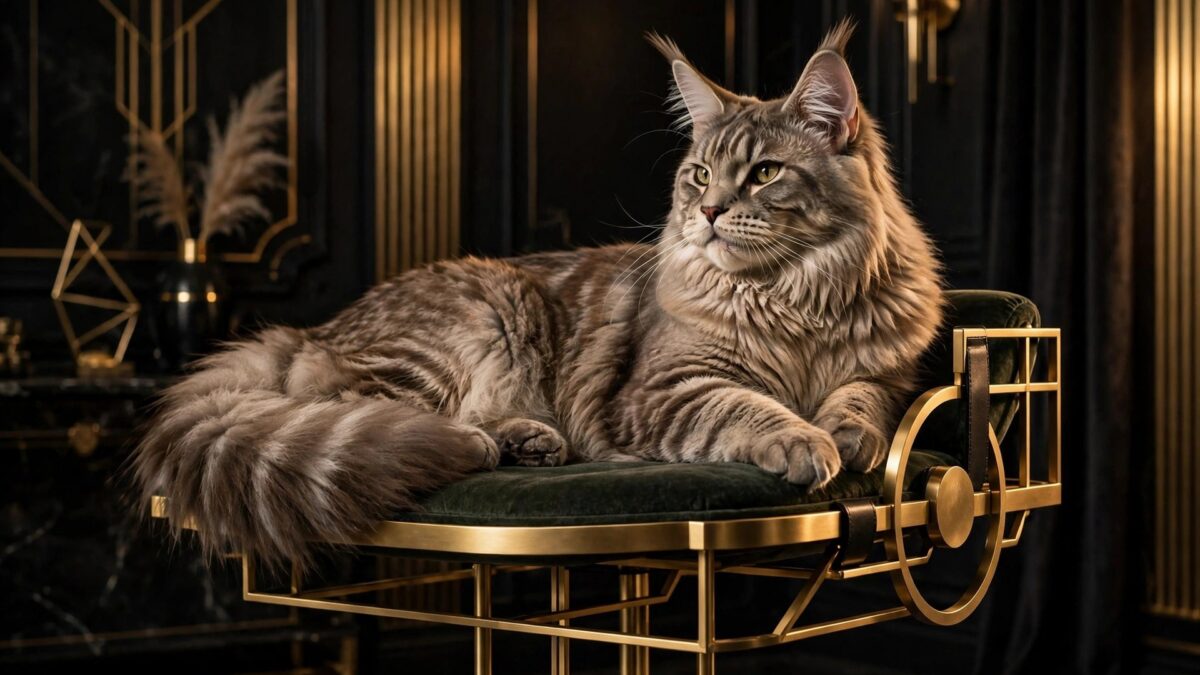
The short answer: designer cat furniture works for a Maine Coon only when it is built at Maine Coon scale — wide perches, thick posts, and joinery that doesn’t wobble under a long, heavy cat. Choose solid wood or heavy moulded pieces with washable natural-fibre cushions, anchor tall pieces to the wall, and treat anything dainty as decoration your cat will ignore.
There is a particular kind of disappointment that comes from unboxing a beautiful cat tree, setting it against the wall like a piece of sculpture, and watching your Maine Coon attempt one perch, feel it shift under him, and never touch it again. Cats read furniture with their bodies. A wobble is a review — and it is a one-star review, delivered instantly and permanently.
Maine Coons make the stakes higher. This is a big, long-bodied breed that likes height, likes to stretch out fully when it sleeps, and lands from a jump with real weight behind it. Furniture designed for an average cat asks a Maine Coon to fold himself into spaces that were never cut for him. He won’t complain. He’ll simply choose the top of your bookcase instead, which is his way of telling you the brief was missed.
Start with the measurements that matter
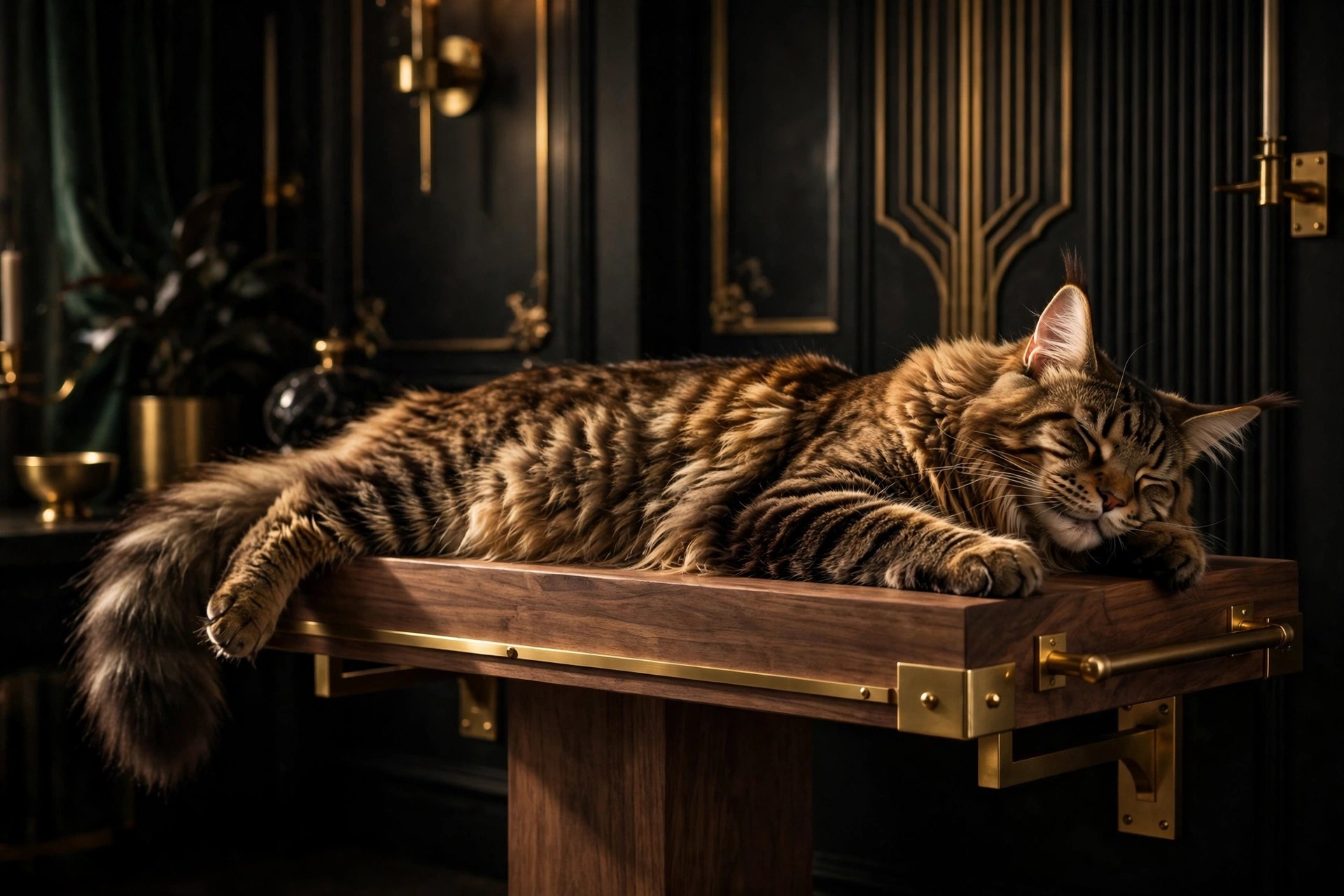
Before you look at finishes, look at dimensions. A sleeping perch for a Maine Coon should be wide enough for the cat to lie at full stretch without a paw dangling — in practice, look for perches noticeably wider than standard cat-tree platforms, and check the listed measurements rather than trusting product photos, which are usually shot with a much smaller cat.
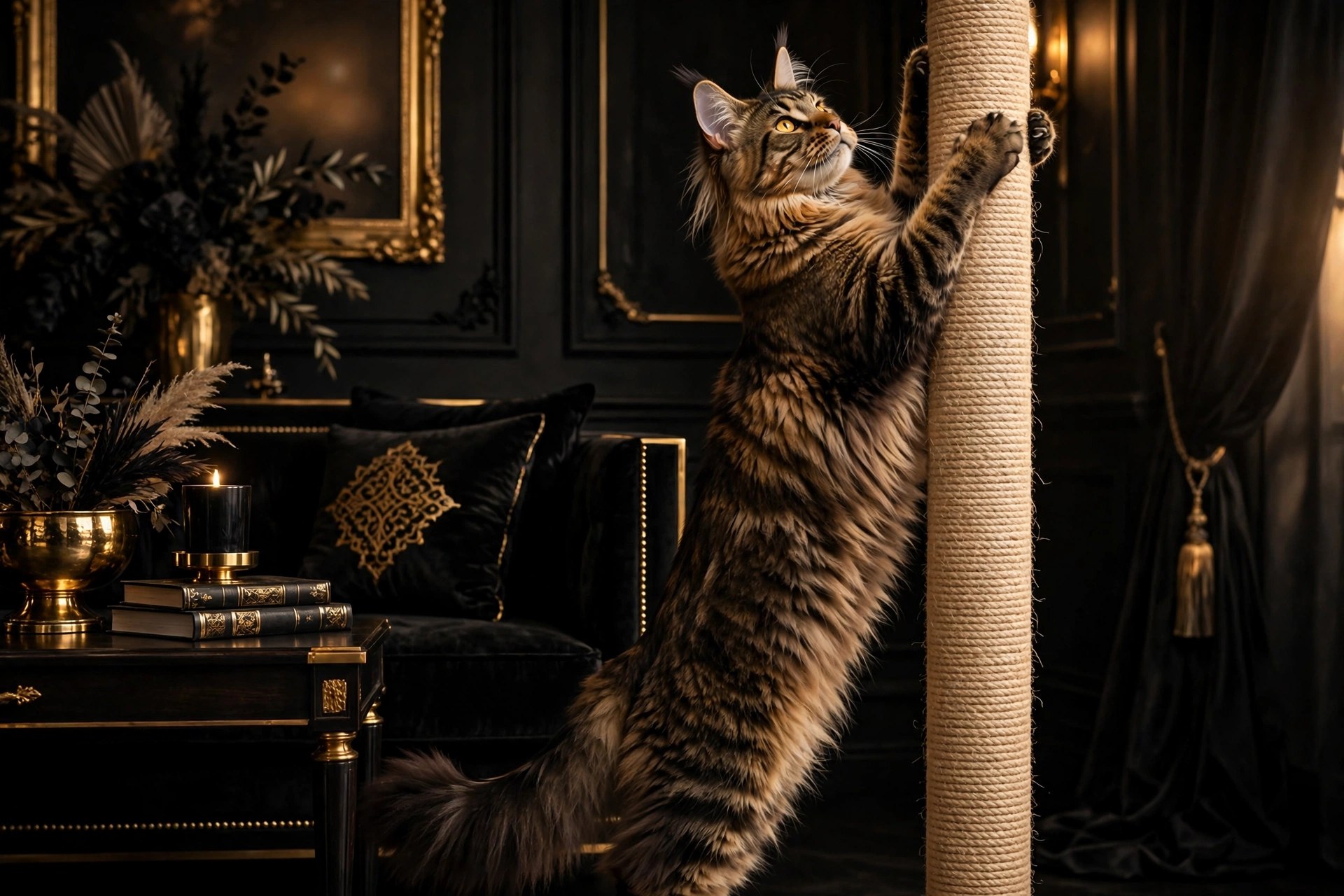
Scratching posts need the same thinking. A Maine Coon stretches tall when he scratches, so a short post forces a crouch and gets abandoned for your sofa arm, which is conveniently the right height. Tall, thick posts wrapped in tightly bound sisal or sisal fabric hold both his interest and his weight when he leans in.
Then do the wobble test in your head: read the base dimensions. A tall piece on a narrow base is a piece waiting to rock. Wide, heavy bases and wall-anchoring straps aren’t unglamorous extras. For a cat of this size, they’re the engineering that makes the design usable at all.
Materials that age gracefully
Solid wood is the connoisseur’s default for a reason. It carries weight without flexing, it can be sanded and re-oiled when claws and years mark it, and it sits comfortably among real furniture rather than apologising for itself. Heavy moulded plywood with a quality veneer comes second — lighter, often more sculptural, still honest under load.
Upholstery is where discernment pays. Wool and heavy cotton cushions in natural tones suit the breed’s drama and can be removed and washed, which matters because a Maine Coon’s coat is generous and it goes everywhere. Velvet looks sublime for a month and then carries a permanent fur overlay. If you love it, choose it for a cushion cover you can strip and clean, not for the structure itself.
What to pass on: particleboard under a thin carpet skin, which sags and sheds; plastic platforms that flex audibly; and anything glued together with no visible fixings you could tighten later. A Maine Coon will find the weak joint in a piece the way water finds a crack.
A Maine Coon does not test furniture the way you do. He lands on it from a height, at speed, trusting it completely — design for that moment, and the piece will never disappoint either of you.
The pieces worth considering
A wall-mounted perch run
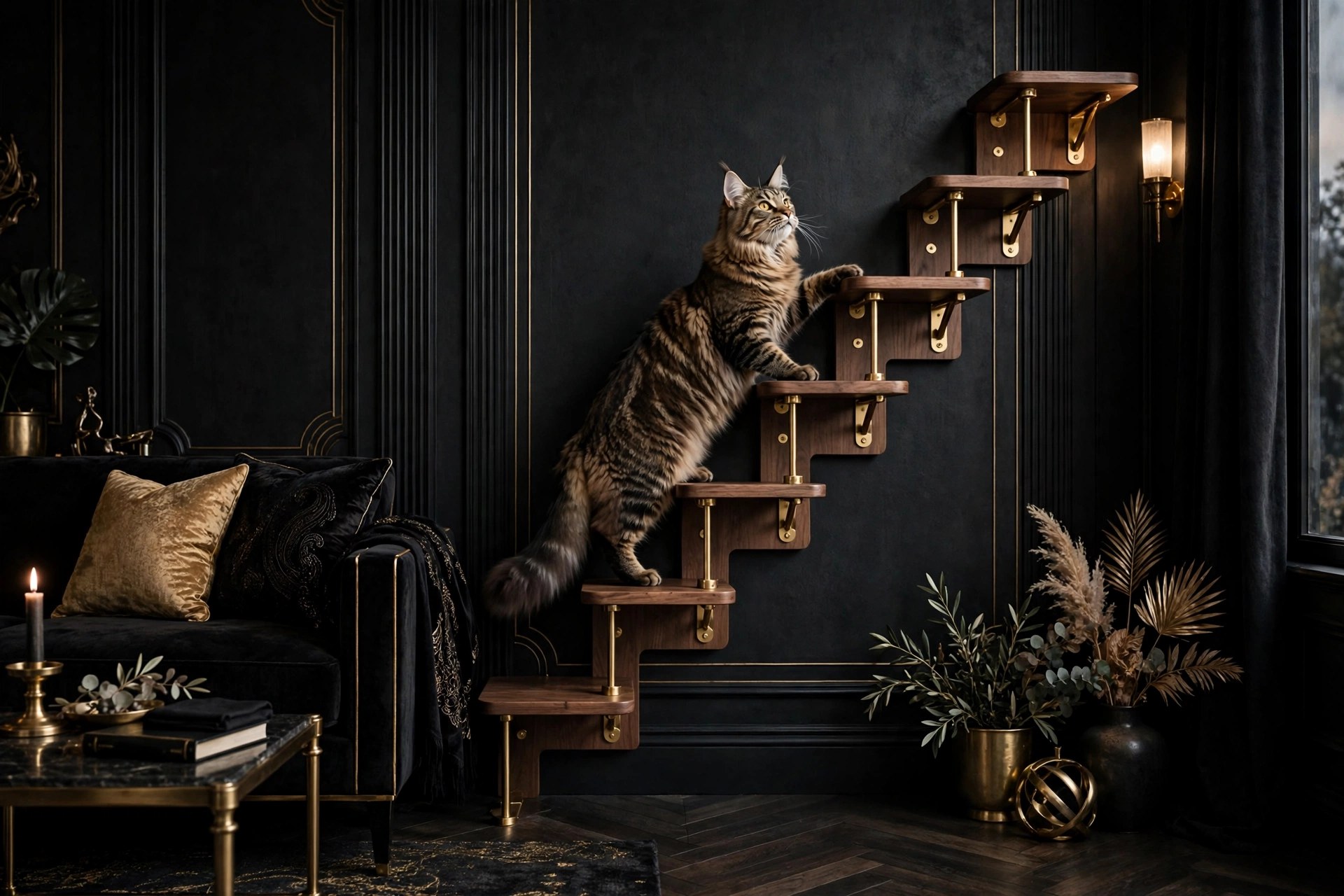
A sequence of wide wall shelves, stepped so the cat can climb in stages, gives a Maine Coon the high route around a room that his instincts keep asking for. Mounted into studs or solid fixings, a perch run has no base to wobble at all, and it reads as architecture rather than pet equipment. Add a washable cushion pad to the sleeping shelf, leave the climbing shelves bare for grip, and place the top shelf where the cat can survey the room — that vantage point is the entire reward.
A sculptural scratching post
The tall post, done properly, becomes a room’s vertical accent: a heavy square base, a column wrapped in natural sisal, perhaps a solid-wood cap that doubles as a small lookout. It belongs near where the cat already likes to scratch and near where he sleeps, since the post-wake stretch-and-scratch is a fixed ritual. Put it in a corner he never visits and you have bought a monument, not a tool.
A low, long daybed
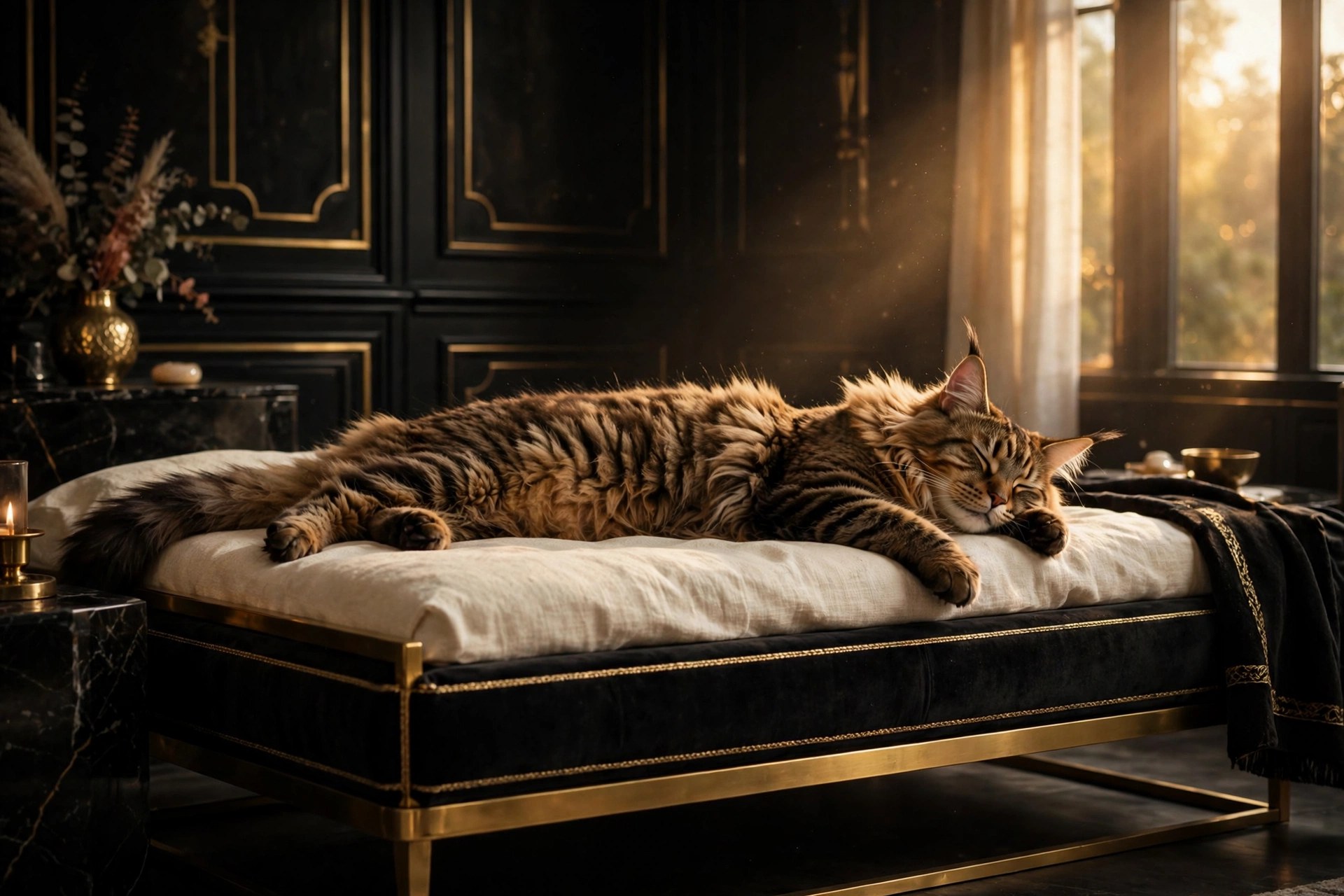
Not every Maine Coon wants altitude all day. A low daybed with a long cushion — long enough for the full stretch, low enough for an older cat’s joints — placed in a patch of afternoon sun is often the most-used piece in the house. Raised wooden frames with a washable, natural-fibre cushion keep it in the language of your other furniture. This is also the kindest first piece for a senior cat, who has earned the sun patch without the climb.
Care that keeps it beautiful
Fine materials ask for small, regular rituals rather than heroic restoration. Sisal wrapping can be trimmed where individual fibres lift, and a post that has been loved to ruin at one height can often be re-wrapped rather than replaced — one more reason to choose pieces built with fixings you can undo. Solid wood wants a wipe with a dry cloth, an occasional pass of furniture oil where claws have dulled the finish, and no harsh sprays near the places your cat rubs his cheeks, which is to say, everywhere he can reach.
Cushions earn a weekly shake outdoors and a wash on the rhythm the fabric allows. With a long-haired breed, the difference between furniture that looks cherished and furniture that looks tired is rarely the piece itself. It is whether the loose coat is lifted before it mats into the weave. Keep a lint brush where you actually sit, not in a drawer of good intentions, and the ritual takes a minute.
Once a season, put a hand on every tall piece and push. Tighten what has loosened, check the wall anchors, and look at the underside joints. Ten quiet minutes of maintenance is what separates a ten-year piece from a two-year one.
What the money actually buys
It is fair to ask what a higher price returns here, because plenty of expensive cat furniture is merely ordinary furniture in a nicer photograph. At the considered end of the market, the money buys three unglamorous things: thicker material that does not flex, joinery that can be tightened and repaired, and replacement parts — a new cushion, a re-wrap of sisal — that extend the piece’s life instead of ending it. It also buys dimensions drawn for large cats rather than scaled down from a dog kennel or guessed from a stock photo.
What it should never buy is fragility dressed as refinement: spindly legs, lacquer that chips at the first claw, white upholstery with no removable cover. Those pieces are designed for the photograph, not the cat. A Maine Coon will deliver his verdict within the week, and he does not offer refunds.
Placing it like you mean it
Beautiful pieces fail in the wrong location. Cats choose furniture for the same reasons you do: warmth, a view, and proximity to the household’s life. A perch beside a window, a daybed in the room where you spend your evenings, a post near the sleeping spot — these placements work with feline priorities instead of against them.
One more placement rule, learned the hard way by many owners: keep at least one route through the room at cat height uninterrupted. A perch run that dead-ends at a wall teaches the cat the route is a trap. A run that continues — shelf to bookcase top to window perch — becomes a highway he uses daily, and a highway gets maintained by its traveller.
Give a new piece time before judging it. Cats are suspicious of novelty in their territory. A cushion that carries the scent of the old favourite blanket, a few treats served on the new perch, and a week of patience will tell you more than the first day’s indifference.
Bottom line
For a Maine Coon, luxury cat furniture is not about ornament. It is about scale, stability and materials that improve with age — wide perches he can truly stretch across, posts tall enough for the full ritual, solid construction that never betrays his trust with a wobble. Buy fewer pieces, buy them at his dimensions, anchor anything tall, and keep the cushions washable. Do that, and the furniture stops being pet equipment scattered through your home. It becomes part of the home — which, if you ask the cat, is what it always was.
This article was created with AI assistance and reviewed by our editorial team before publishing.
 A Designer Vivarium for the Panther Chameleon
 Luxury Dog Beds That Look Like Furniture
 8 Designer Dog Collars & Leashes That Double as Jewelry
Leave a Reply