
The best luxury dog beds that look like furniture use sofa silhouettes, raised wooden frames, bolstered sides, and tailored upholstery to blend with living rooms. For large spotted breeds like the Dalmatian, choose a low-profile frame, washable performance fabric, and supportive foam thick enough to protect hips and elbows during long, elegant stretches.
A dog bed does not have to look like an afterthought tossed in a corner. It can sit beside your sofa and belong there. Same clean lines. Same rich textures. A place your dog chooses, and a piece you actually enjoy looking at every day.
That shift matters most in open living spaces, where everything is on view. A flat cushion in a loud print pulls the eye for all the wrong reasons. A framed bed in linen, velvet, or warm wood does the opposite. It quiets the room.
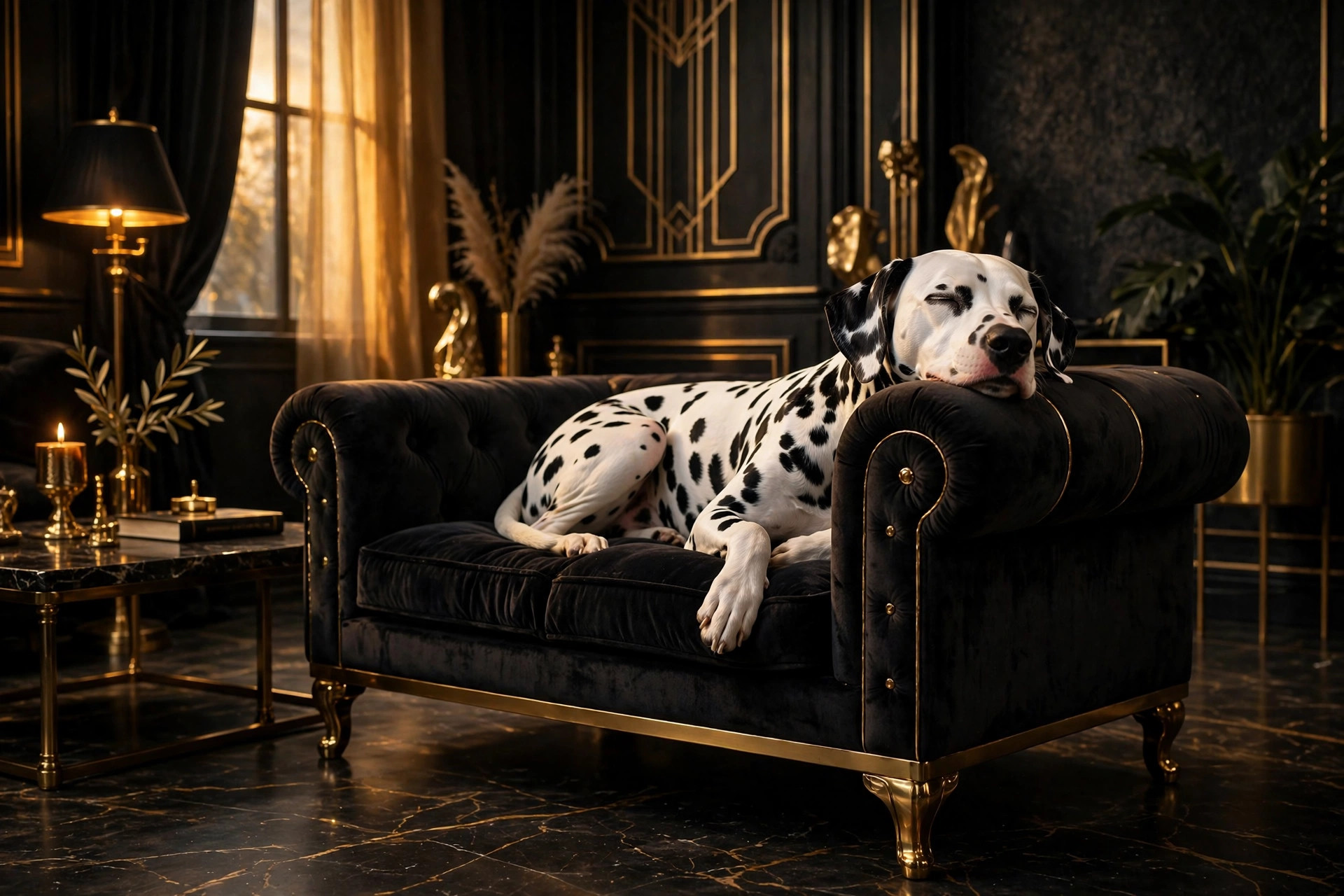
A Dalmatian stretched out on a low sofa-style luxury bed with black upholstery and gold-toned legs
Why a Furniture-Style Bed Changes the Room
Most standard beds sag, bunch, and drift across the floor. Within months the edges curl and the filling goes lumpy. You end up tucking it behind a chair when guests arrive, which tells you everything.
A furniture-style bed holds its shape because it has structure. A frame, a back, raised sides. Those details keep the cushion in place and give the bed a finished edge, so it reads as part of the seating rather than bedding that escaped the laundry room.
What Makes a Bed Look Like Real Furniture
Copy the cues your own furniture already uses. Legs. Piping. Tufting, if that suits your taste. A back that is a touch higher than the sides. When a dog bed borrows those details honestly, it stops looking like a pet product and starts looking like a small, very loved sofa.
Silhouette and Scale
Proportion is where most beds fail. Too low and wide, and it looks like a mat with ambitions. Too tall, and a dog has to climb rather than step in, which older dogs will quietly refuse to do.
Look for a low entry point with a taller back. That profile suits a Dalmatian well. The breed is long, lean, and leggy, and it tends to stretch out fully rather than curl into a tight ball. A rectangular or chaise shape fits that habit far better than a round nest bed.
Measure your dog stretched out, nose to tail base, then add room to spare. Measure the spot in the room, too. A bed that fills its corner with a small margin around it looks placed. One that blocks a walkway looks like clutter, no matter how pretty the fabric is.
Materials That Belong in a Living Room
Wood frames in walnut, oak, or matte black give the strongest furniture feel. Rattan and woven cane suit lighter rooms. For upholstered styles, tight-weave linen, bouclé, and short-pile velvet read as refined without shouting for attention.
Ask one blunt question before you buy: can the cover come off? If the answer is no, walk away. A beautiful bed you cannot wash is a short-lived bed, especially with a short-coated breed that sheds fine white hairs year-round.
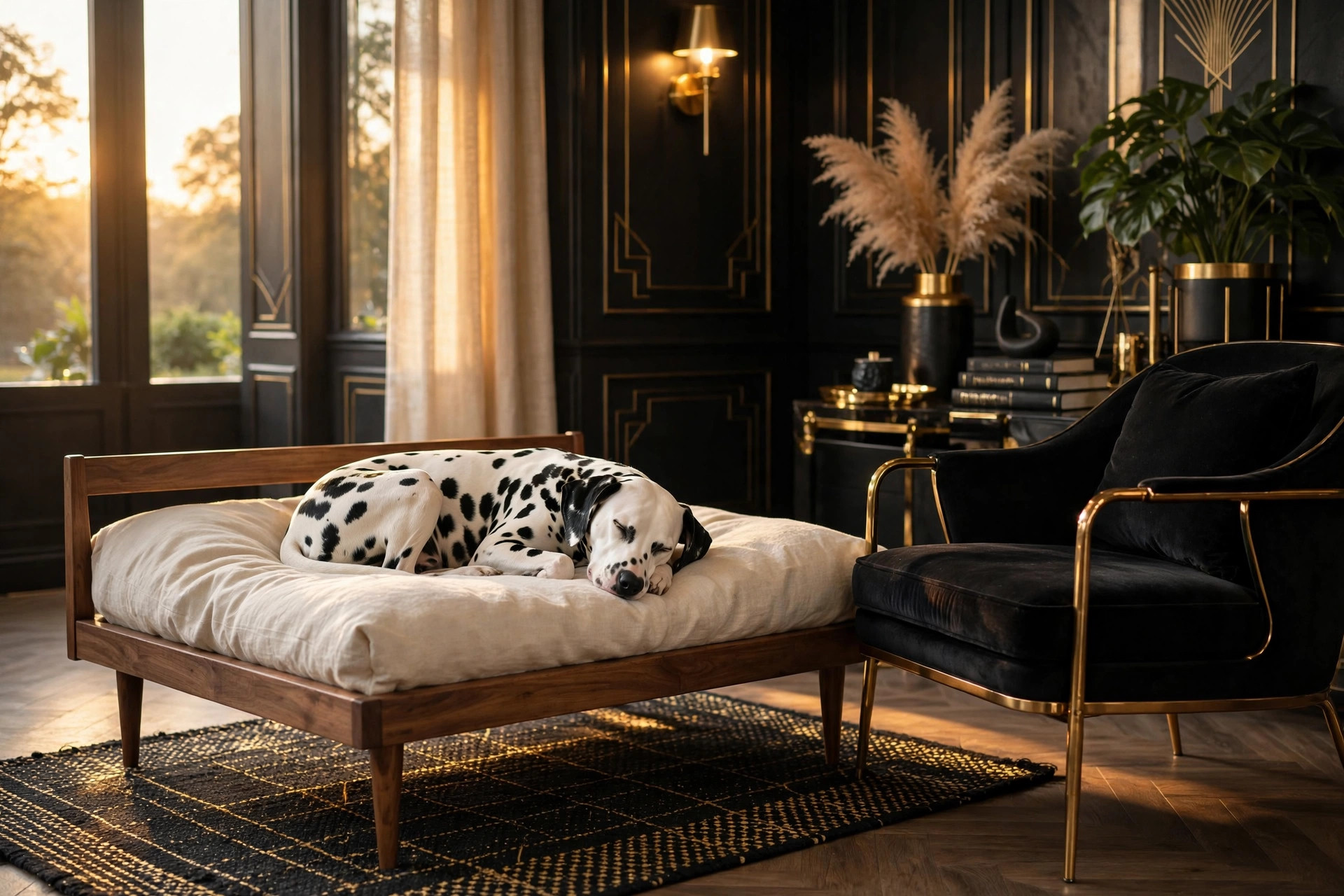
A Dalmatian resting its chin on the firm arm of a tailored, furniture-style dog sofa in a refined living room
Color, Pattern, and the Dalmatian Factor
A Dalmatian is graphic by nature. Black spots on white, or liver spots on white, against a solid bed create a striking picture without any effort. Deep charcoal, warm black, camel, and cream all flatter that coat. So does a rich forest green, if your room can carry it.
Busy patterns are risky here. The coat is already the pattern. A solid or lightly textured fabric lets the dog be the focal point, and loose hairs show less on mid-tone, heathered weaves than on flat black or pure white.
Styles Worth Considering
Three shapes cover most rooms and most dogs. The right one depends on how your dog sleeps and how much floor you can honestly give up.
The Mini Sofa
This is the classic choice, and for good reason. Rolled or straight arms, a firm back, and a deep seat cushion mimic a real loveseat in miniature. Dogs that lean, prop their chin, or sleep on their side tend to take to it fast.
Choose squared arms if your style leans modern. Rolled arms suit traditional rooms. Either way, check that the arms are sturdy enough to hold a resting head without collapsing inward over time.
The Raised Platform Bed
A low wooden frame with a tailored cushion on top. Simple, architectural, easy to dress with a folded throw. Air can move under the frame, which helps in warmer rooms and makes cleaning underneath far less of a chore.
This style suits dogs that sprawl flat and overheat in plush nests. It also suits minimalist rooms, where a heavily upholstered bed would feel fussy. Add a low bolster at one end if your dog likes a pillow but not a full rim.
The Chaise and Daybed
One raised end, one open end. A chaise gives a long dog a built-in headrest while leaving the rest of the body free to stretch. For a Dalmatian photographed against black and gold, few shapes look more deliberate.
Daybeds with three low sides work well pushed against a wall or under a window. They define a clear boundary, which some dogs respect more readily than an open mat. Just leave the open side facing the room, not the wall.
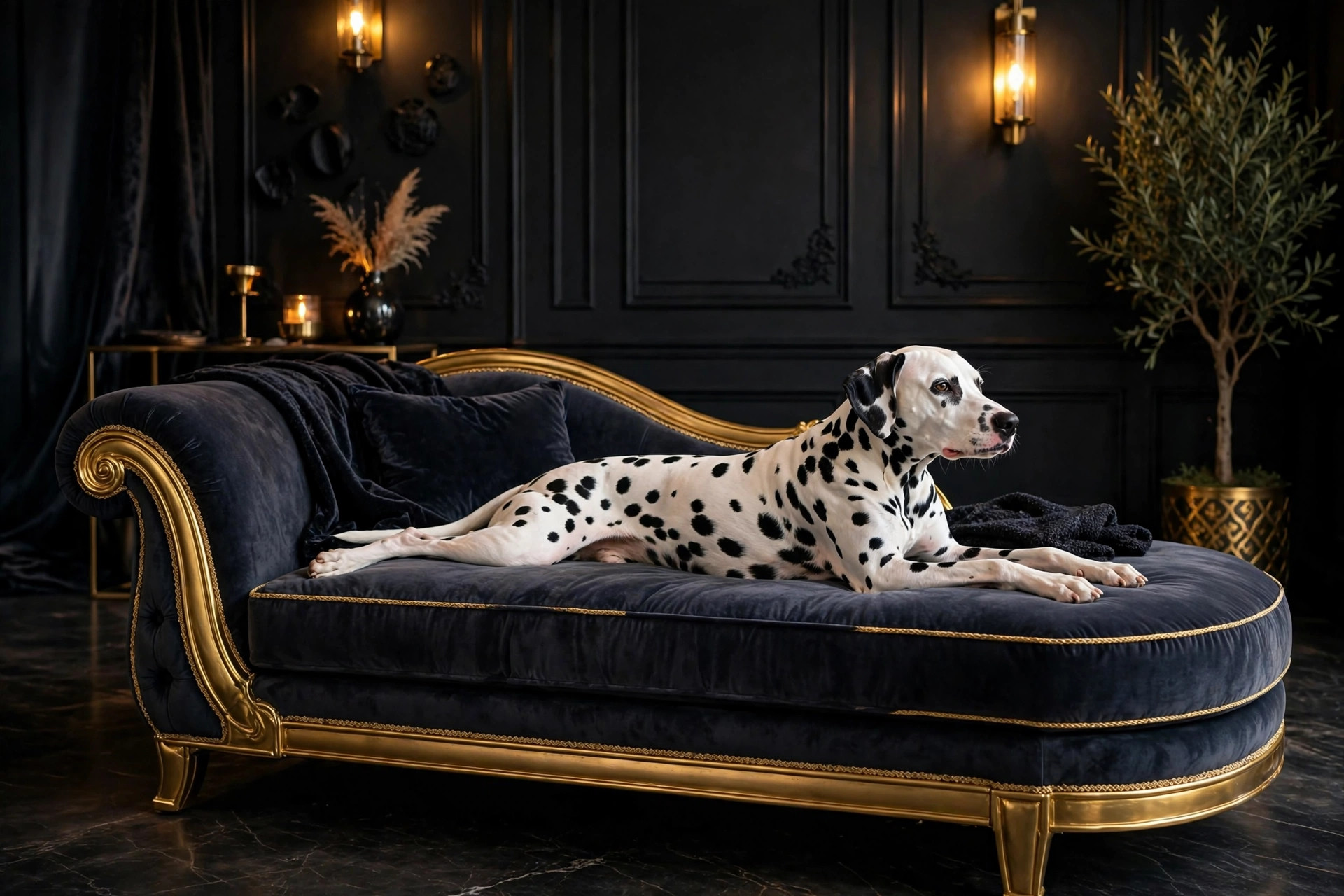
A Dalmatian sprawled on a chaise-style luxury bed with a raised headrest and deep, supportive cushion
Comfort Beneath the Tailoring
A pretty frame with poor filling is a prop, not a bed. Press the cushion hard with your hand. It should push back, slowly, and it should not let you feel the frame or the floor through it.
Memory foam molds to bony points like elbows and hips. High-resilience foam feels firmer and bounces back faster. Many better beds layer the two, with a supportive base and a softer top. That mix suits lean breeds, where there is less natural padding over the joints.
Support for Lean, Athletic Dogs
Dalmatians are built to move. Muscular, light on their feet, and restless until they are not. After a long run they drop hard and sleep deeply, often flat on one side with legs extended.
That sleeping style needs even support along the spine, not a hammock dip in the middle. If a cushion sags in the center within the first weeks, it will only get worse. A removable insert you can replace later extends the life of a good frame by years, which is the smarter luxury to pay for.
Bolsters, Backs, and Sprawlers
Not every dog wants to be enclosed. Curlers love high bolsters. Sprawlers hate them. Watch how your dog sleeps for a few nights before you commit to a shape.
- Side sleeper, legs out: flat platform or chaise, low sides
- Chin rester: mini sofa with firm, level arms
- Back leaner: a bed with a solid, padded back panel
- Burrower: add a loose blanket rather than choosing a cave-style bed
Sizing It for a Dalmatian
Adult Dalmatians are medium to large dogs with long lines. Most furniture-style beds marketed as medium will be too short once the dog stretches out. When in doubt, go a size up. A bed that is slightly generous looks lush. A bed that is slightly small looks like a mistake.
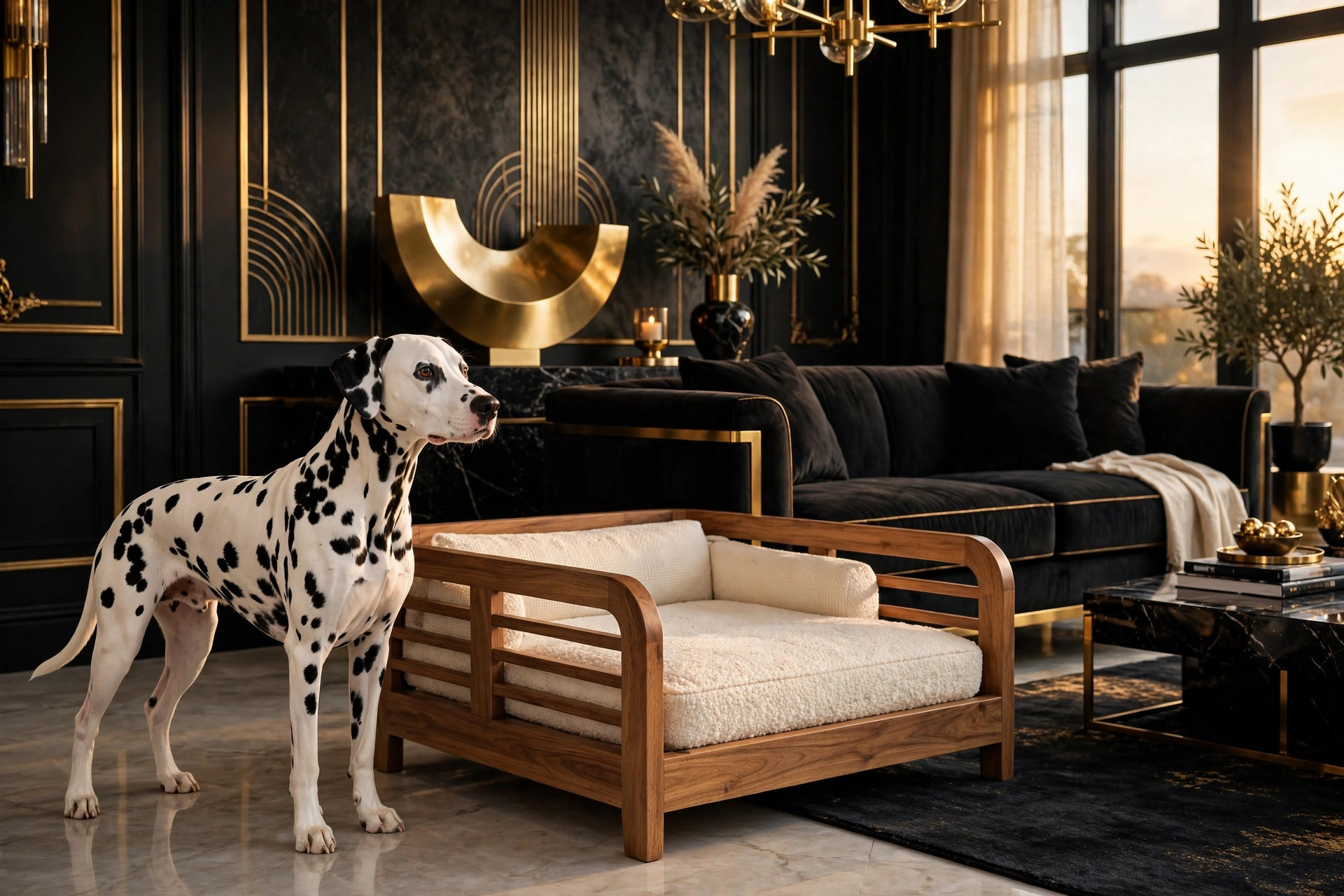
A Dalmatian beside a solid wood-frame furniture bed, sized to sit naturally alongside a full-scale sofa.
Check the inner sleeping surface, not the outer frame dimensions. Thick arms and backs can take up a surprising share of the listed size. Product pages sometimes list only the footprint, so read the inner measurements or ask the maker directly.
Care Without the Fuss
Luxury that demands dry cleaning will not stay luxurious for long. Removable, machine-washable covers are the baseline. A waterproof liner under the cover protects the foam from accidents, spills, and the occasional wet-paw return from the garden.
Short white hairs weave into bouclé and linen in a way that brushing alone will not fix. A lint roller helps for daily tidying, but the real answer is a cover that washes well and dries without shrinking. Wash it before the return window closes, if you can. That test tells you more than any product description.
How to Place It So It Looks Intentional
Put the bed where your dog already wants to be, then style around that reality. Near the main sofa, angled to face the room, works for social dogs. A quiet corner with a view of the door suits watchful ones.
Anchor it. A low rug under a platform bed defines the zone and stops the frame sliding on hard floors. Align the bed with nearby furniture lines instead of pushing it in at an odd angle. Small alignment choices are what separate placed from parked.
Finish with restraint. One folded throw, maybe a single toy basket beside it. Stop there.
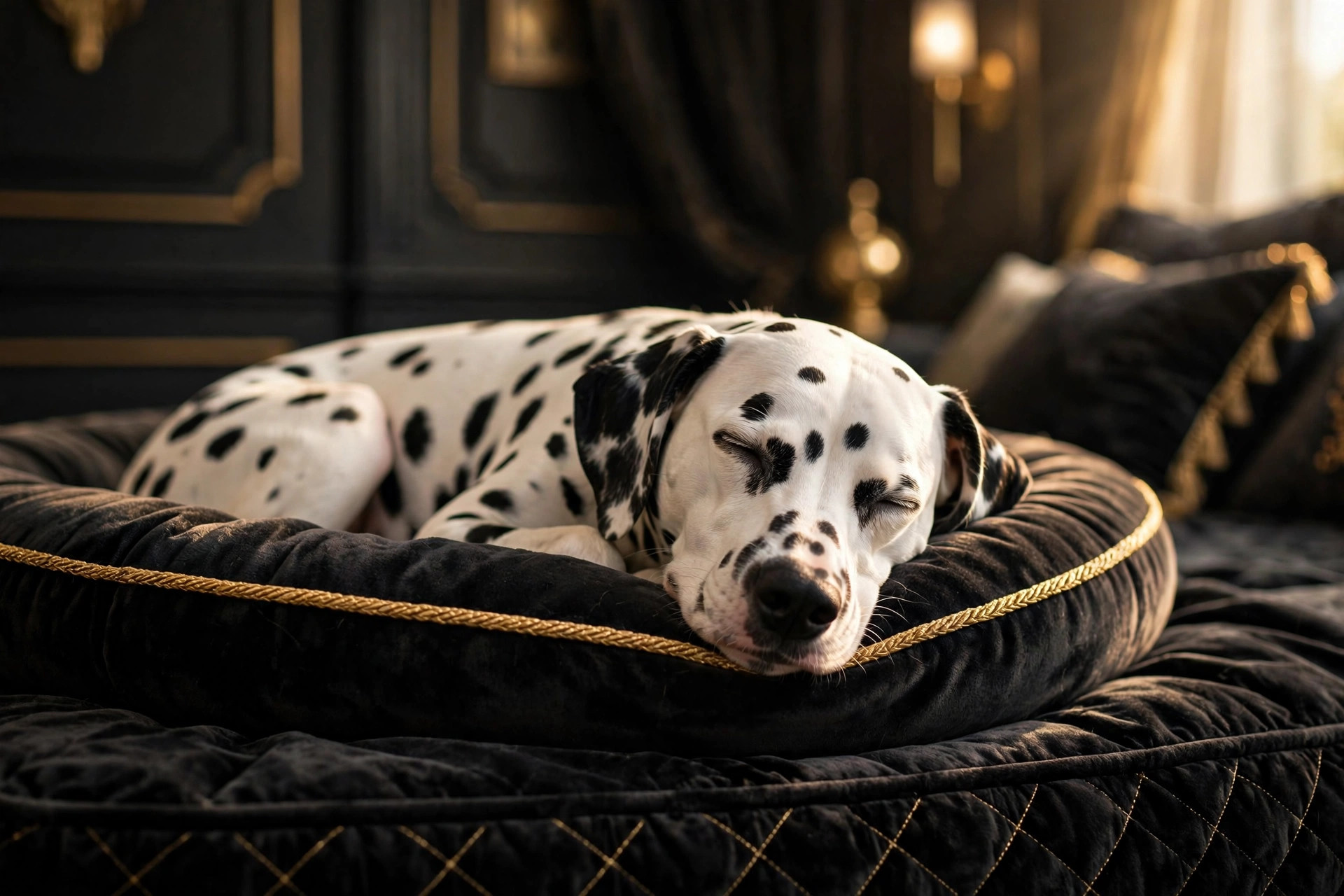
A Dalmatian settled on a raised platform bed styled with a folded throw beside the main sofa
Frequently Asked Questions
Are furniture-style dog beds worth the higher price?
They can be, if the frame is solid and the cushion insert can be replaced or washed. You are paying for structure, better fabric, and a piece that stays in your main living space for years. A cheap bed replaced often rarely ends up cheaper, and it never looks as good.
What size bed does a Dalmatian need?
Choose a large size and judge it by the inner sleeping surface. Your dog should be able to stretch fully on one side without hanging off the edge. If the measurements are close, size up. Long, lean breeds outgrow medium beds faster than their weight alone suggests.
Which fabric hides Dalmatian shedding best?
Mid-tone, heathered, tightly woven fabrics hide loose white and dark hairs better than flat black or pure white. Performance linen and textured weaves are strong choices. Whatever you pick, insist on a removable cover you can machine wash at home.
Do raised beds help older dogs?
A low raised frame can help by keeping a dog off cold floors and giving steady support. Height is the catch. Keep the entry low so stiff joints do not have to climb, and pair the frame with a thick, supportive cushion rather than a thin pad.
This article was created with AI assistance and reviewed by our editorial team before publishing.
 A Designer Vivarium for the Panther Chameleon
 Designer Cat Furniture Built for a Maine Coon
 8 Designer Dog Collars & Leashes That Double as Jewelry
Leave a Reply