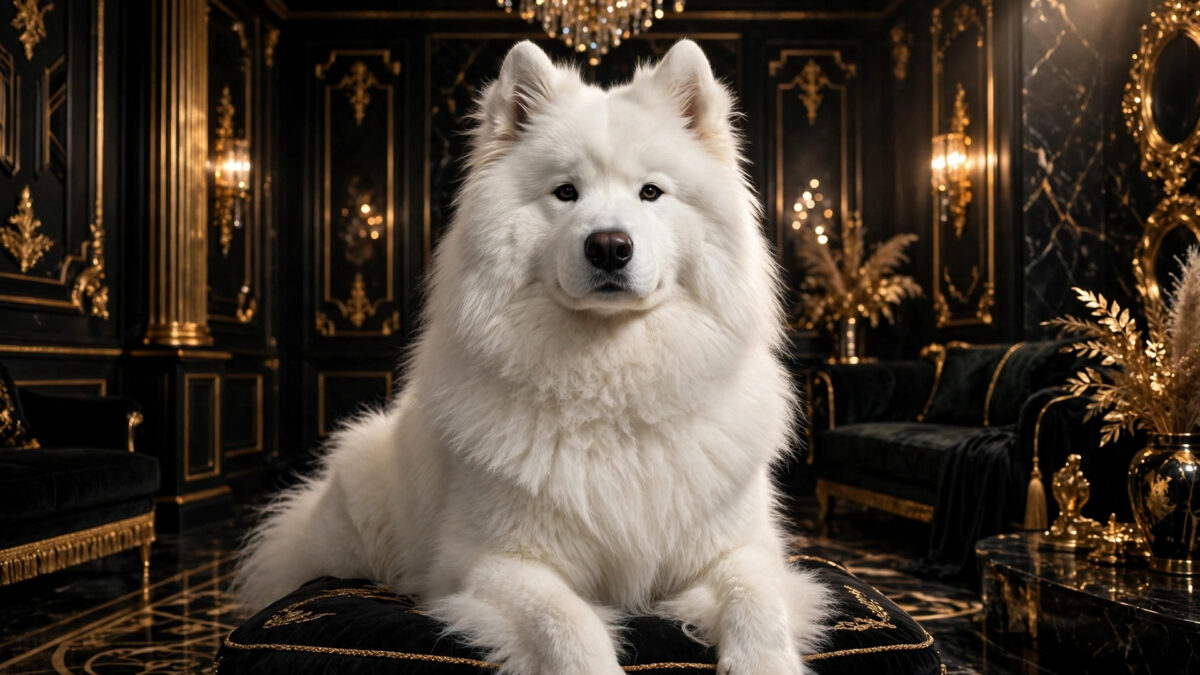
A Samoyed coat stays cloud-white and full with a slow, unhurried ritual: a thorough line-brush down to the skin, a careful bath only when the coat needs one, a complete dry, and patient attention to the feathering behind the ears and legs. Rushed grooming mats the undercoat. Gentle, regular sessions keep the famous Sammy smile framed exactly as it should be.
There is a moment, mid-brush, when a Samoyed leans into your hand and sighs. That sigh is the whole philosophy. This breed’s coat wasn’t designed for speed. It was built for Arctic work, dense and weatherproof, and it responds best to owners who treat grooming as an appointment rather than a chore. Twenty unhurried minutes, twice a week, will save you hours of mat removal later. It will also save the coat itself.
Know the coat you’re holding
A Samoyed wears two coats at once. The outer layer stands off the body in long, harsh guard hairs that shed dirt and water. Underneath sits a woolly undercoat, soft and close, the insulation that once kept sled dogs alive through Siberian nights. Sunlight gives the outer coat its silver tips. That’s the shimmer people stop you on the street to ask about.
Why does this matter for grooming? Because the two layers fail in different ways. The undercoat packs down and mats, quietly, right against the skin, while the top still looks presentable. Owners brush the surface, admire the fluff, and miss the felt forming underneath. Then a groomer finds it months later. The fix is a technique, not a product. It’s called line brushing, and it’s the heart of this ritual.
The ritual, step by step
Step one: line brush, in sections
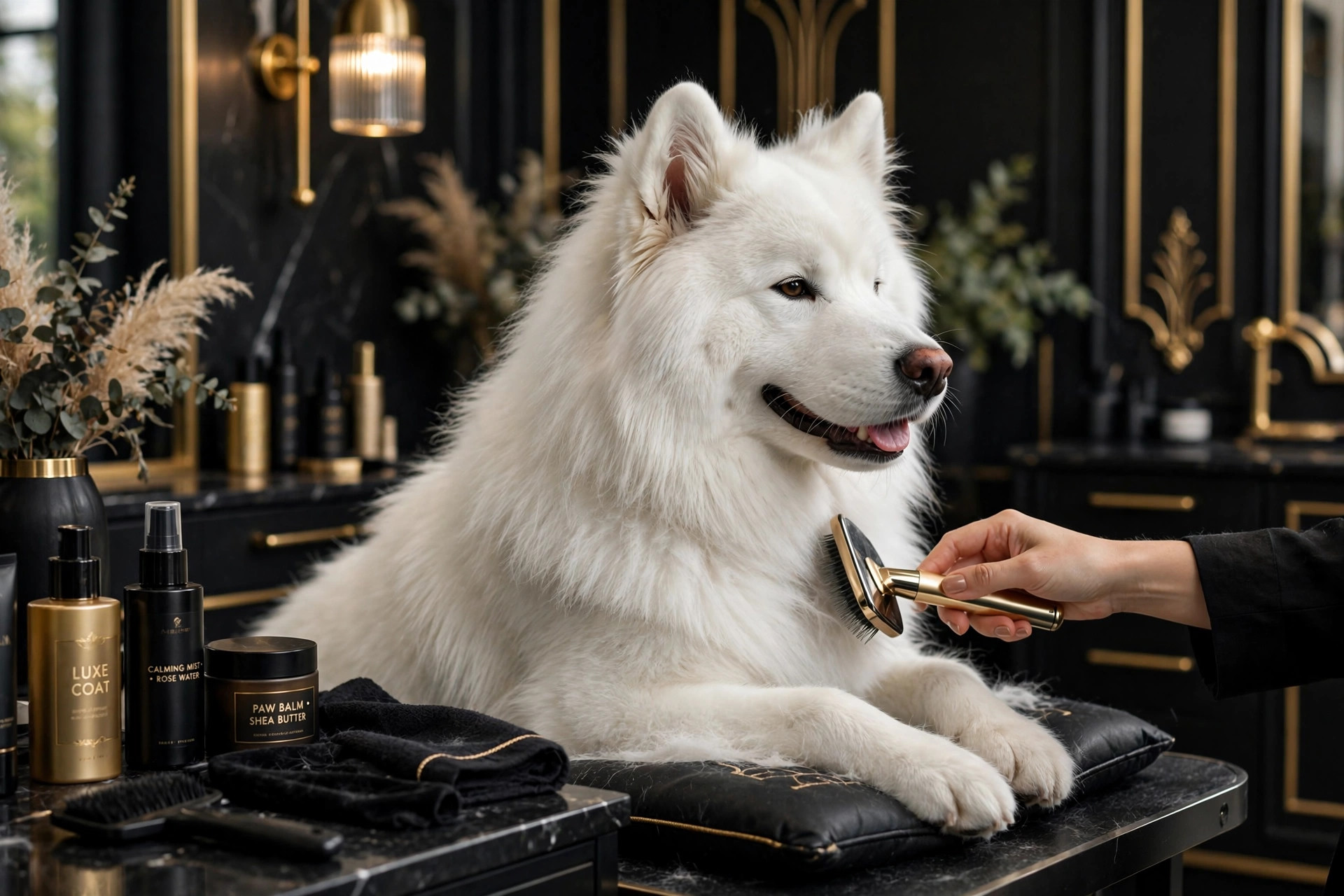
Part the coat with one hand so you can see skin. Brush the exposed line of fur outward, away from the body, with a slicker brush. Move up a finger’s width. Repeat. You’re working in rows, the way a tailor works a seam, until every section has been brushed from the skin out. Behind the ears, under the collar, and at the armpits deserve extra time. Friction lives there. So do mats.
Short on time? Do a quarter of the dog properly rather than all of him badly. Rotate sections across the week. A half-finished line brush beats a glossy skim every single time.
Step two: the comb check
Follow the brush with a steel comb, drawn gently through each finished section. The comb tells the truth. If it glides, you’re done there. If it snags, that spot needs the brush again, worked from the ends of the hair toward the skin in small strokes. Never wrench a comb through a mat. It hurts, it breaks coat, and your Samoyed will remember it at the next session. Dogs keep receipts.
Step three: bathe rarely, and rinse like you mean it
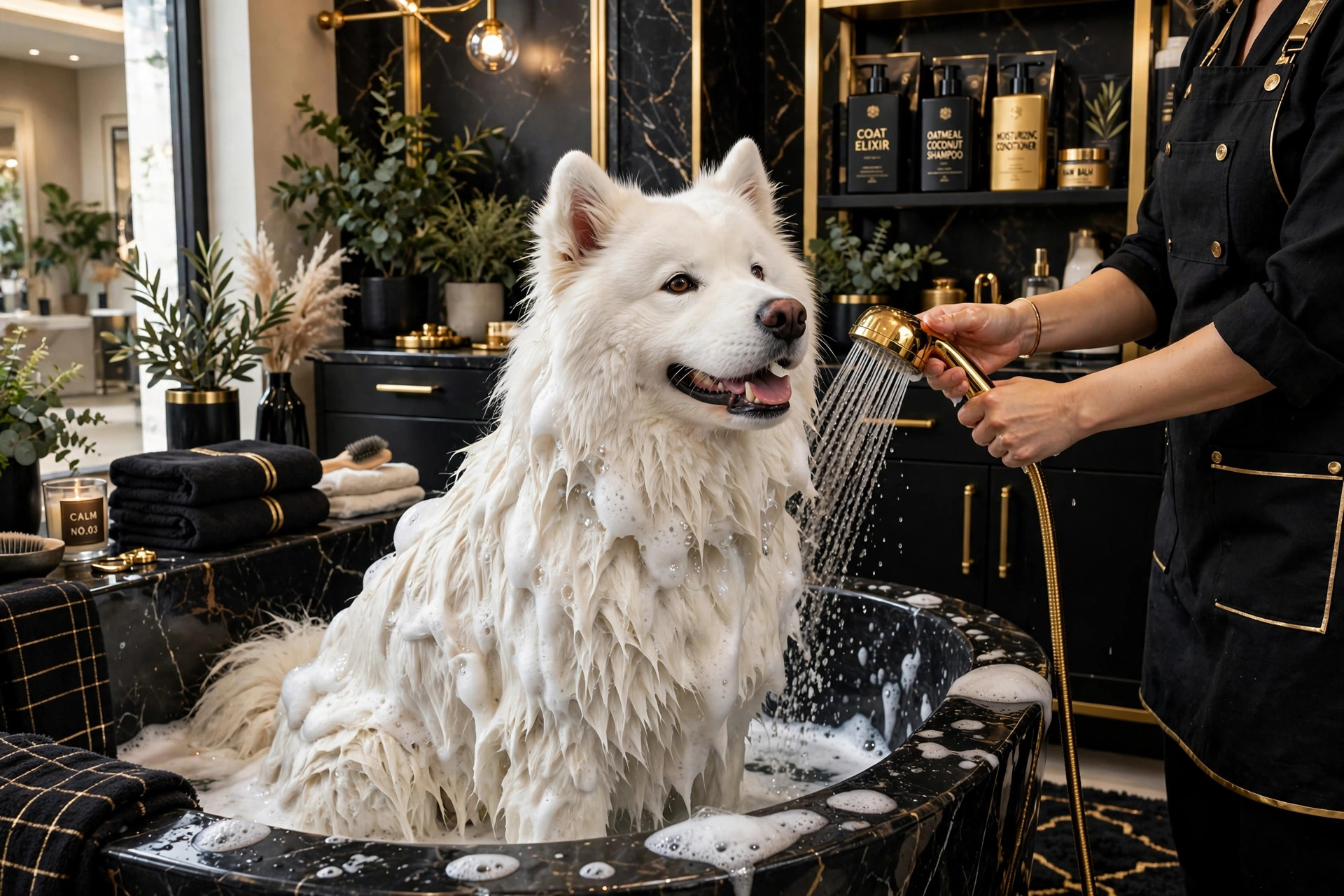
Samoyeds don’t need frequent baths. Their coat sheds dirt remarkably well once dry, and over-bathing strips the texture that makes the breed look like itself. Bathe when the coat is genuinely dirty or before a special occasion, using a dog shampoo suited to white, double coats. Then rinse. Rinse again. Residue left in that dense undercoat dulls the finish and itches, and itching starts the scratching that starts the mats.
A word on whitening shampoos. Used occasionally, they brighten a coat yellowed by city pavements and park mud. Used weekly, they can dry the hair and shift its texture. Save them for when they earn their place. Elegance is restraint, here as everywhere.
Step four: dry completely, no exceptions
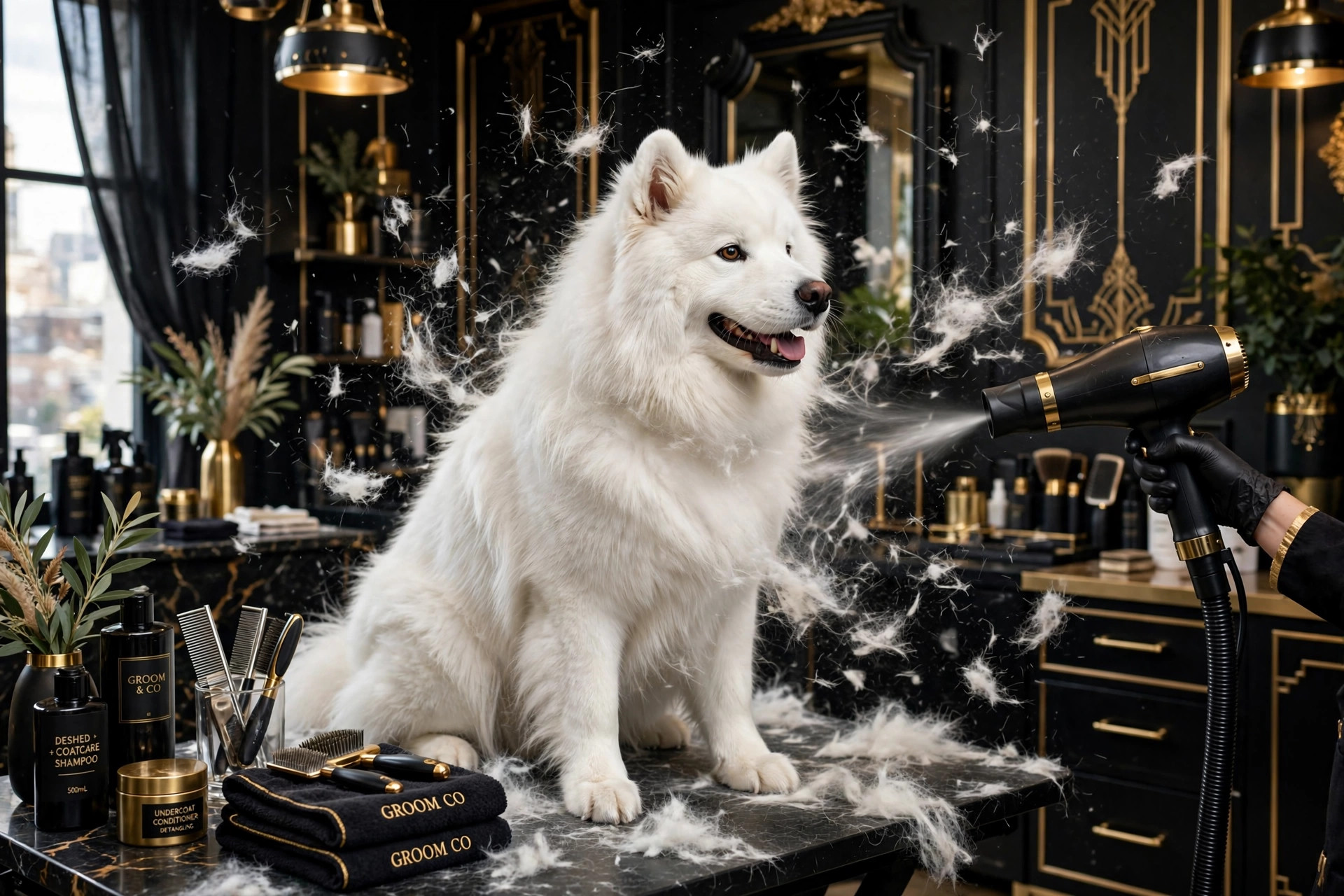
A damp Samoyed undercoat is a mat factory. Towel off the worst, then use a high-velocity dryer on a cool or warm setting, blowing the coat in sections while you brush. The dryer does double duty during shedding season, lifting loose undercoat out of the coat before it lands on your furniture. Work until the undercoat at the skin feels dry to your fingertips, not just the surface. This step takes the longest. Pour tea. Put on music. It’s a ritual, remember?
Shedding season: the coat blow
Twice a year, typically, the undercoat lets go all at once. Owners call it blowing coat, and the name is honest. You’ll brush out bags of soft white wool, enough to make visitors ask whether you own a second dog. Don’t panic, and don’t shave the dog. Shaving a Samoyed ruins the double coat’s ability to regulate temperature, and the regrowth can return patchy and soft. The ASPCA’s general grooming guidance makes the same wider point for double-coated breeds: the coat insulates in both directions, against cold and against heat.
Instead, increase the ritual’s pace. Short line-brushing sessions every other day through the blow, a bath once the loose coat peaks, and a long dryer session to finish. The season passes in a few weeks. What you keep is a healthy coat that grows back exactly as it should.
The finishing touches
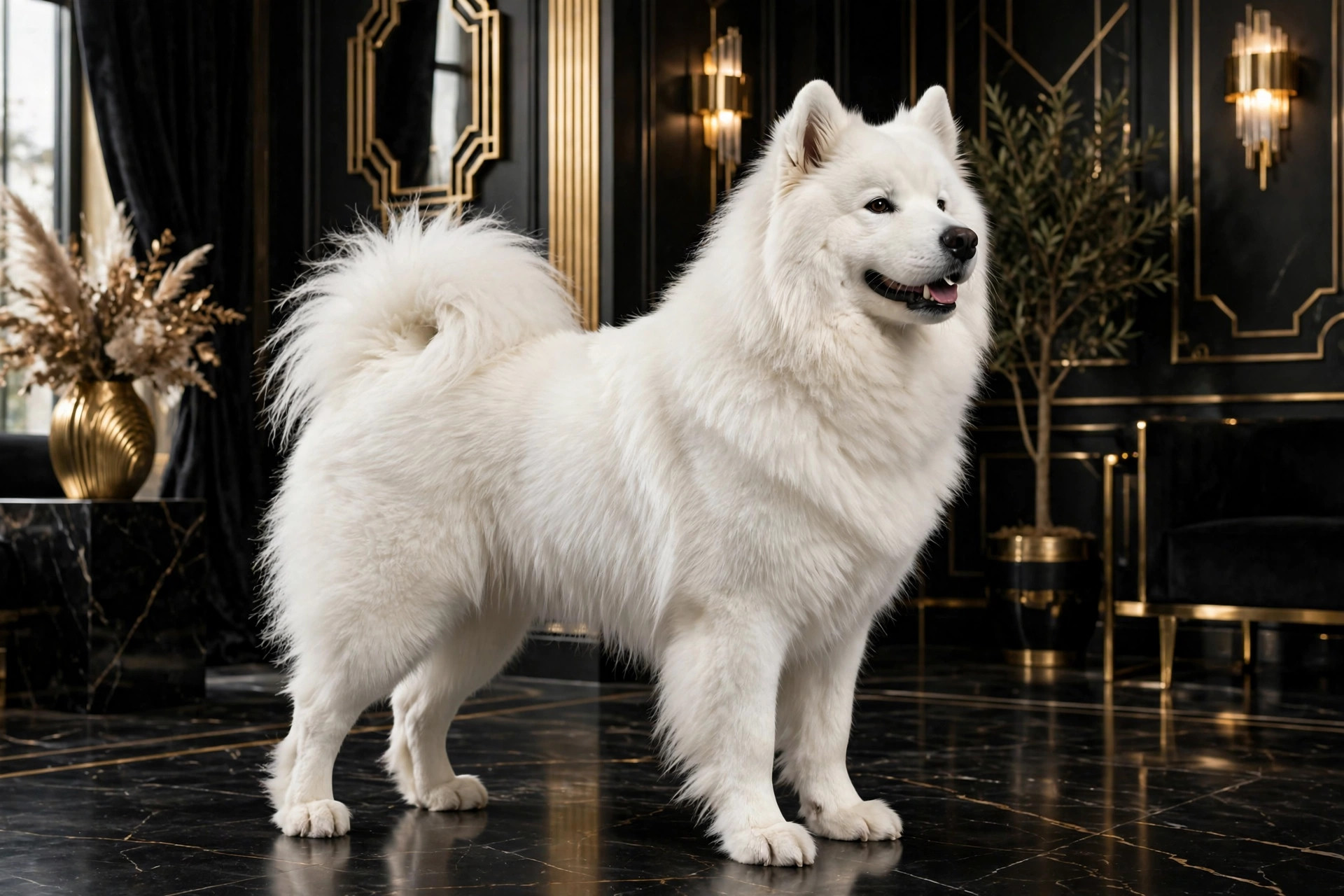
Feathering sells the silhouette. The long hair behind the front legs, along the breeches, and on that magnificent plumed tail should be combed out and left natural. Samoyeds aren’t sculpted like Poodles, and the breed looks wrong when it is. Trim only what hygiene demands: the hair between the paw pads, so ice, grit, and city salt don’t pack in, and a discreet tidy around the rear. Nails, ears, and teeth belong in the same appointment. A beautiful coat over overgrown nails is a portrait hung crooked.
And the white itself? Protect it between baths with the simplest tools. A wipe of the paws after wet walks. A bib of common sense at mealtimes for the droolers. Tear staining responds to gentle daily wiping and a word with your vet if it deepens, since eyes that water constantly deserve a check, not a cosmetic fix. We’re not vets here, and a change in your dog’s eyes, skin, or coat texture is always a reason to book one.
Frequently asked questions
How often should a Samoyed be brushed?
Twice a week is a sound rhythm for most of the year, working down to the skin with line brushing rather than skimming the surface. During the twice-yearly coat blow, switch to shorter sessions every other day until the loose undercoat clears. Puppies need gentler, briefer practice so the ritual itself becomes a pleasure early.
Can I shave my Samoyed in summer to keep him cool?
No. The double coat insulates against heat as well as cold, and shaving can damage its texture permanently, with regrowth that may come back patchy or overly soft. Keep him cool with shade, water, rest during hot hours, and a properly brushed-out undercoat that lets air move through it.
How do I keep a Samoyed’s coat white without constant baths?
Brush regularly, since a clean, separated coat sheds dirt on its own once dry. Wipe paws and feathering after wet walks, rinse mud off with plain water rather than shampoo, and save whitening shampoo for occasional use. Frequent bathing dulls and dries the very texture that makes the coat gleam.
What’s the best brush for a Samoyed?
A quality slicker brush for line brushing, paired with a steel comb for checking your work, covers nearly everything. A pin brush suits the longer feathering. Skip the heavy deshedding tools with blades for routine care. They can cut guard hairs, and the guard coat is what gives a Samoyed its stand-off, silvered finish.
Why does my Samoyed mat behind the ears?
That hair is finer, the collar rubs there, and the spot is easy to miss when brushing the obvious places. Work behind each ear in every session, comb it through, and keep the collar off while the coat dries after a bath. Two minutes of attention there prevents the tightest, sorest mats this breed grows.
This article was created with AI assistance and reviewed by our editorial team before publishing.
 The Ragdoll Grooming Ritual: Silk Coat, Calm Hands
 The English Angora Rabbit Grooming Ritual
 Luxury Dog Grooming at Home: The Complete Ritual
Leave a Reply