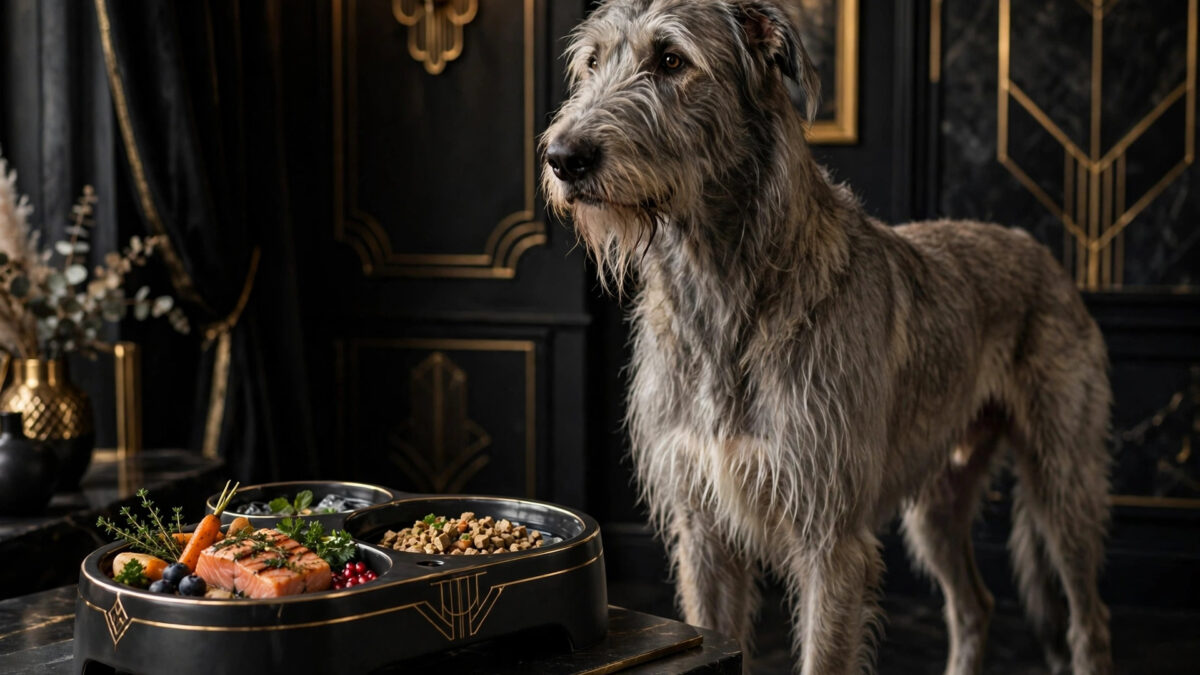
An Irish Wolfhound eats like a small horse and grows like one too. Pups put on weight fast, adults carry a deep chest and long, heavy bones, and the margin for sloppy feeding is thin. A gourmet approach helps — not because it is fancy, but because it forces you to choose good protein, measure portions, and slow the whole meal down. Done well, feeding this gentle giant becomes a calm daily ritual instead of a guessing game.
Start with the shape of the dog
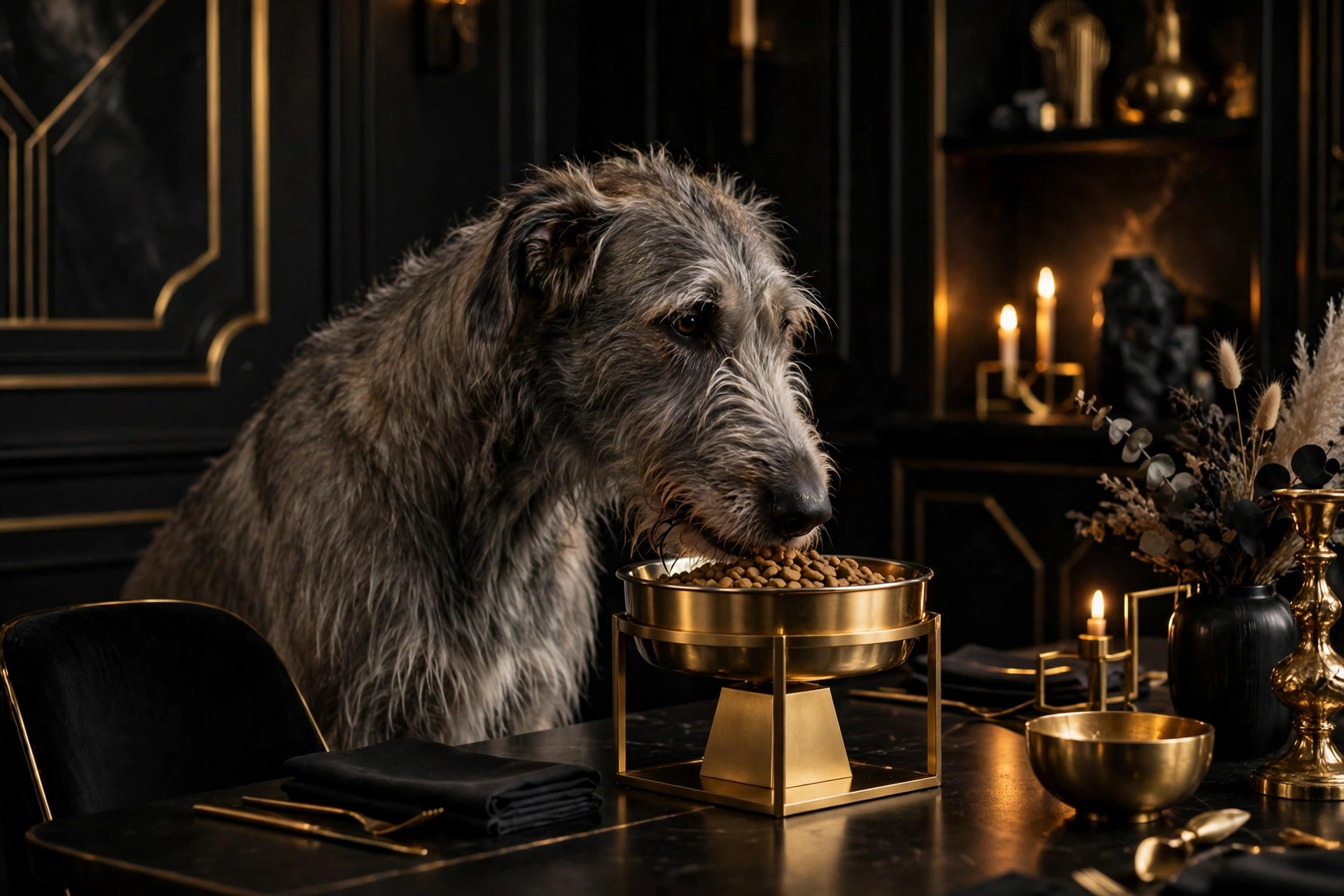
Wolfhounds are the tallest of dogs, and that height shapes every feeding decision. Food served on the floor asks a long neck to work at an awkward angle. A sturdy elevated station, set so your dog eats with the head level or slightly down, is kinder on the neck and shoulders. Choose one that does not wobble. A giant dog leans, and a light stand will travel across the room.
Then there is the deep chest. Large, deep-chested breeds are the group vets watch most closely for bloat, a life-threatening stomach emergency. Feeding smaller meals more often, keeping your dog calm before and after eating, and knowing the signs — restlessness, pacing, a swollen belly, trying to vomit with nothing coming up — are habits worth building from day one. If you ever see those signs, it is a straight-to-the-vet moment, no waiting to see.
What gourmet actually means here
Strip away the packaging and gourmet means three plain things: a named protein first, ingredients you can identify, and a recipe built for large-breed growth. For a Wolfhound pup, that last point carries real weight. Giant-breed puppies grow for a long time, and feeding guidance from veterinary nutrition services consistently stresses controlled growth — enough energy to grow, not so much that bones are pushed faster than they should be. Rich, calorie-dense food made for small breeds is the wrong tool, however premium the bag looks.
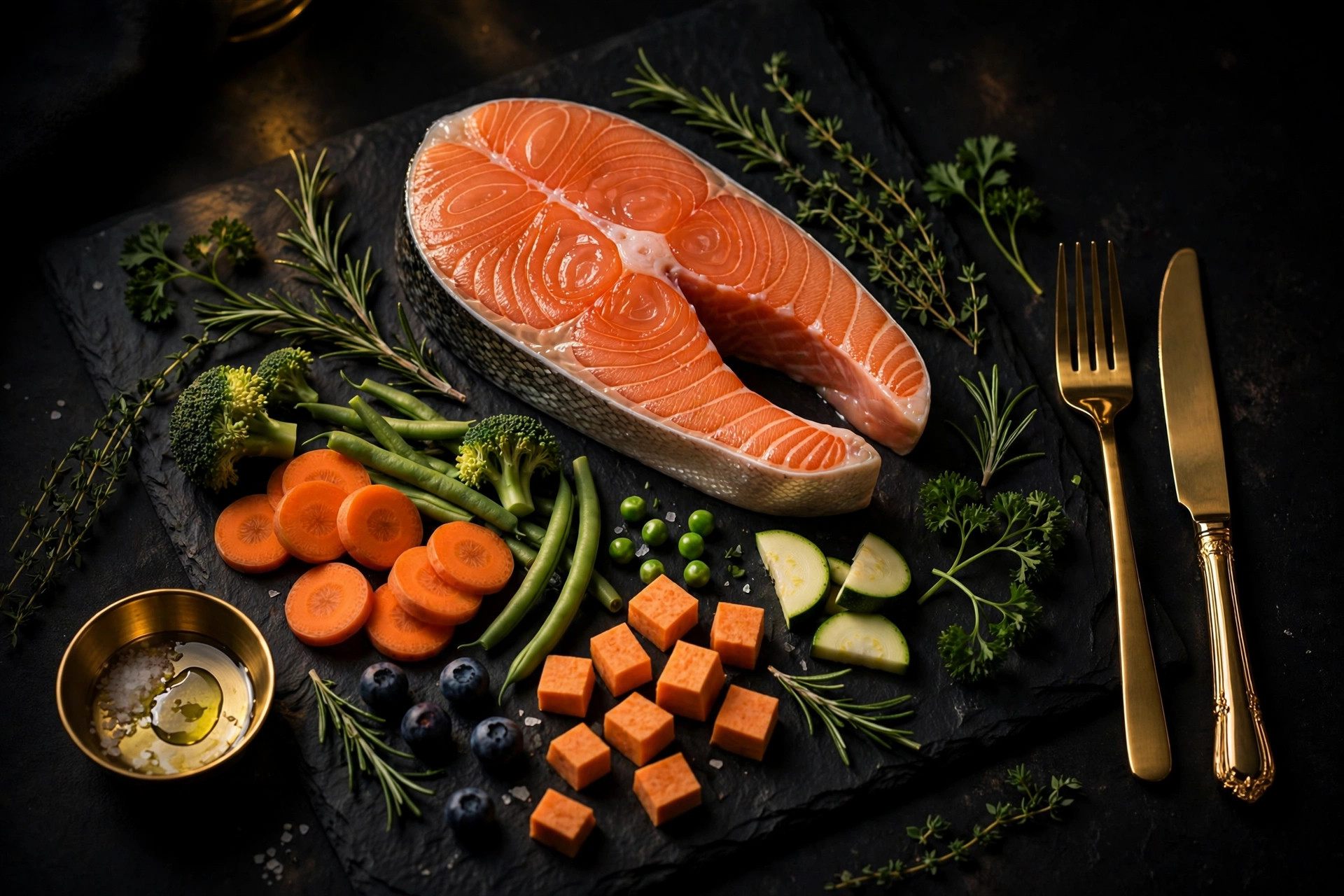
For adults, look for a complete food where meat leads the ingredient list, with fat and carbohydrate sources you recognise. Fresh and gently cooked foods can suit this breed beautifully, but only when the recipe is complete and balanced — a bowl of plain chicken and rice is a treat, not a diet. If you add toppers, keep them to a small share of the day’s food so the balance of the main meal still does the work.
A giant breed does not need a complicated menu. It needs the right food, in the right amount, served calmly, every single day.
Portions, pace, and the daily ritual
Weigh the food. Cups lie, especially with dense fresh food, and a Wolfhound’s daily ration is large enough that small scooping errors add up to real weight. Use the feeding guide on the food as a starting point, then judge by the dog in front of you: ribs felt easily under a thin cover of flesh, a visible waist from above, and steady energy. Your vet can confirm the target at each check-up, and for a growing pup those check-ins matter more than any chart.
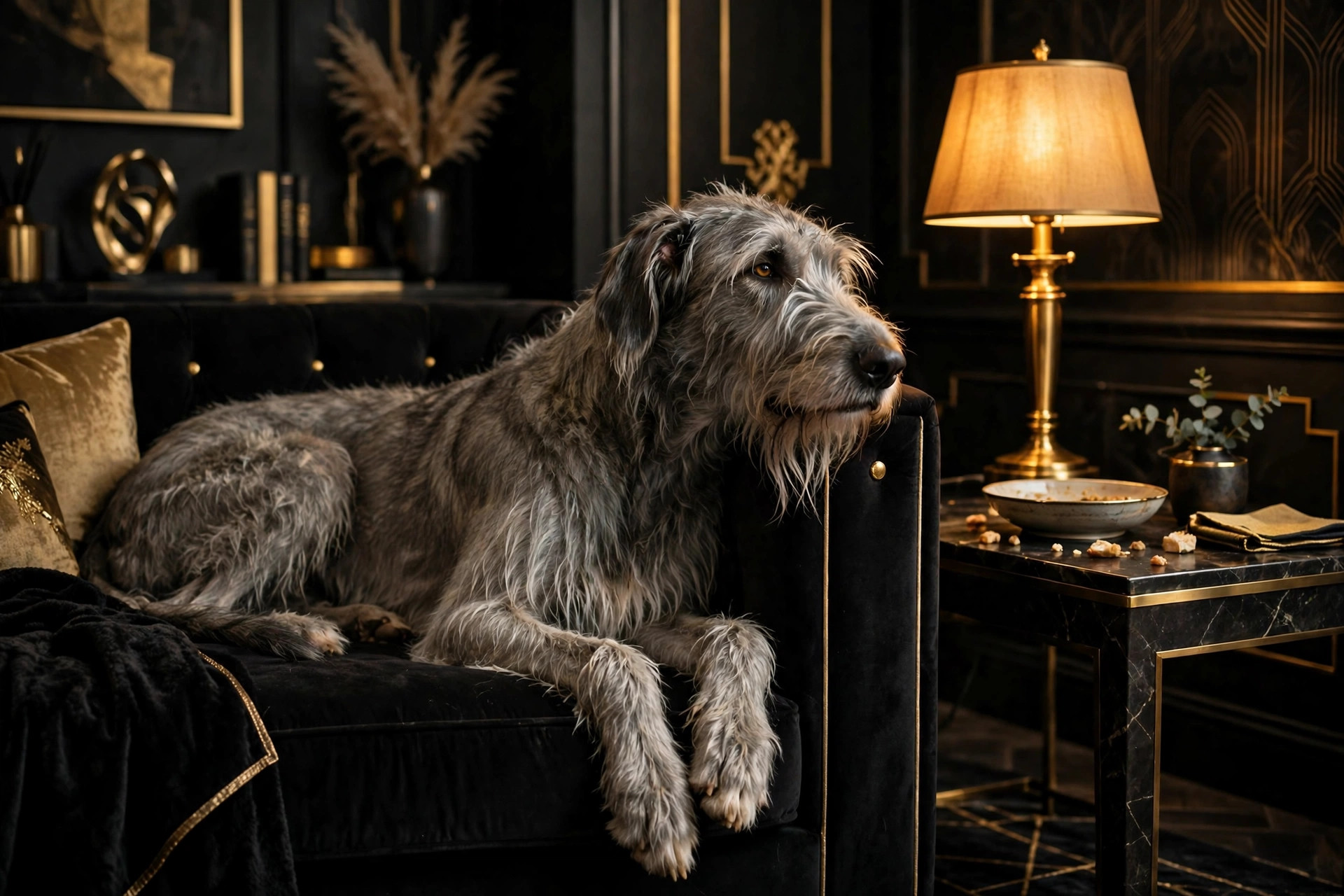
Split the day into at least two meals for an adult, and three or four smaller ones for a pup. It is gentler on a deep chest, steadier for energy, and it turns feeding into a rhythm your dog can relax into. Serve in the same quiet place, at roughly the same times. Wolfhounds read routine the way we read a clock.
Pace deserves its own word. A dog who inhales dinner swallows air with it, and air is the last thing a deep chest needs. A slow-feeder bowl, or scattering part of the meal for your dog to find piece by piece, stretches a two-minute meal into ten calm ones. It also gives a bright, gentle dog something to do — Wolfhounds bore quietly, and a bored giant finds its own entertainment.
Treats and finishing touches
Keep treats honest. A few pieces of cooked meat, a slice of carrot, a spoon of plain yoghurt if your dog tolerates dairy — small, simple, and counted inside the day’s food, not on top of it. Bone broth poured warm over a meal is a lovely finishing touch for a picky eater, as long as it is made without onion, garlic, or added salt, which do not belong in a dog’s bowl. When in doubt about a human food, check before you share rather than after.
Water is part of the menu too. A tall dog drinks a lot, and a heavy ceramic or steel water bowl at the feeding station — washed daily, refilled often — keeps hydration as routine as the meals themselves.
Feeding through the life stages
A pup, an adult, and an old Wolfhound are three different feeding jobs wearing the same coat. The pup needs a large-breed growth recipe and patience — this breed matures slowly, and rushing growth with extra calories is the one mistake you cannot take back. Meals run three or four times a day, portions creep up in small steps, and the food changes only when your vet says the growth plates and the weight curve agree it is time.
The adult settles into two measured meals and a stable recipe. Resist the urge to rotate flavours for your own amusement; a dog who eats calmly and digests well has already found the right menu. The senior, in turn, often needs fewer calories for the same bowl size, plus a closer eye on condition — old giants lose muscle quietly, and a monthly hands-on check of ribs, waist, and coat tells you more than the scale alone. At every stage, change food gradually over a week or so, mixing new into old in rising shares. A sudden swap is the fastest route to an upset stomach in a dog this size.
The station is part of the meal
It sounds like a detail. It is not. A feeding station at the right height, on a mat that does not slide, in a corner away from household traffic, teaches a young giant that meals are calm events. Bowls should be heavy enough to stay put, wide enough for a long muzzle, and washed after every meal — a giant dog produces giant quantities of drool, and yesterday’s film on a bowl is nobody’s idea of gourmet. Keep the station beautiful if you like; this breed lives in your home like furniture with a heartbeat. Just let function lead, and let the elegance follow.
The bottom line
Feed an Irish Wolfhound like the giant it is: a complete, large-breed recipe with a named protein first, portions weighed rather than guessed, split into calm meals from a steady raised station, with an unhurried hour around each one. That is the whole gourmet secret. The elegance is not in the ingredients list — it is in the consistency, repeated quietly, day after day, for a dog who gives you its whole heart in return.
This article was created with AI assistance and reviewed by our editorial team before publishing.
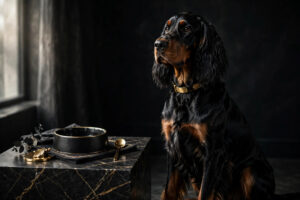 Premium Pet Nutrition: Fresh, Human-Grade and Gourmet Food, Explained
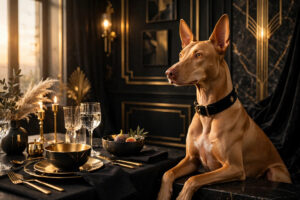 Bone Broth and Meal Toppers: A Gourmet Finishing Touch
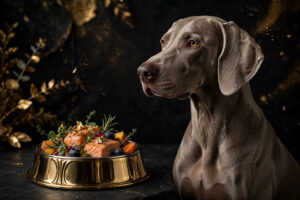 Premium Fresh Dog Food: Is It Worth It?
Leave a Reply