
Bone broth and meal toppers can turn an ordinary bowl into a slower, more fragrant ritual your dog actually looks forward to. Poured warm over kibble or spooned over fresh food, they add moisture, aroma, and variety — without replacing a complete, balanced meal underneath.
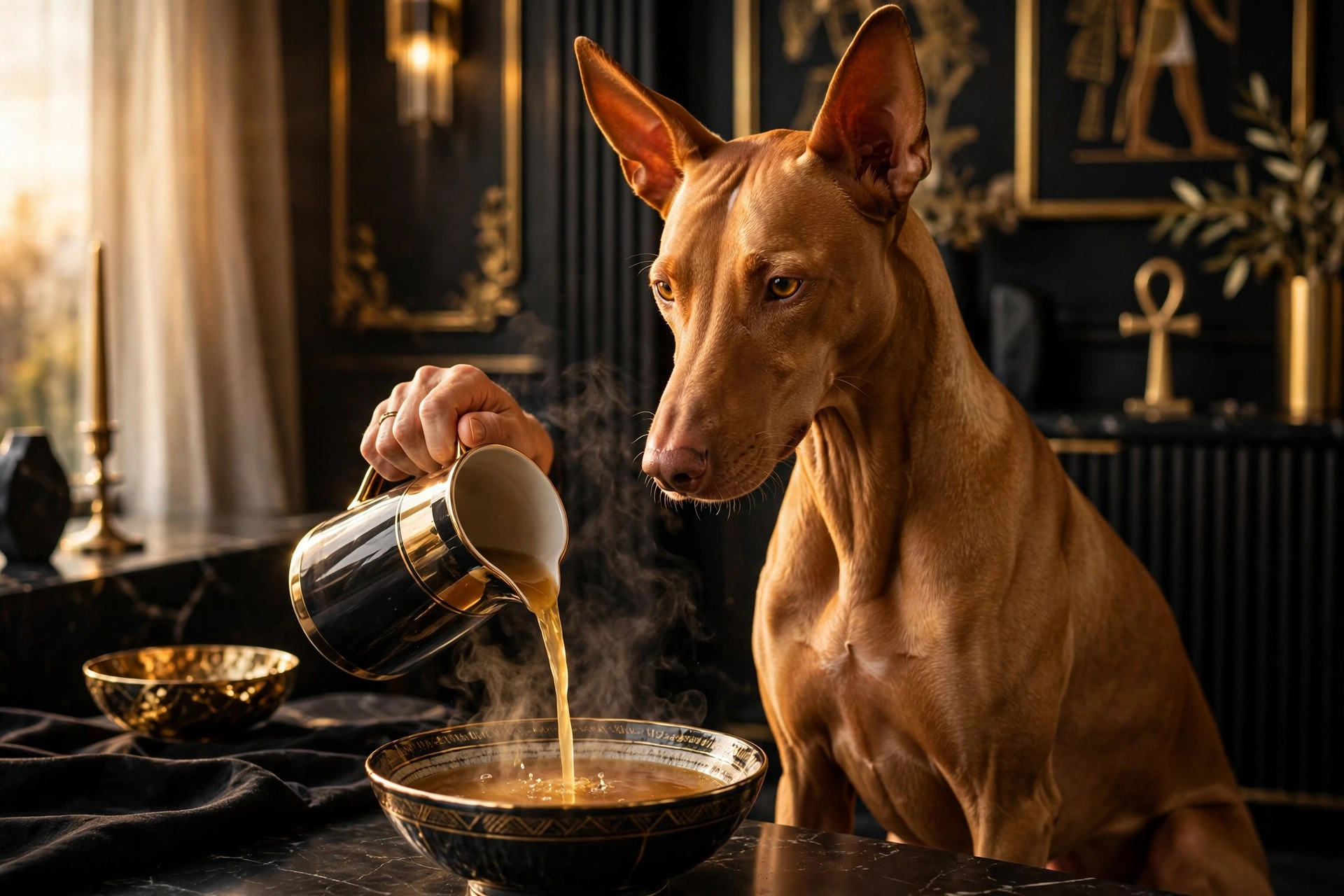
A Pharaoh Hound waits, composed and patient, as warm broth is poured over a refined ceramic bowl.
Why a finishing touch changes the bowl
Some dogs race to dinner. Others wander over, sniff, and wander off again, as if the bowl hasn’t quite earned their attention.
A finishing touch can change that mood. Warm broth releases scent. A spoonful of something soft changes texture. Suddenly the same base food feels new, and a picky eater may linger instead of leaving half behind.
That doesn’t mean every meal needs dressing up. It shouldn’t. A topper works best as an accent, not a rescue plan for a diet your dog dislikes or a bowl that sits out too long.
Think of it the way you’d think of sauce on your own plate. The sauce isn’t the meal. It brings the meal together, adds comfort, and makes you slow down for a minute.
What bone broth actually is
Bone broth starts with bones simmered gently in water for a long stretch, often with a splash of something acidic to help draw flavour from the bones. The result is savoury and silky, quite different from a thin stock cube dissolved in hot water.
Good broth for pets is simple. Bones, water, time. That’s mostly it.
Broth made for people is a different story. It often carries onion, garlic, and plenty of salt — ingredients you don’t want in your dog’s bowl. Don’t share the soup pot and assume it’s fine. Choose a broth made for pets, or make one at home with pet-safe ingredients only.
Broth, stock, and gravy are not the same thing
Labels get blurry, so read them slowly. Pet broth is usually thin, pourable, and meant to moisten food. Gravy-style toppers are thicker and richer, so a little goes further than you might expect.
Stock products for human cooking can hide flavourings and salt you can’t spot from the front of the packet. If the label doesn’t say it’s suitable for pets, leave it on the shelf.
Choosing a broth that earns its place
Start with the ingredient list. You want it short enough to read at a glance, with a named protein source you recognise — chicken, beef, or turkey, for example — and no onion or garlic in any form.
Skip anything with vague wording. “Meat flavouring” tells you almost nothing. A clear list tells you a lot.
Texture matters too. Some broths pour like tea. Others set softly in the fridge because of the natural gelatin from the bones, then melt again when warmed. Either can work, as long as your dog enjoys it and it sits well.
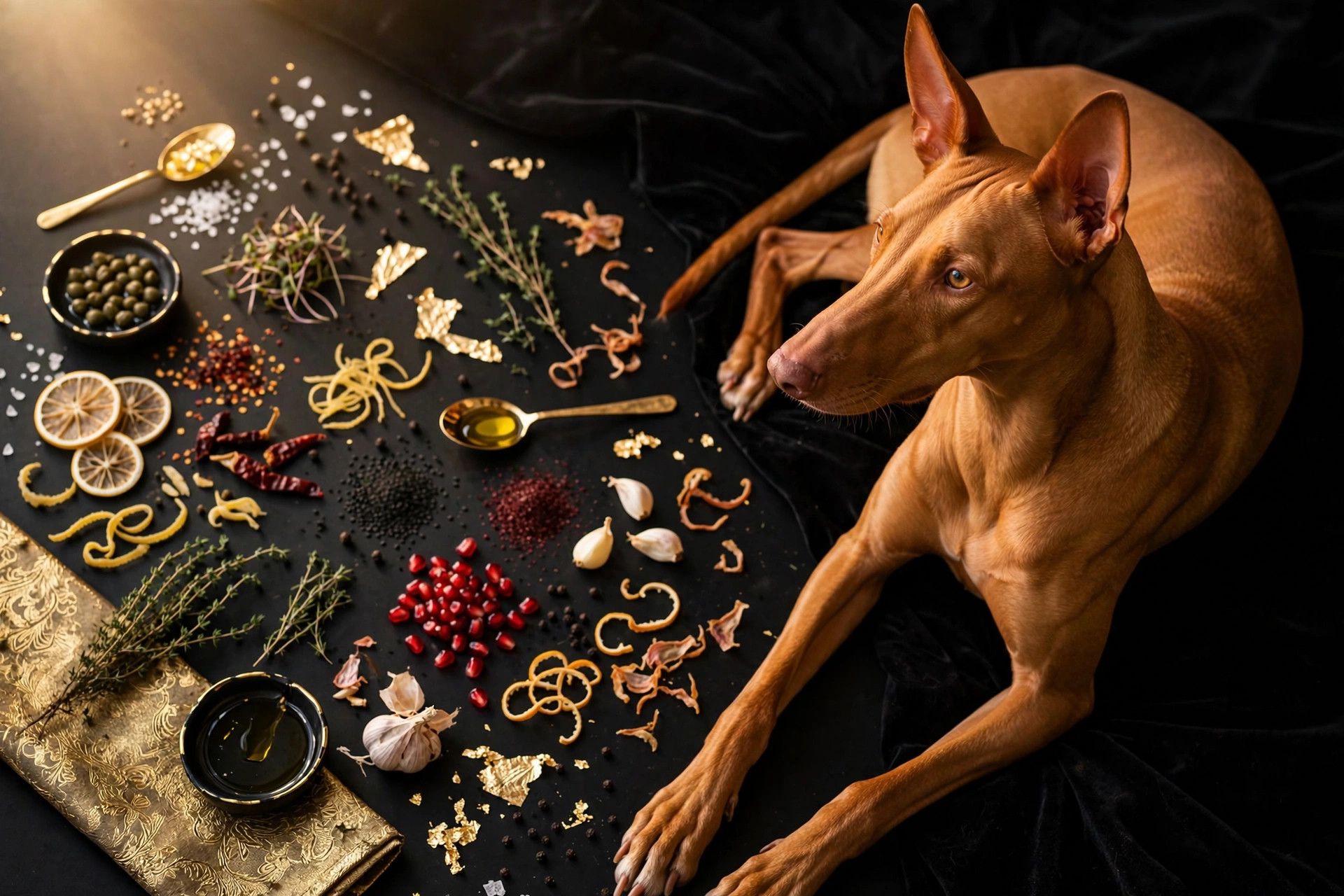
Simple, elegant topper ingredients laid out with gold accents, ready to finish a bowl with care.
A quick label check before you buy
Look for a feeding guide on the pack. Check how the maker suggests storing it once opened. Note whether it’s meant as a complementary food — something served alongside a complete diet, not instead of one.
If your dog has kidney trouble, a sensitive stomach, or a history of pancreatitis, ask your vet before you add broth or rich toppers. Rich food isn’t kind to every dog, and a quiet word with the vet beats guessing.
Meal toppers, from simple to sumptuous
Toppers cover a wide, rather lovely range. At the simple end, you’ve got a spoonful of plain cooked pumpkin, a few green beans, or a little wet food warmed and spread over the top. At the more indulgent end, there are freeze-dried raw pieces, gently cooked meats, and shredded fish made for pets.
You don’t need the fanciest option. You need the one your dog likes, digests well, and can eat safely day after day without upsetting the balance of the main diet.
Rotate gently if you like. Chicken one week, a fish-based topper the next. Variety can keep mealtimes interesting, but change one thing at a time so you can spot what doesn’t agree with your dog.
Wet, dry, and freeze-dried options
Wet toppers add moisture and spread scent through the bowl, though they spoil faster once opened. Dry and freeze-dried toppers keep longer and crumble nicely over kibble, but they don’t add water — broth does that job better.
Fresh toppers, like a small amount of cooked egg or plain meat without seasoning, can feel special. Keep portions modest, though. A topper that steals the show can quietly unbalance the meal underneath it.
Building a calm feeding ritual
The ritual matters as much as the recipe. Warm the broth just a little — not hot, just enough to lift the aroma. Pour it slowly. Let your dog smell what’s coming.
Then set the bowl down in the same quiet spot, step back, and let them eat in peace. No hovering. No coaxing every bite.
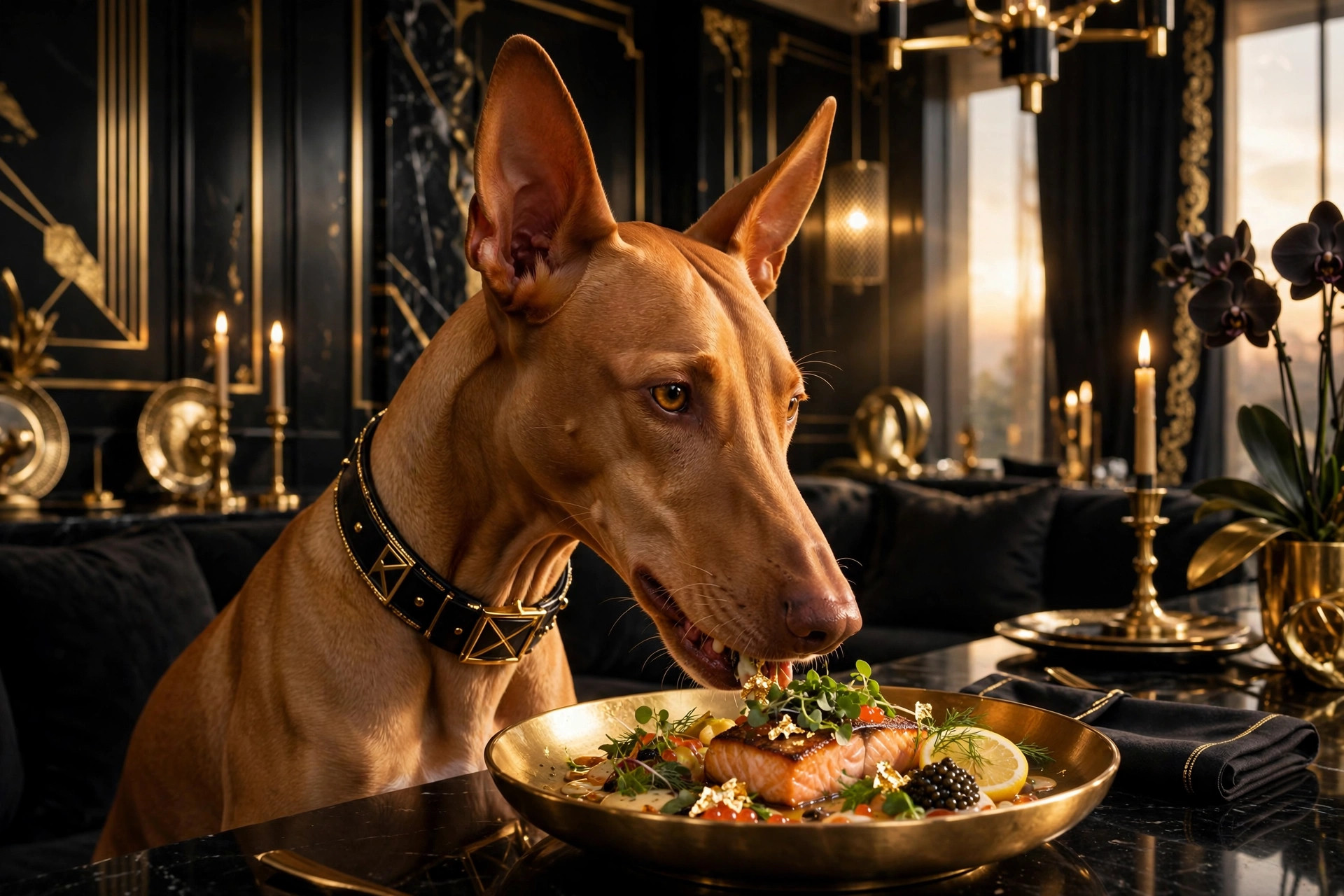
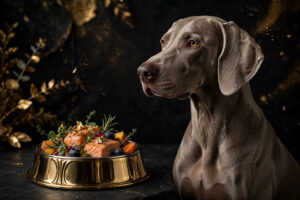
Dinner served slowly in a luxurious, calm interior — a Pharaoh Hound enjoying a gourmet meal at an unhurried pace.
For an elegant breed like the Pharaoh Hound, that calm suits the moment. A heavy ceramic bowl that doesn’t slide, washed daily, on a mat that catches drips — small details that make the ritual feel cared for.
Portion sense, without fuss
Here’s the trap: toppers add calories. Broth adds fewer than most rich toppers, but it isn’t nothing, and the extras can creep up if you aren’t paying attention.
A practical approach is to treat the topper as part of the meal, not on top of a full meal plus treats plus chews. If you add a generous topper, serve a touch less of the base food. Watch your dog’s waistline over a few weeks and adjust in small steps.
For puppies, senior dogs, and dogs on a prescription diet, don’t improvise. Ask your vet how a topper fits, or whether it fits at all. A prescription diet is balanced for a reason, and diluting it night after night can undo the point of feeding it.
Serving broth well, day to day
Start small. A few spoonfuls over one meal is enough for the first few days, even if your dog looks at you as if you’ve been holding out on them for years.
Watch the bowl — and watch what comes later. Softer stools, gas, or a sudden loss of interest are signs to pause, not push through. Go back to the plain diet, let things settle, and try a plainer option later if you want to.
Some dogs prefer broth at room temperature. Others like it barely warm. You’ll learn quickly — dogs aren’t subtle about these preferences.
Don’t leave a broth-topped bowl sitting out for hours. Moistened kibble spoils and loses its appeal anyway. Serve it, give them a reasonable window, and clear what’s left.
Making broth at home
Home-made broth gives you control. Use plain bones and water, simmer gently, skim, strain well, and cool it before serving. Remove every cooked bone — cooked bones splinter and should never be fed.
Don’t add salt, onion, garlic, stock cubes, or leftover gravy. Keep it plain, even if it smells a bit plain to you. Your dog’s nose is working on a completely different level.
Freeze the extra in small portions so you aren’t defrosting a large container for a single bowl. Label it with the date, follow sensible fridge hygiene, and throw out anything that smells off. When in doubt, out it goes.
When to skip the extras
Not every dog needs a topper, and not every week needs one either. If your dog eats happily, holds a healthy weight, and has a settled stomach, you don’t have to change a thing.
Skip toppers if they turn your dog into a negotiator who won’t touch plain food. That’s a common, quiet problem. The fix is usually boring: return to the plain diet, keep mealtimes regular, and save toppers for occasional use rather than every single bowl.

After the ritual, a serene Pharaoh Hound rests in warm golden light — fed, settled, and content.
Also pause and call your vet if appetite drops suddenly, vomiting or diarrhoea keeps returning, or your dog drinks far more than usual. A tasty topper can mask a problem for a day or two. It shouldn’t. Loss of appetite can be an early sign that something else needs attention, and no garnish is worth delaying that check.
Used with restraint, though, broth and toppers are a gentle pleasure. They won’t fix a poor diet, and they aren’t medicine. What they can do is make a good diet more inviting — and turn feeding, twice a day, into a small ceremony you both enjoy.
One more thing worth saying: a finishing touch is only as good as the foundation under it. Our pillar guide to premium pet nutrition, explained shows how to judge the base food — adequacy statement, ingredient list and all — before you dress it up.
Frequently asked questions
Can I give my dog bone broth every day?
Many dogs can have a small amount daily as part of a complete diet, as long as it agrees with them and the calories are counted in. If your dog has a medical condition or eats a prescription diet, check with your vet first.
Is human bone broth safe for dogs?
Don’t assume it is. Broths made for people often contain onion, garlic, and added salt, which you should avoid for dogs. Choose a broth made for pets, or make a plain pet-safe batch at home.
Will a meal topper make my dog a picky eater?
It can, if every plain meal gets upgraded the moment your dog hesitates. Use toppers in modest amounts, keep a regular routine, and serve plain meals sometimes too, so the base food stays normal — not a disappointment.
Should I warm the broth before serving?
A little warmth helps release the aroma and can make the bowl more appealing. Serve it warm, not hot, and test it with a clean fingertip first. If it feels hot to you, let it cool.
Can cats have the same toppers as dogs?
Not automatically. Cats have different nutritional needs, and a product made for dogs isn’t necessarily suitable for them. Use cat-specific toppers for cats, and check the label rather than sharing the same pouch between species.
This article was created with AI assistance and reviewed by our editorial team before publishing.
 Feeding an Irish Wolfhound, the Gourmet Way
 Premium Pet Nutrition: Fresh, Human-Grade and Gourmet Food, Explained
 Premium Fresh Dog Food: Is It Worth It?
Leave a Reply