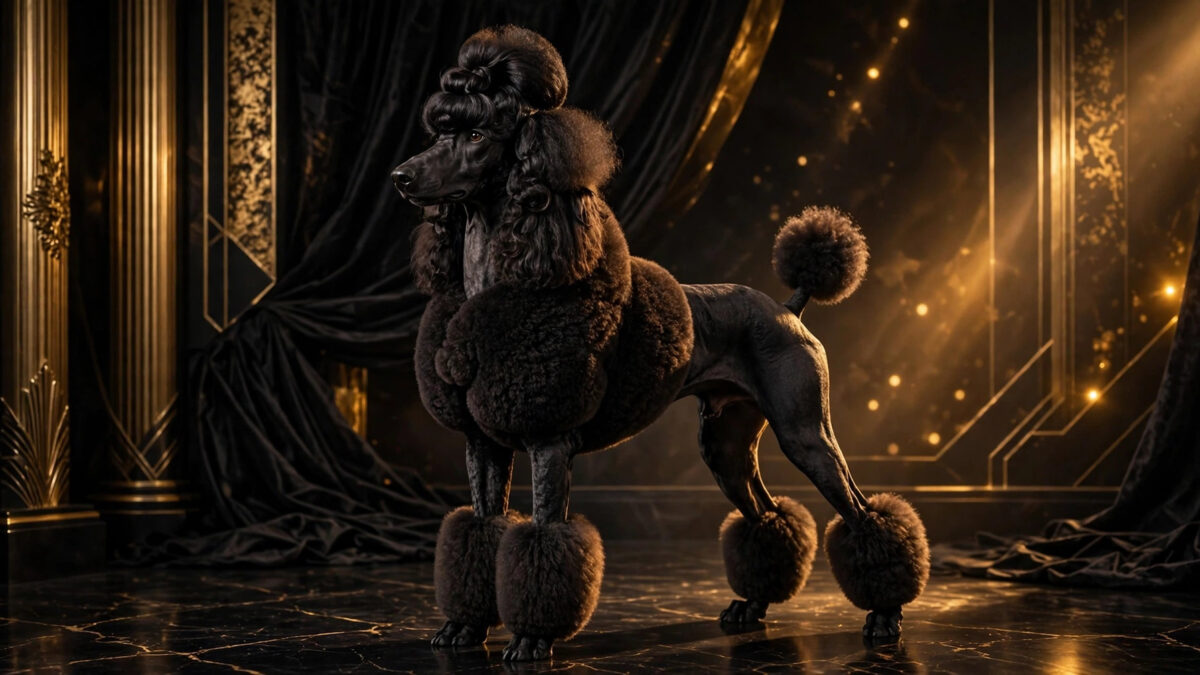
The short answer: A salon-quality groom at home comes down to sequence, not spending. Brush the coat completely dry before water ever touches it, bathe with lukewarm water and properly diluted shampoo, work in small sections, dry with the nozzle moving constantly, and finish with face, feet, and nails. Done in this order — with patience between each step — a home groom can genuinely rival a professional finish.
There is a particular pleasure in grooming a beautiful dog well. It is unhurried, tactile, almost meditative — and the result walks around the house for weeks. But most at-home grooms disappoint for the same handful of reasons: matted coat meets water, shampoo applied at full strength, drying rushed, finishing skipped. The professionals aren’t using magic products. They’re following an order.
Here is the ritual, step by step, the way a good salon thinks about it.
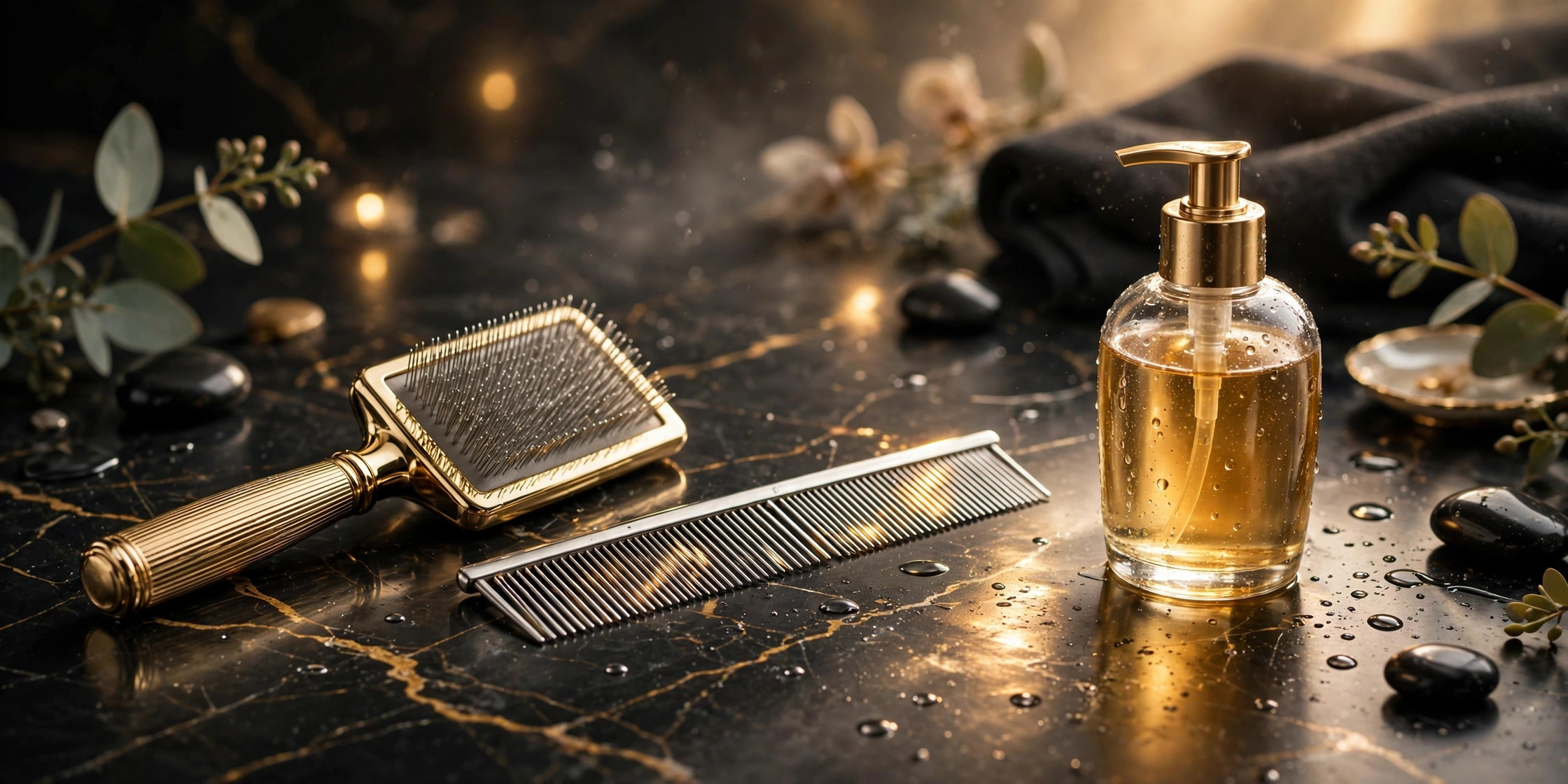
Step one: the dry brush-down
This is the step everyone skips, and it’s the one that matters most. Never — ever — wet a coat that hasn’t been fully brushed out. Water tightens tangles into mats, and a mat that gets wet becomes a felted knot that only scissors will fix.
Work in layers with a slicker brush, lifting the coat section by section from skin outward. Follow with a steel comb: if the comb glides from root to tip without catching, the section is ready. If it snags, go back to the slicker. On a full-coated breed this takes twenty to forty minutes. Consider it the price of admission — everything after this goes twice as fast.
A light detangling spray on dry coat helps the brush glide, but use it sparingly. You’re preparing the canvas, not styling it yet.
Step two: the bath, done properly
Water temperature is lukewarm — roughly body temperature, 37–38°C. Hot water strips the coat’s natural oils and irritates skin; cold water won’t lift dirt. Test it on the inside of your wrist the way you would for a child.
Dilute the shampoo. Professional groomers almost never use shampoo straight from the bottle — typically a 1:8 to 1:16 dilution in a squeeze bottle. Full-strength shampoo is harder to rinse completely, and residue is the number-one cause of the dull, slightly sticky coat people blame on “cheap shampoo.” It usually isn’t the shampoo. It’s the rinsing.
Wash twice: the first lather lifts the dirt, the second actually cleans. You’ll feel the difference — the coat squeaks faintly under your fingers on the second pass when it’s truly clean. Rinse until the water runs completely clear and the coat feels like nothing at all, then rinse once more. Residue hides.
Conditioner is not optional for long or curly coats. Apply to the lengths, leave it for the full recommended time (usually 3–5 minutes), and rinse thoroughly. This is what gives the finished coat that liquid, light-catching quality.
Step three: the dry
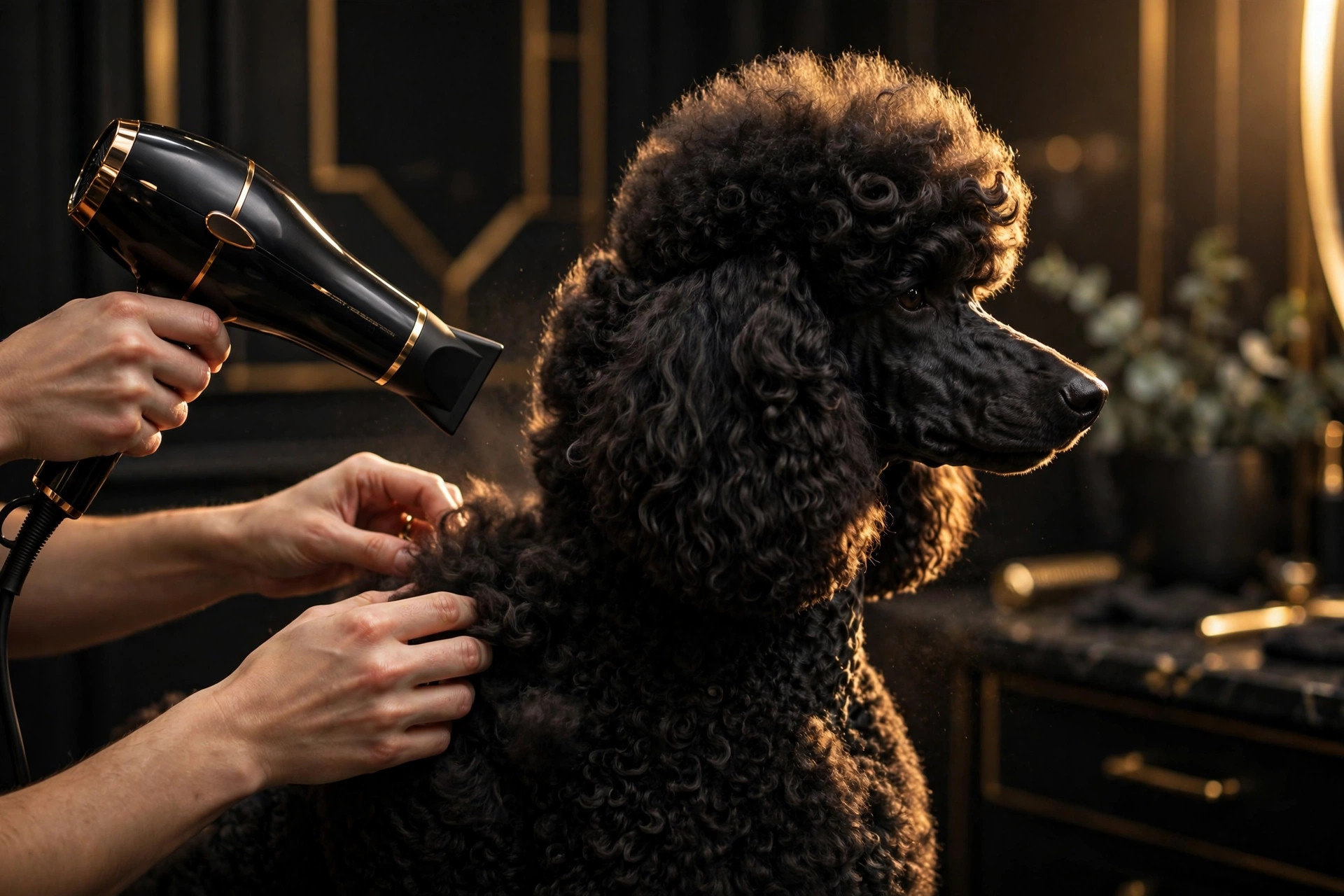
Drying is where home grooms most visibly fall short — and where technique matters more than equipment. A high-velocity dryer is the professional’s tool, but a human hairdryer on medium heat works if you respect two rules.
Rule one: the nozzle never stops moving. Concentrated heat on one spot burns skin faster than you’d expect, especially on thin-skinned areas like the belly and ears. Keep the dryer in constant motion, 15–20 cm from the coat, always following the direction of the brush.
Rule two: dry in the direction you brush. Dry a section while brushing it straight with the slicker — dry, brush, move on. This “stretch drying” is what creates that smooth, full, salon finish instead of a wavy air-dried look. Air-drying a long coat is how you get frizz and, worse, hot spots under damp undercoat that never fully dried.
Work from the rear forward, legs first, then body, then the head last (most dogs tolerate the dryer least around the face — save your goodwill). The coat should be 100% dry to the skin. If in doubt, part the coat and feel the undercoat. Damp undercoat is a skin problem waiting to happen.
Step four: the finish
The bath and dry are maintenance. The finish is artistry — and it’s what separates “clean dog” from “groomed dog.”
- Face: comb the furnishings forward and trim what falls over the eyes. Clean the corners of the eyes with a damp cloth. This five-minute job changes the whole expression of the dog.
- Feet: trim the hair between the pads flush, then shape the foot into a neat oval. Neat feet make the dog look finished even when the rest is growing out.
- Nails: trim or grind after the bath, when nails are softest. Take a little at a time; on dark nails, trim in thin slices until you see the pale center approaching.
- Sanitary trim: a quick tidy around the rear keeps a long-coated dog clean between full grooms.
- Finishing spray: a light mist of coat spray or cologne, then one final comb-through. This is scent as accessory — present, never overpowering.
Stand back and look at the dog from across the room. The silhouette should be balanced and intentional. If something draws your eye, that’s the thing to refine.
A note on fragrance
Luxury grooming products love their scents — lavender, chamomile, white tea, cedarwood. Used sensibly in rinse-off products, they’re harmless pleasure. But concentrated essential oils and heavily fragranced leave-in products are a different matter: a dog’s sense of smell is tens of thousands of times more sensitive than ours, and some essential oils are genuinely problematic for dogs.
🐾 Before you use any essential oil around your dog: check it in the Eaoae safety checker — a free two-minute check covering 24 pet species.
The rule is simple: fragrance belongs in products formulated for dogs, used as directed — never in DIY additions of undiluted essential oils to shampoos or sprays. If a product makes your eyes water, it’s too strong for the dog wearing it.
And because a coat is built in the bowl before it’s polished by the brush, our guide to premium pet nutrition, explained is the natural companion to this ritual — how to judge the food behind the shine.
FAQs: Luxury dog grooming at home
How often should I do a full grooming ritual at home?
For long or curly coats, a full bath-and-dry every 3–4 weeks with thorough brushing 2–3 times per week in between. Short-coated breeds can go 6–8 weeks between baths. Over-bathing strips natural oils — the brushing between baths matters more than bath frequency.
Can a human hairdryer really substitute for a pet dryer?
Yes, with care. Use medium heat (never high), keep the nozzle moving constantly, and maintain 15–20 cm distance. The main advantage of a high-velocity pet dryer is speed and the way it blasts water out of dense undercoat — for a single dog at home, patience with a human dryer achieves the same finish.
Why does my dog’s coat look dull a few days after grooming?
The most common cause is shampoo residue from incomplete rinsing — it attracts dirt and flattens the coat within days. The second is skipping conditioner on a coat that needs it. Try doubling your rinse time on the next groom; most people are surprised by how much difference thorough rinsing makes.
Is it safe to use scented grooming products on my dog?
Products specifically formulated for dogs are tested for canine safety — use those rather than human products or homemade essential-oil blends. Avoid applying undiluted essential oils directly to your dog’s coat or skin, and skip heavily fragranced products for puppies, pregnant dogs, or dogs with respiratory issues.
This article was created with AI assistance and reviewed by our editorial team before publishing.
 The Ragdoll Grooming Ritual: Silk Coat, Calm Hands
 The English Angora Rabbit Grooming Ritual
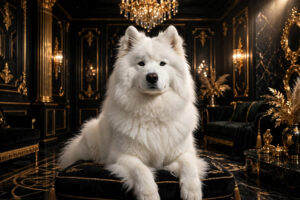 Samoyed Grooming Ritual: The Luxury Coat Guide
Leave a Reply