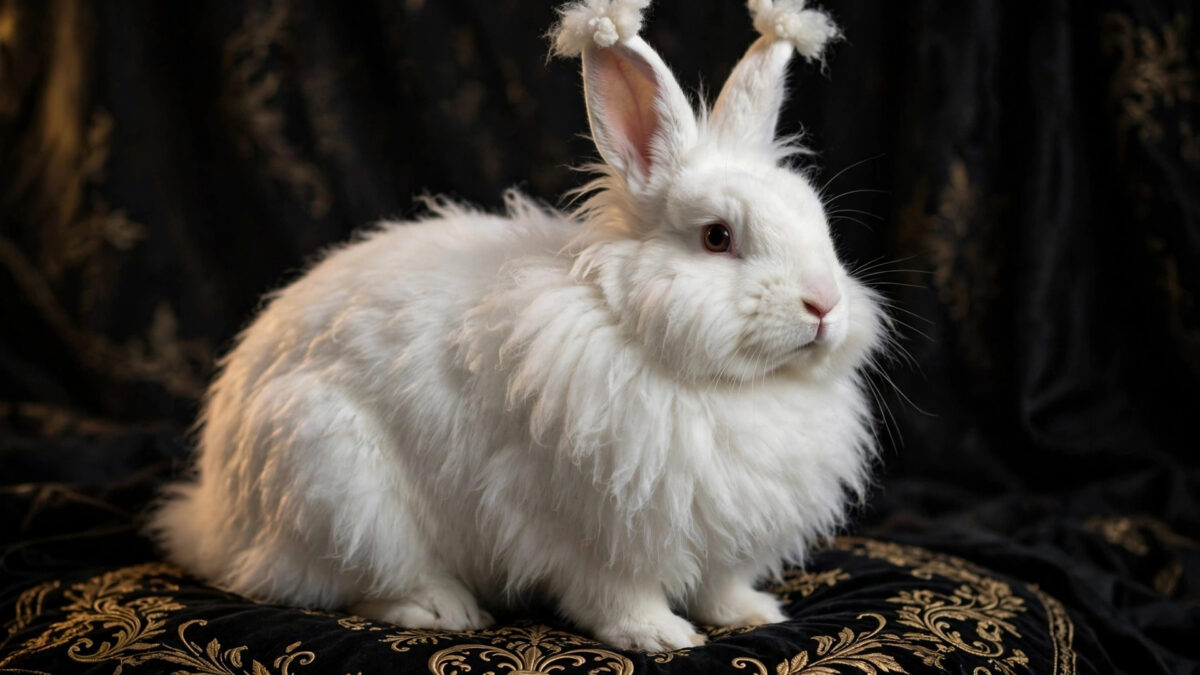
English Angora rabbit grooming is a calm, regular ritual, not an occasional rescue job. A few minutes of gentle checking each day, a longer comb-through once a week, and a careful harvest when the wool naturally loosens will keep the long coat soft, free of mats, and comfortable.
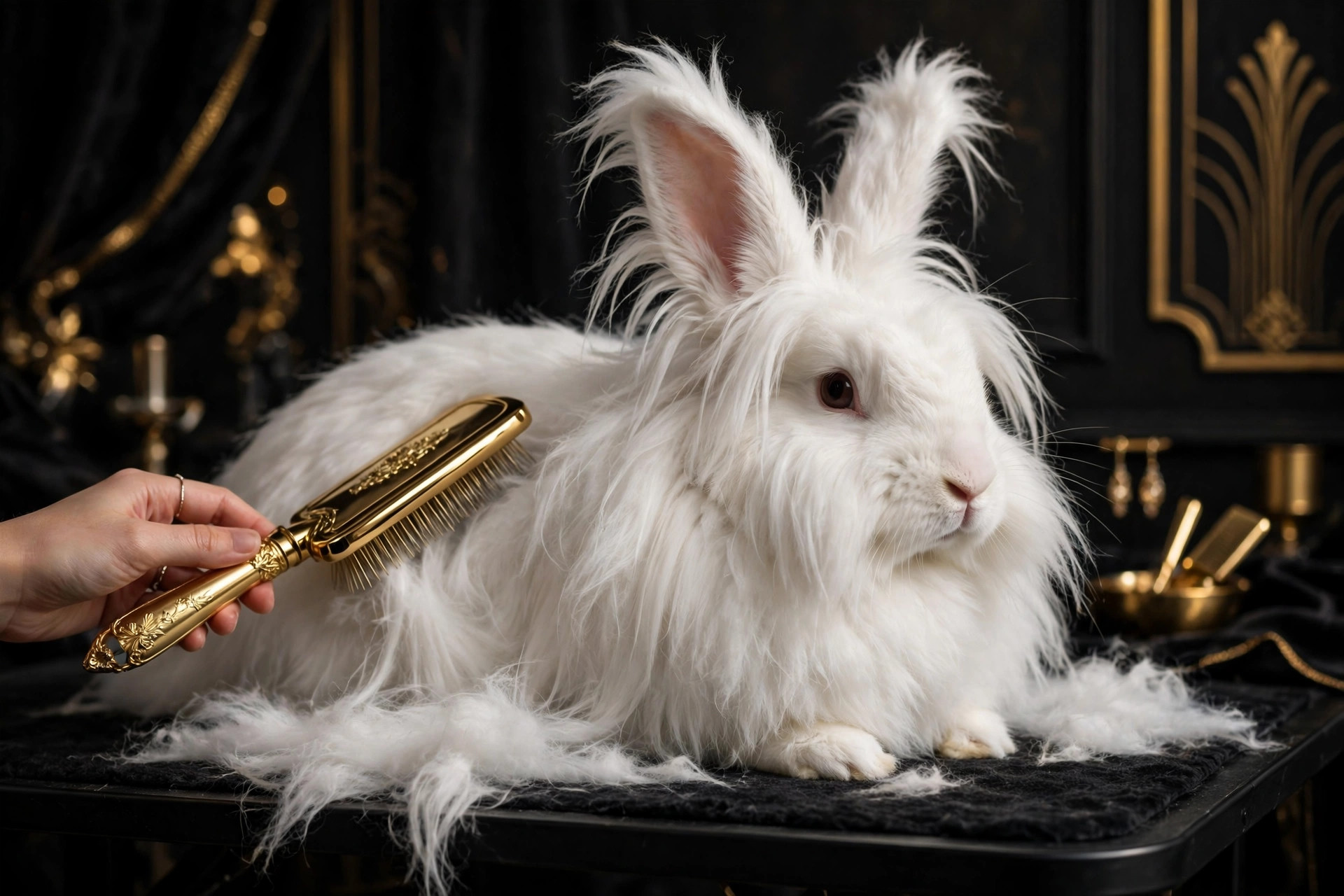
Know the coat you’re caring for
The English Angora carries wool almost everywhere. It grows over the ears, down the cheeks, and across the feet, giving the rabbit that soft, rounded silhouette people fall for at first sight.
That beauty comes with a trade-off. The fibres are fine and light, and they tangle easily. A little friction from bedding, a damp patch near the water bowl, or a day spent lounging in one favourite corner can start a felted knot.
Left alone, loose wool works into the coat instead of falling away. It mats. It traps moisture against the skin. It also gets swallowed, because rabbits groom themselves constantly with their tongues, just as cats do.
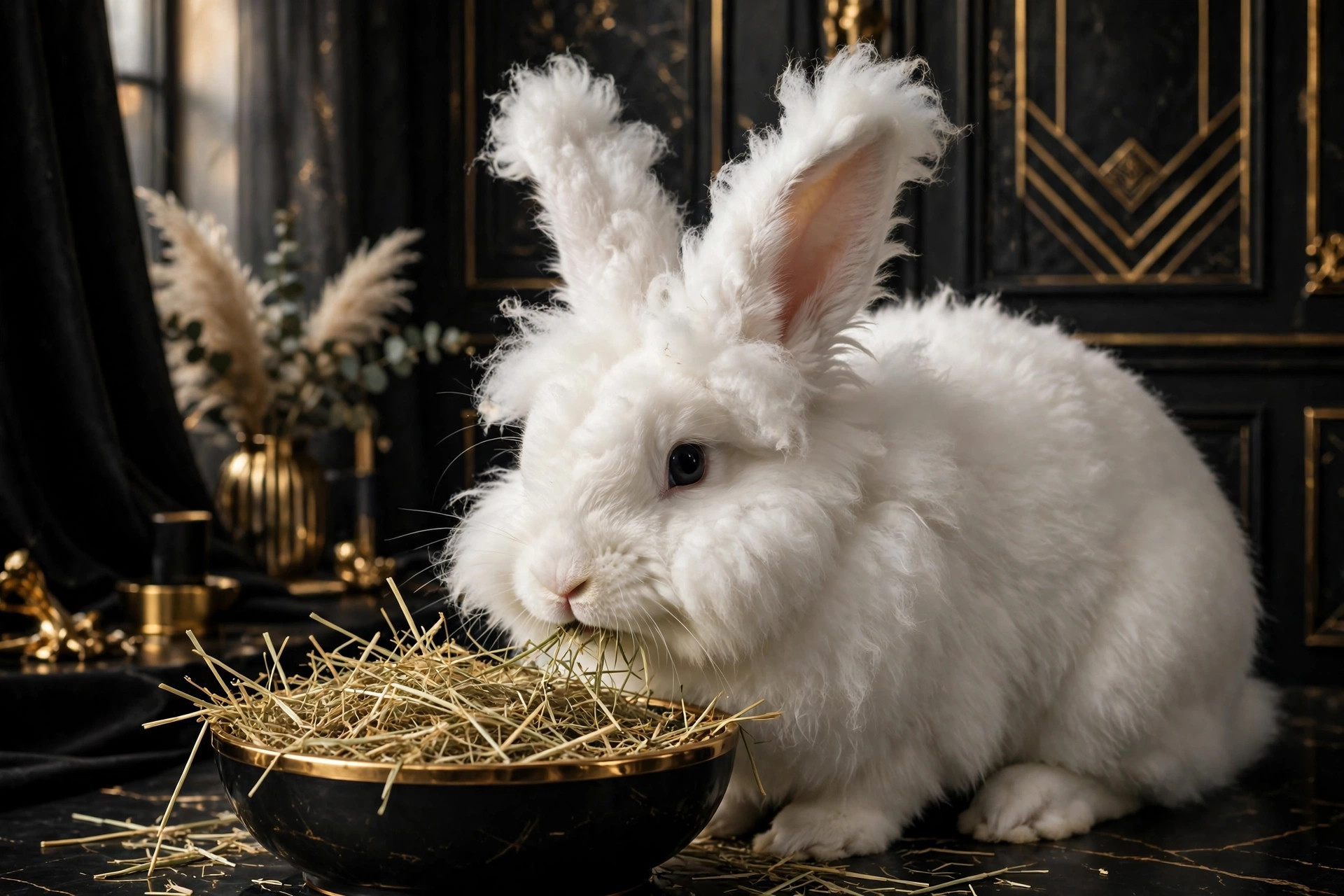
Swallowed wool can’t be coughed back up, and rabbits can’t vomit. That’s why hay sits at the centre of coat care, odd as that sounds. Long strands of hay keep the gut moving, and a gut that keeps moving handles passing wool far better.
Keep hay available all day, every day. It’s not a treat or a side dish. For an Angora, it’s part of the grooming kit.
The daily ritual (short)
Five to ten quiet minutes. That’s the whole daily ask, and it’s best done at the same time each day so your rabbit learns what to expect.
Prey animals relax into routine. A rabbit who knows the lap, the table, and the order of things will settle. A rabbit surprised by handling will not.
Start by simply looking. Run your fingers lightly through the wool behind the ears, under the chin, around the tail, and along the belly line. Those are the friction points, and they’re where mats begin.
Tease apart any loose clump you find while it’s still soft. Today’s tangle is a two-second job. Next week’s is not.
Check the feet and the rear end, too. Wool there picks up bedding and droppings quickly, and keeping it clean and dry matters more than keeping it pretty.
End with hay and a calm return to the pen. Short, predictable, unhurried — that’s the tone you’re setting for every longer session to come.
The weekly deep groom
Once a week, set aside a proper session. Thirty minutes is a reasonable guide, though a rabbit new to this may need shorter sittings at first. Let patience set the pace.
Work on a stable, non-slip surface at a comfortable height. A grooming table helps, but a towel-covered table at home works just as well. What matters is that neither of you is crouching, slipping, or rushing.
Go layer by layer. Lift a small section of wool, comb from the skin outward in short strokes, then move on. Skimming over the top looks tidy for an hour and does nothing underneath, where mats actually form.
Hold the base of a stubborn patch with one hand while you work it with the other. Pulling against skin hurts, and an Angora’s skin is thin. A rabbit who learns that grooming hurts will fight you for months afterwards.
Talk quietly as you go. Rest a hand on the rabbit between sections. If breathing quickens or the rabbit keeps trying to bolt, pause, offer a small piece of hay, and resume only once things have settled.
Finish by checking the whole coat with your fingers, not your eyes. Your hands will find what the fluff hides.
Harvest day: when the wool lets go
Every few months, the coat changes. In breeder practice, the wool is usually ready to harvest roughly every three to four months, when it naturally loosens and begins to release.
You’ll see the signs. The coat looks full and slightly tired. Loose fibres come away easily in your fingers. New growth waits underneath.
Some keepers pluck this loose wool by hand, taking only what releases without resistance. Others shear with small clippers or blunt-tip scissors. Both approaches can work. The rule is the same either way: if it doesn’t let go easily, it isn’t ready.
Never force it. Plucking wool that is still anchored hurts and can tear skin, and clipping too close carries the same risk. Work slowly, in good light, and stop often to feel where the skin sits beneath the fluff. Angora skin folds and stretches in ways that surprise people.
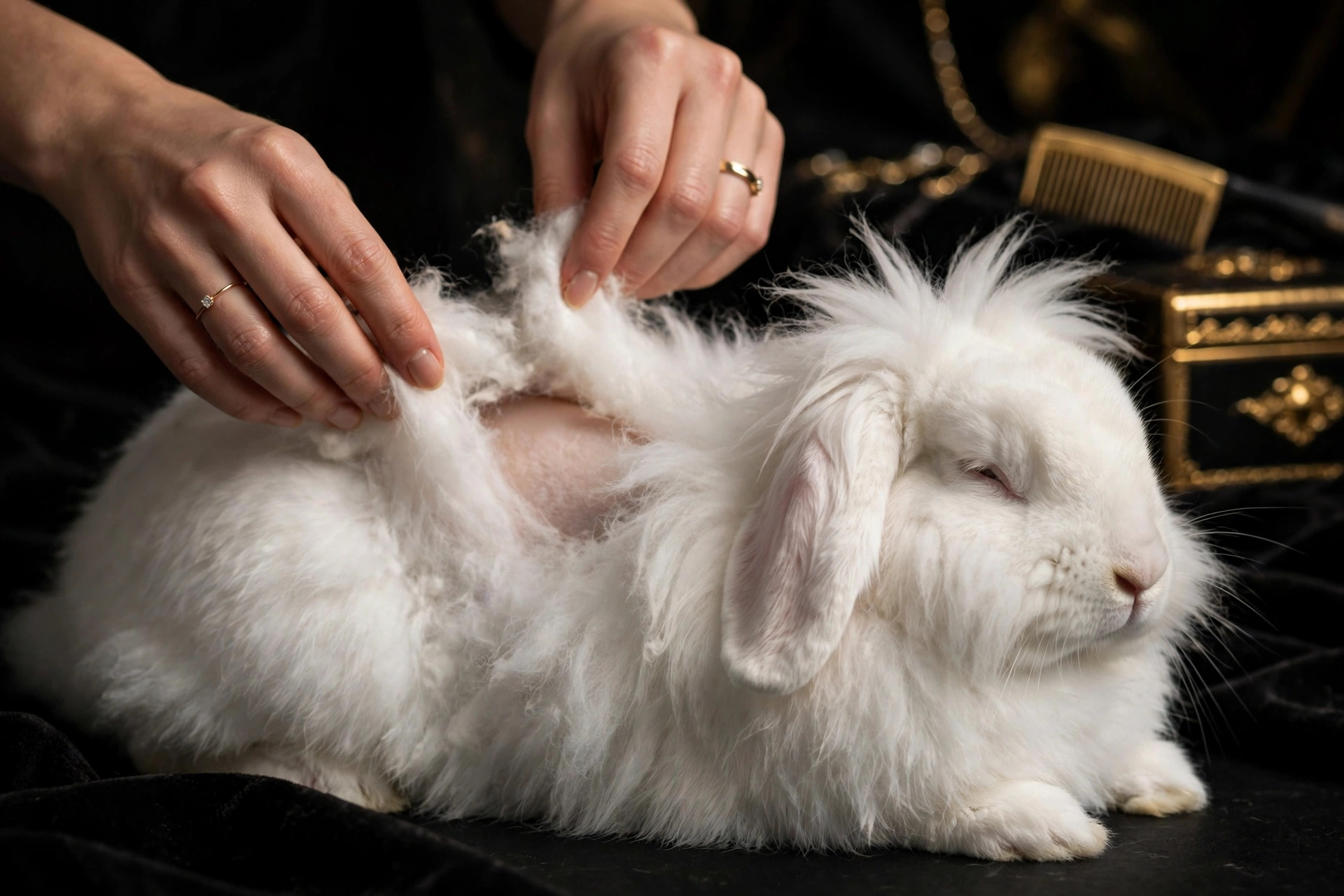
If a mat sits tight against the skin, leave it. Don’t cut blindly underneath it and don’t try to pull it free. That job belongs to a vet or an experienced groomer, who can remove it without nicking the skin hidden inside.
After a harvest, the rabbit will look smaller and a little startled by its own lightness. Keep the hutch warm and draught-free for a few days, especially in cooler weather. The insulation is gone until the new coat grows in.
Tools of the ritual
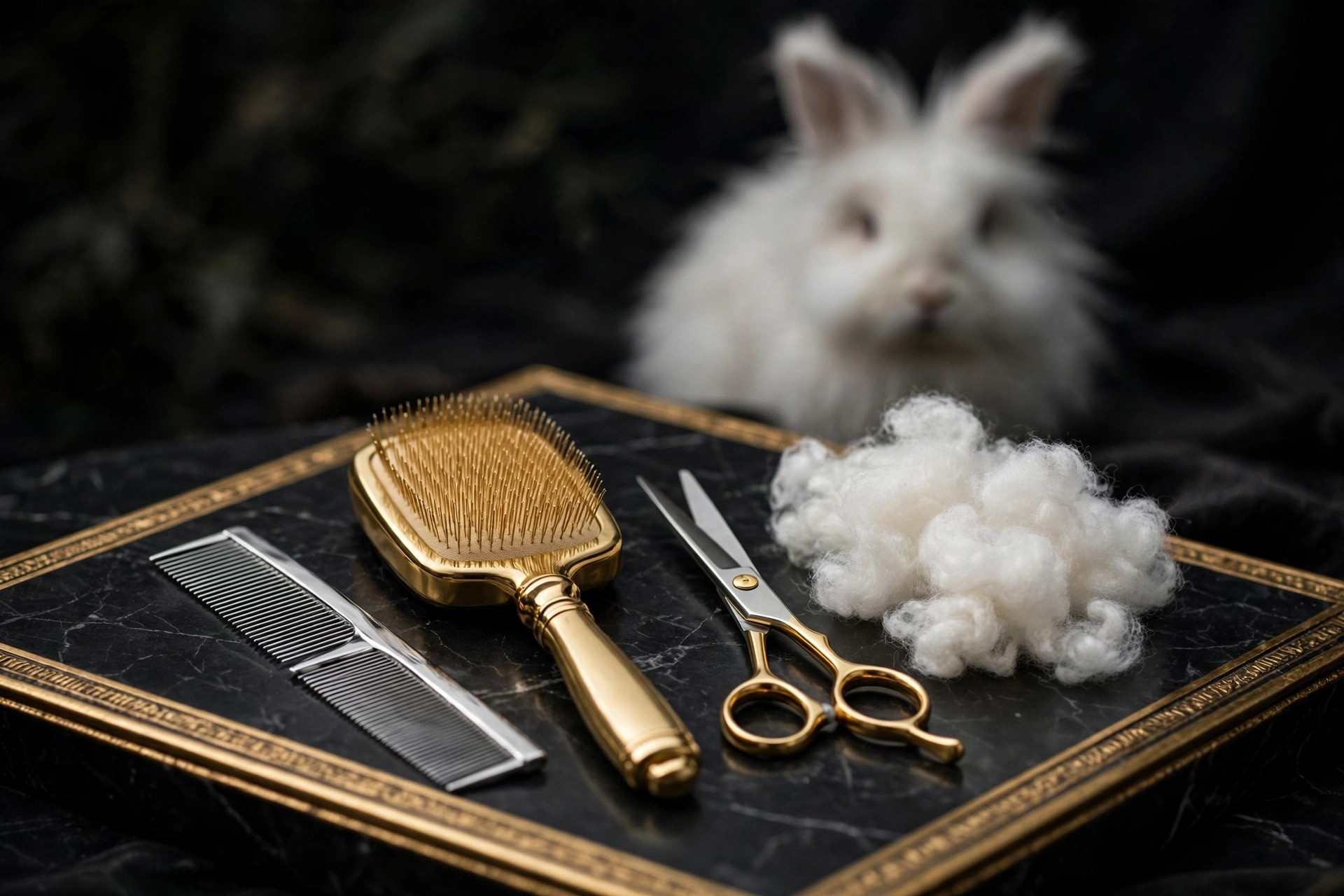
You don’t need a drawer full of equipment. A short, well-chosen set does the work, and using the same tools each time adds to that sense of familiar routine.
A slicker brush suits the outer coat and lifts loose fibre before it felts. Use a light touch. Pressing hard scratches skin and breaks the very wool you’re trying to preserve.
A steel comb is the real workhorse. Its teeth reach down through the layers, find hidden tangles, and tell you honestly whether a section is clear. If the comb glides, you’re done. If it snags, you’re not.
Blunt-tip scissors or small, quiet clippers handle trimming and harvest work. Blunt tips matter. They forgive a sudden kick in a way pointed scissors never will.
Add a grooming table ritual to the list, because setting counts as a tool. Same place, same towel, same order, same calm voice. Over time, the setting itself tells the rabbit that nothing frightening is about to happen.
Store everything clean and dry, and replace a comb or brush once teeth bend or pins roughen. Damaged tools snag, and snagging teaches dread.
Mistakes that undo the ritual
Never bathe an Angora rabbit. Rabbits regulate their temperature poorly when soaked, wet wool mats as it dries, and the shock of a bath can be dangerous in itself. Spot-clean a dirty patch with a damp cloth instead, then dry it fully and comb it through.
Never pull a mat apart by force. Work it gently from the outer edges with fingers and comb, or leave it for professional help. Torn skin and a frightened rabbit are too high a price for one tidy afternoon.
Skip scented products entirely. Sprays, perfumed detanglers, and fragranced shampoos belong nowhere near a rabbit who will lick its own coat for hours afterwards. If a product isn’t plainly safe for a rabbit to ingest in trace amounts, it doesn’t go on the wool.
Don’t skip weeks and then try to make up for lost time in one long session. Marathon grooming exhausts a prey animal and turns care into an ordeal. Little and often wins, every time.
And watch the rabbit, not just the coat. Not eating, producing no droppings, or sitting hunched and quiet can signal gut stasis, which is an emergency for rabbits. Stop grooming, and contact a vet promptly. No coat is worth waiting on that.
FAQ
How often does an English Angora rabbit need grooming?
A short check of five to ten minutes each day, plus one longer comb-through each week, suits most Angoras. Wool is usually ready to harvest roughly every three to four months, when it loosens naturally. Skipping the daily check lets small tangles become mats.
Can I bathe my English Angora rabbit if the wool gets dirty?
No. Bathing risks chilling and shock, and wet Angora wool mats badly as it dries. Spot-clean the dirty area with a damp cloth, dry it completely, and comb it through gently. If soiling is heavy or the skin looks sore, ask a vet for help.
What should I do about a mat that’s tight against the skin?
Leave it alone. Don’t pull it, and don’t slide scissors underneath it, because Angora skin is thin and hides inside the mat. A vet or an experienced groomer can remove it safely. Loose tangles, by contrast, can be teased apart gently at home.
Why does hay matter for coat care?
Rabbits swallow wool while grooming themselves, and they can’t vomit it back up. Hay keeps the digestive system moving, which helps swallowed wool pass through. Keep fresh hay available at all times, and seek vet help promptly if your rabbit stops eating or stops producing droppings.
An English Angora’s coat asks for rhythm more than skill. Show up daily, work gently, harvest only what the wool offers, and the ritual becomes one of the quiet pleasures of keeping this remarkable rabbit.
This article was created with AI assistance and reviewed by our editorial team before publishing.
 The Ragdoll Grooming Ritual: Silk Coat, Calm Hands
 Samoyed Grooming Ritual: The Luxury Coat Guide
 Luxury Dog Grooming at Home: The Complete Ritual
Leave a Reply